 comparison
Coastal Jaw Surgery Alternative for Implants in 2026
Table of Contents
- Why Consider an Alternative to Coastal Jaw Surgery for Implants?
- Comparing Full-Arch Implant Options vs. Jaw Surgery
- What to Expect: Full-Arch Restoration Recovery Time
- Board-Certified Implantologist vs Oral Surgeon: Who Should You Trust?
- Understanding the Cost-Benefit of Implant Alternatives
- Your Dental Implant Consultation Checklist
- Final Verdict: Choosing the Right Path for Your Smile
- Frequently Asked Questions
Last Updated: September 8, 2026
Why Consider an Alternative to Coastal Jaw Surgery for Implants?
Traditional jaw surgery reshapes the jaw bones to correct alignment or prepare for tooth replacement. For many Trinity-area patients, the prospect of months of recovery, general anesthesia, and significant swelling makes exploring a coastal jaw surgery alternative for implants a practical first step.
In practice, the decision comes down to which surgical and restorative approach fits your bone structure, health history, and lifestyle.
Comparing Full-Arch Implant Options vs. Jaw Surgery
The most significant difference between full-arch implant options and traditional jaw surgery is how the new teeth are anchored. Jaw surgery repositions bone, whereas implant alternatives work with your existing facial structure to secure a fixed prosthesis.
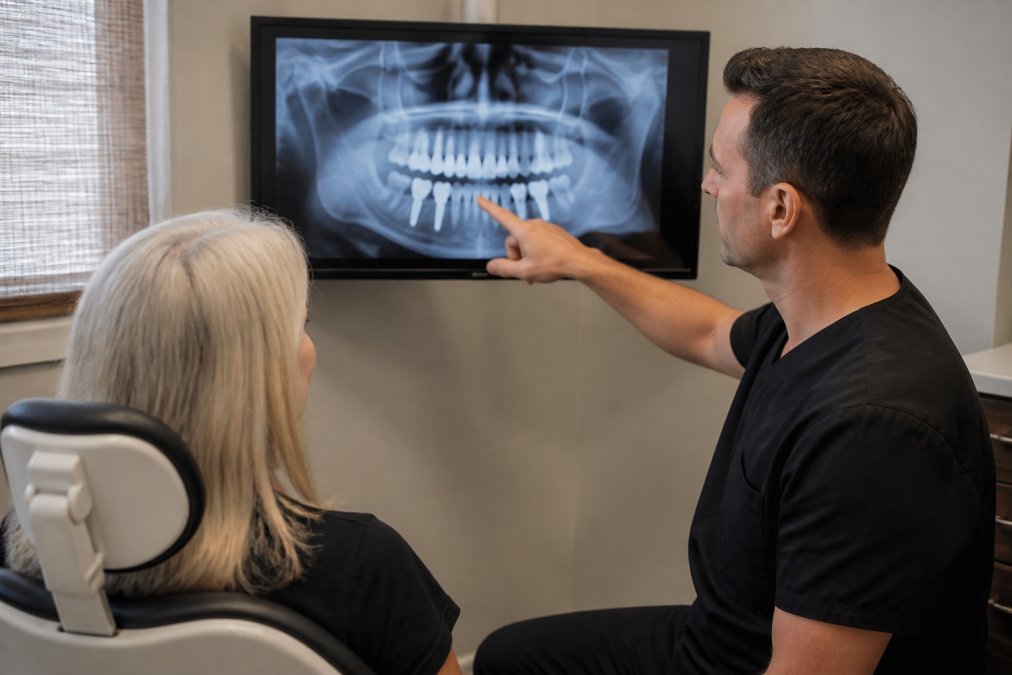
You are essentially choosing between surgical bone modification and surgical implant placement. The table below summarizes the primary routes.
| Option | Procedure Type | Bone Requirement | Typical Recovery Focus |
|---|---|---|---|
| Zygomatic Implants | Implant placement | Low (uses cheekbone) | Soft tissue healing |
| All-on-4 / All-on-6 | Implant placement | Moderate | Soft tissue healing |
| Jaw Surgery + Implants | Bone modification | N/A (reshapes bone) | Bone healing, extended |
| Bridges / Dentures | Non-surgical | None | Immediate |
Zygomatic Implants: A Viable Alternative
Zygomatic implants are a specialized solution for patients with severe upper-jaw bone loss who are ineligible for standard implants. Instead of anchoring into the maxillary bone, these longer implants secure into the denser cheekbone, which is often unaffected by resorption.
For patients facing years of living with removable dentures due to bone loss, zygomatic implants offer a fixed, permanent-feeling alternative in a fraction of the time. The primary drawback is that they require highly specialized surgical expertise, so your choice of provider is critical.
All-on-4 and All-on-6: Same-Day Full-Arch Solutions
For patients with moderate bone support, All-on-4 and All-on-6 offer a compelling middle ground. These procedures place four or six implants strategically to maximize anchorage, often avoiding sinus augmentation or grafting.
The defining feature is the potential for same-day teeth. Rather than wearing temporary dentures for months, many patients leave with a fixed, provisional prosthesis on the day of surgery.
Non-Surgical Options: Bridges and Dentures
Non-surgical alternatives remain the right choice for some patients. Dental bridges anchor to adjacent natural teeth, restoring chewing without surgical healing. Removable dentures, in partial or full-arch configurations, offer the most affordable and completely non-invasive path.
What to Expect: Full-Arch Restoration Recovery Time
Most clinical pages stop at "swelling peaks at day three." That does not help you plan your life. The real difference between a coastal jaw surgery alternative for implants and traditional orthognathic surgery is not just recovery length, it is the texture of those days.
The First 72 Hours: The Critical Window
Day 0 (Surgery Day): You will leave with your provisional fixed teeth in place if you chose a same-day protocol. Numbness wears off over 6 to 8 hours; most patients feel a deep, dull ache rather than sharp pain. Rest completely and keep your head elevated on two pillows.
Day 1: Swelling builds, peaking around hour 36. Apply cold compresses for 20-minute intervals. Your diet is strictly liquids and very soft foods, protein shakes, thinned soups, and smoothies. Do not use a straw, as suction can disrupt the surgical site. Minor oozing is expected and resolves within 24 hours.
Day 2: This is often the most uncomfortable day because swelling peaks. Do not judge the success of your procedure by how you feel on day two, many patients feel discouraged here, only to turn a corner by day four.
Day 3 to Day 5: Swelling subsides noticeably. Bruising on the cheeks or neck is a normal sign of healing. Most desk-based professionals return to work on day four or five. Transition to a soft-food diet, scrambled eggs, mashed potatoes, pasta, and begin gentle warm salt-water rinses.
The First Two Weeks: Functional Recovery
By day seven to ten, most patients feel "normal" aside from dietary restrictions. Non-dissolving sutures are typically removed at your one-week follow-up. Resume light exercise by day ten, but avoid heavy lifting for two weeks.
The Real Timeline: Osseointegration
The visible recovery is only half the story. Osseointegration, the biological process that determines long-term success, takes 3 to 6 months for the upper jaw and 4 to 6 months for the lower jaw.
Month 1 to 3: Gradually reintroduce harder foods, but avoid biting directly into apples, corn on the cob, or crusty bread.
Month 4 to 6: Your final, permanent prosthesis is fabricated and placed, ending the recovery journey. Unlike jaw surgery patients who must wait for bone remodeling before receiving implants, your implant-only path has already reached the finish line.
A Patient-Centric Recovery Checklist
To make this roadmap actionable, here is what you should ask your provider before scheduling surgery:
- What is your specific protocol for managing swelling in the first 48 hours? (Cold therapy schedule, prescribed anti-inflammatories)
- When exactly will I return for my first post-op check? (Day 7 is standard for implant-only procedures)
- What foods are on your "soft diet" list for week one? (A detailed list beats generic advice)
- At what point can I resume cardio? (Most practitioners say day 10 to 14)
- Who do I call at 2 a.m. if I have unexpected bleeding or pain? (A direct line to the surgeon, not a call center)
This timeline also frames the cost conversation. A longer recovery means more time off work, a hidden cost rarely in treatment quotes.
This roadmap is a realistic preview, not a guarantee. Individual healing varies by age, health status, and adherence to post-op instructions.
Board-Certified Implantologist vs Oral Surgeon: Who Should You Trust?
A common question is whether patients need an oral and maxillofacial surgeon or an implantologist. Oral surgeons excel at complex bone reconstruction and extractions, but their focus is often the surgical phase.
A board-certified implantologist is a general dentist with advanced, accredited training specifically in implantology. A single provider managing both surgery and restoration ensures continuity of care and a more cohesive result.
Understanding the Cost-Benefit of Implant Alternatives
Every dental website says implants are "an investment." Few show you the math. This section provides a transparent, 10-year cost-benefit framework comparing the true financial picture of a coastal jaw surgery alternative for implants against bridges, dentures, and jaw surgery with grafting.
The 10-Year Cost Framework
The only honest metric is total cost of ownership over a decade, including the initial procedure, maintenance, replacement cycles, and hidden costs of bone loss.
Traditional Dental Bridge (3-unit, replacing one tooth):
- Initial cost: Moderate (the lowest surgical option that is fixed)
- Lifespan: 10 to 15 years with good hygiene
- Hidden cost: The abutment teeth are shaved down permanently. If they fail, you now need two additional implants or a partial denture.
- 10-year projection: One initial procedure plus potential replacement or repair costs in year 10 to 12. No bone preservation benefit.
Removable Dentures (Full Arch):
- Initial cost: Low (the most affordable upfront)
- Lifespan: 5 to 8 years before relining or replacement is needed
- Hidden cost: Accelerated bone loss. The jawbone shrinks without implant stimulation, leading to a sunken facial appearance and difficulty chewing. Many denture wearers eventually seek implants anyway, after their bone has deteriorated further.
- 10-year projection: Two to three denture replacements or relines, plus the psychological cost of a removable appliance.
Traditional Jaw Surgery + Bone Grafting + Implants:
- Initial cost: High (the most expensive upfront due to hospital fees, anesthesia, and multiple surgical phases)
- Lifespan: Implants are designed for 20+ years, but the grafting material may resorb unpredictably
- Hidden cost: Extended time off work (2 to 4 weeks minimum), hospital co-pays, and the risk of graft failure requiring a second harvest from the hip or a synthetic substitute
- 10-year projection: One major surgical event with significant downtime. If the graft fails, you face additional surgery.
Zygomatic Implants or All-on-4 (Implant-Only Alternative):
- Initial cost: High (comparable to jaw surgery, but often lower because it is a single-phase procedure in an office setting, not a hospital)
- Lifespan: 20+ years with proper maintenance; the implant itself is designed to last a lifetime
- Hidden cost: Minimal. The key advantage is that you avoid the bone graft surgery entirely, which eliminates a major cost center and a major source of complications.
- 10-year projection: One surgical event, one prosthetic replacement cycle (typically at year 10 to 15), and preserved bone structure.
The Financial Logic of Choosing an Alternative
The most common financial mistake is choosing the lowest upfront cost without modeling the 10-year trajectory. A patient may choose a bridge or denture to save money; however, if it fails due to bone resorption, the patient may then need implants, and bone loss could make standard implants impossible without grafting, potentially leading to the exact surgery they tried to avoid, at a higher cost.
The Psychological Cost-Benefit: A Factor Competitors Ignore
Most cost comparisons stop at dollars, ignoring the measurable psychological impact of tooth loss and restoration type. Tooth loss can be associated with reduced quality of life, social anxiety, and nutritional deficiencies.
Consider the daily experience of each option:
- Dentures: Fear of slippage while speaking or eating; social anxiety about the appliance being visible; avoidance of steak, apples, and corn on the cob.
- Bridge: Confidence in chewing, but ongoing anxiety about the health of the abutment teeth and the eventual need for replacement.
- Implants (Zygomatic or All-on-4): Fixed, permanent teeth that feel and function like natural teeth. No fear of slippage. No dietary restrictions. The psychological freedom of not thinking about your teeth is itself a form of value that compounds daily.
How to Evaluate a Cost Quote
When you receive a treatment plan, ask for a breakdown that includes these line items:
- Surgical fee (implant placement, anesthesia, facility fee)
- Restorative fee (the provisional teeth and the final permanent prosthesis)
- Diagnostic fee (3D imaging, treatment planning)
- Warranty period (What is covered if an implant fails in year one? Year five?)
- Prosthetic replacement estimate (What will it cost to replace the teeth on top of the implants in 10 to 15 years?)
This framework is designed to help you walk into any consultation with a clear head and a clear spreadsheet.
Your Dental Implant Consultation Checklist
Before you commit to any provider, use this checklist to ensure you are getting a thorough clinical evaluation and an honest recommendation.
- Diagnostic imaging: Did they take a 3D scan to assess your bone density and structure, or just a 2D X-ray?
- Medical history review: Did they discuss how conditions like diabetes or medications affect healing and osseointegration?
- Anchorage strategy: Did they explain why they chose a specific implant technique (zygomatic vs. All-on-4) for your bone situation?
- Provisional teeth plan: Will you have fixed teeth on the day of surgery, or will you wear a temporary denture?
- Prosthodontist involvement: Who designs the final, permanent teeth, and is that person part of the same practice?
- Long-term maintenance: What does the follow-up schedule look like for the first year, and who handles complications?
- Sedation options: What is available for managing anxiety during the procedure?
Final Verdict: Choosing the Right Path for Your Smile
Choosing between jaw surgery and an implant alternative should be driven by your anatomy, health status, and personal goals. For severe upper-jaw bone loss, zygomatic implants can bypass grafting. For moderate bone, All-on-4 and All-on-6 offer efficient, same-day solutions.
The common thread is the need for a provider with the surgical skill to place implants in compromised bone and the restorative artistry to craft natural-looking teeth. Trinity Dental Arts, led by a board-certified implantologist, can guide you.
Deciding between a coastal jaw surgery alternative for implants and a traditional surgical route is complex, but you do not have to navigate it alone. The right path balances clinical necessity with recovery time, budget, and long-term goals. With a board-certified implantologist and advanced same-day technology, Trinity Dental Arts offers a comprehensive approach that prioritizes your comfort and confidence. Get started with a consultation and take the first step toward a fixed, functional smile.
Frequently Asked Questions
What is the best alternative to a dental implant for full-arch restoration?
For full-arch restoration, the best alternative often depends on your bone density and health history. Zygomatic implants anchor into the cheekbone, bypassing the need for bone grafting in the upper jaw. All-on-4 or All-on-6 procedures use angled implants to maximize existing bone, often allowing for same-day teeth. If you want to avoid surgery entirely, removable dentures or a fixed dental bridge are options, though they may not offer the same chewing stability or long-term bone preservation as implant-based solutions.
What can I do instead of jaw surgery for dental implants?
If you're avoiding orthognathic (jaw) surgery, alternatives include zygomatic implants, which anchor into the cheekbone, or All-on-4/All-on-6 implants that use strategic angulation to work with limited bone height. These approaches often eliminate the need for extensive bone grafting. A board-certified implantologist can perform a clinical evaluation and use diagnostic imaging to determine if your bone structure supports these less invasive implant techniques, which typically involve a shorter recovery time than traditional jaw reconstruction.
How does full-arch restoration recovery time compare to jaw surgery recovery?
Full-arch restoration recovery time is generally much shorter than recovery from traditional jaw surgery. With same-day full-arch implants like All-on-4, most patients manage discomfort with over-the-counter pain relief within a few days and can return to a soft-food diet quickly. Orthognathic surgery often requires a longer initial healing period, a liquid diet for weeks, and several months for the bone to fully consolidate before implants can even be placed. Your specific timeline depends on whether bone grafting or sinus augmentation is also required.
What should I look for when choosing an implantologist in the Trinity area?
When choosing a specialist, look for a board-certified implantologist rather than a general dentist performing occasional implant work. Board certification indicates advanced training and examination in surgical placement and restorative dentistry. Ask if they have an in-house lab, which can streamline the process for same-day crowns or full-arch teeth. Review their approach to sedation dentistry if you have anxiety, and confirm they handle post-operative care and long-term maintenance in-house, so you aren't referred elsewhere if complications arise.