 comparison
Can Porcelain Veneers Fix Crooked Teeth? Pros and Cons
Last Updated: October 24, 2026
Quick Summary
Porcelain veneers can fix the look of mildly crooked teeth by masking small gaps, minor rotations, and uneven edges, but they cannot move teeth or hide severe crowding. The pros are a fast, stain-resistant cosmetic result; the cons are permanent enamel removal, irreversibility, and higher fracture risk on teeth that meet unevenly.
- Veneers are cosmetic camouflage, not orthodontic treatment; they change how teeth look, not where they sit.
- Severe crowding or overlapping teeth cannot be masked convincingly by a shell and need orthodontics first.
- Preparing a tooth for a veneer removes a fraction of a millimeter to about half a millimeter of enamel that does not grow back.
- Porcelain veneers commonly last around 10 to 15 years with good care, and many last longer.
- Ask for the per-tooth fee and the lifetime estimate in the same conversation before you commit.
Table of Contents
- Porcelain Veneers for Crooked Teeth: What They Can and Cannot Do
- Can You Get Veneers With Crooked Teeth?
- Pros and Cons of Porcelain Veneers for Crooked Teeth
- Porcelain Veneers vs Braces: Which Moves Teeth and Which Masks Them
- Veneers vs Invisalign for Crooked Teeth: A Decision Framework
- How Long Do Porcelain Veneers Last?
- Cost, Long-Term Value, and What to Ask Before Treatment
- Book a Veneer Consultation at Trinity Dental Arts
- Frequently Asked Questions
Porcelain Veneers for Crooked Teeth: What They Can and Cannot Do
Porcelain veneers are thin, custom-made ceramic shells bonded to the front of teeth to change their shape, color, and apparent alignment. At Trinity Dental Arts, we explain that veneers are cosmetic camouflage, not orthodontic treatment.
Below, we break down the pros and cons of porcelain veneers for crooked teeth, compare them with braces and clear aligners, and give you a candidacy framework.
Can You Get Veneers With Crooked Teeth?
Yes, you can get veneers with crooked teeth, but only when the misalignment is mild enough for a cosmetic shell to mask convincingly.
The Cleveland Clinic overview of dental veneers describes veneers as coverings for the front surface of teeth, used to conceal chips, cracks, and discoloration. Alignment is a separate question, and it is the one that determines candidacy.
Mild Misalignment: Where Veneers Work Best
Mild misalignment is the sweet spot for porcelain veneers. Small gaps, minor rotations, a slightly uneven edge, or one tooth sitting a fraction forward of its neighbor can often be visually corrected with carefully shaped veneers, symmetry without moving a tooth.
This suits adults who want a faster cosmetic result and whose bite is healthy. Confirming the bite first is important, because veneers over teeth that meet unevenly are more prone to chipping.
Severe Misalignment: When Veneers Are the Wrong Tool
Severe misalignment is where veneers stop making sense. Crowding, overlapping teeth, or a tooth rotated well out of the arch cannot be masked by a shell; overbuilding looks bulky and unnatural.
There is a functional problem too. Crooked teeth are harder to clean, and covering them without correcting position can trap plaque and compromise gum health. When alignment is severe, orthodontics comes first.
Pros and Cons of Porcelain Veneers for Crooked Teeth
The core trade-off is simple: veneers deliver a fast, stain-resistant cosmetic result, but they require enamel removal and do not correct underlying alignment. What many articles skip is how that trade-off changes when teeth are crooked, a veneer on a rotated tooth behaves differently than one on a straight tooth.
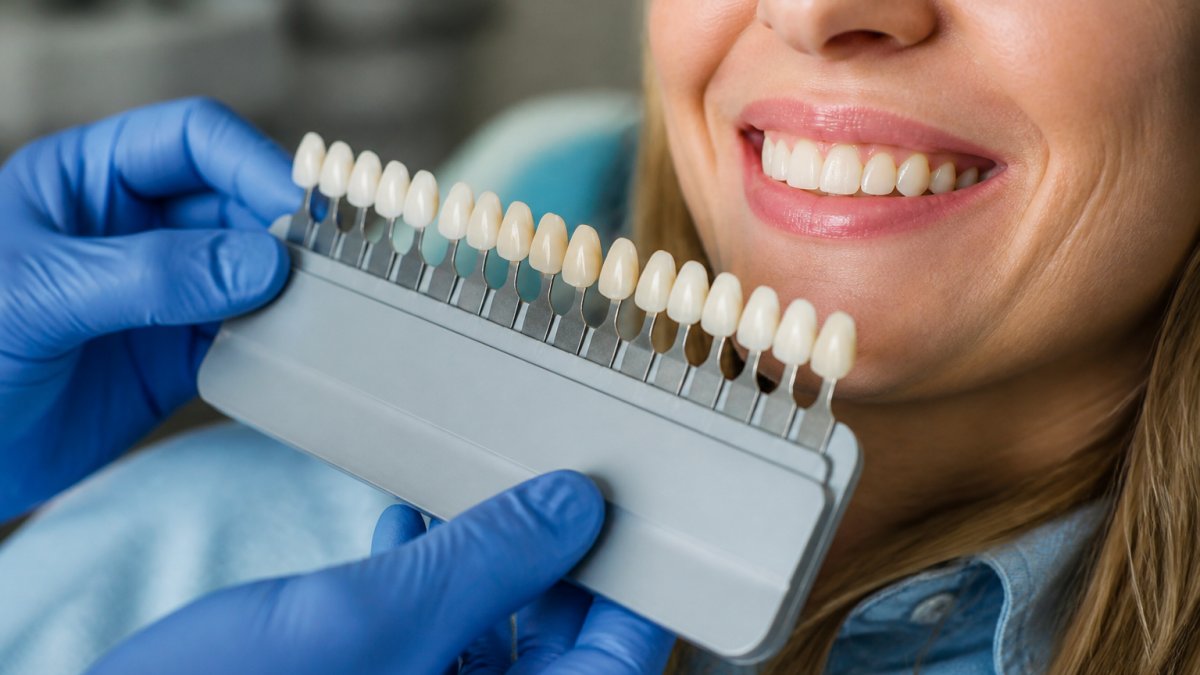
Pros: Appearance, Speed, and Stain Resistance
- Speed. A veneer case is typically completed in a few visits rather than the months orthodontic treatment takes, the main draw for an adult with a wedding, job interview, or milestone on the calendar.
- Appearance. Porcelain mimics the translucency of natural enamel, so a well-made veneer reflects light like a real tooth. On a mildly rotated tooth, a skilled technician can build the ceramic so the rotation reads as intentional shape.
- Stain resistance. Porcelain holds its color far better than natural enamel or composite bonding. Crooked teeth often trap stain in overlapping contacts; veneers cover those surfaces with a non-porous material.
Cons: Enamel Removal, Irreversibility, and Bite Limits
The drawbacks deserve equal weight, and several are amplified when teeth are crooked.
- Enamel removal. Preparing a tooth for a veneer means removing a thin layer of enamel, typically a fraction of a millimeter to about half a millimeter on the facial surface. It does not grow back.
- Irreversibility. Once prepared, the tooth will always need a restoration, the single biggest reason we steer severe cases toward orthodontics first.
- Bite limits. Veneers cannot fix a bad bite or move a tooth. They mask, they do not correct. If your upper and lower teeth do not meet evenly, adding ceramic to the front can change how the bite loads and increase fracture risk.
Porcelain Veneers vs Braces: Which Moves Teeth and Which Masks Them
Braces move teeth. Veneers mask them. That distinction should drive your decision.
Braces and clear aligners apply controlled force over months to reposition teeth and correct bite alignment, genuinely changing tooth position to support chewing and gum health.
If your goal is a straighter smile and your teeth are healthy, orthodontics addresses the cause. For non-brace options, see our guide to alternatives to braces for crooked teeth.
Veneers vs Invisalign for Crooked Teeth: A Decision Framework
Use this framework to sort yourself before you book anything, the same logic we apply in consultation.
| Your situation | Best first step | Why |
|---|---|---|
| Mild rotation, small gaps, healthy bite | Porcelain veneers | Cosmetic masking is enough |
| Moderate crowding, bite issues | Clear aligners | Teeth need to move, not just look moved |
| Severe crowding or overlapping | Braces or aligners, then reassess | Veneers cannot mask this convincingly |
| Already straight, wants whiter and more even | Veneers or whitening | Alignment is not the problem |
| Grinding or clenching habit | Address the habit first | Fracture risk is too high otherwise |
Clear aligners such as Invisalign move teeth gradually using removable trays, suiting adults who want alignment correction without fixed brackets. Veneers suit adults who want a finished cosmetic result and whose alignment is already close. For a deeper comparison, read our guide on Invisalign vs veneers for a smile makeover.
How Long Do Porcelain Veneers Last?
Porcelain veneers commonly last around 10 to 15 years with good care, and many last longer. Lifespan depends on bond quality, your bite, and your habits.
Maintenance is not complicated, but it is not optional: brush and floss daily, wear a night guard if you grind, and avoid ice or hard objects. Our guide on how to maintain porcelain veneers long term covers the routine.
Replacement is a normal part of the lifecycle. Budget for it rather than being surprised by it.
Cost, Long-Term Value, and What to Ask Before Treatment
Most veneer articles either dodge pricing or quote a national average that does not reflect what you will pay. We do not invent a number for your mouth, but we can show you how the cost is built, what drives it up, and what the lifetime number looks like once replacement is included.
How Per-Tooth Pricing Is Built
A veneer fee is not one charge. It is a bundle, and practices bundle differently. The main components are:
- Laboratory fee. A skilled ceramist charges more than a production lab, the largest driver of per-tooth price and the one most worth asking about.
- Clinician time and skill. Complex cases, multiple teeth, and cosmetic planning take more chair time than a single straightforward veneer.
- Diagnostic wax-up or digital smile design. Some practices include this; others bill it separately. It is the blueprint for the final result and not optional in a good case.
Typically, the per-tooth fee for porcelain veneers sits in the high hundreds to low thousands of dollars, with the upper end driven by an elite ceramist, complex shaping, or gum contouring. A single figure is not quoted because a number right for one patient is wrong for another.
Additional Costs Crooked Teeth Can Add
This is where a crooked-teeth case diverges from a straight-teeth case.
- Orthodontic treatment first. If alignment is moderate or severe, the honest plan is aligners or braces before veneers, a separate cost and timeline, and skipping it usually costs more later.
- Gum contouring. A veneer can straighten the crown but not the gumline. Reshaping the gum so margins sit evenly is sometimes needed and usually billed separately.
- Night guard. If you grind or clench, a guard is not optional. It protects the veneers and is often not included in the fee.
The Lifetime Cost Math
This is the number that matters and the one almost no competitor shows. Porcelain veneers commonly last around 10 to 15 years with good care.
So the honest comparison is not "veneer fee versus aligner fee" but:
- Veneers: per-tooth fee × number of teeth × number of replacement cycles, plus guards, repairs, and any gum contouring.
- Aligners or braces: treatment fee, plus retainers for life, plus whitening or bonding afterward if you want the cosmetic finish.
For mild misalignment, veneers can be the lower-lifetime-cost path because you skip orthodontics. For moderate crowding, the math often flips: you pay for alignment and then still pay for cosmetic refinement. Run both columns before you decide.
What to Ask Before You Commit
Ask these questions before you commit, and get the answers in writing:
- How many teeth need preparation, and how much enamel will be removed?
- Is a diagnostic wax-up or digital smile design included, or billed separately?
- What is the fee per veneer, and what exactly does it cover (lab, temporaries, cementation, follow-up)?
Cost is not just the per-tooth fee. It is the fee plus replacement over time plus any orthodontic work needed first. Comparing on the per-tooth number alone is how patients end up disappointed. Our guide on how to find affordable porcelain veneers walks through what drives pricing.
Book a Veneer Consultation at Trinity Dental Arts
The decision between masking and moving is easier once a clinician has looked at your bite, your enamel, and your goals. At Trinity Dental Arts, our board-certified implantologist and in-house lab allow for planning cosmetic cases with precision, from digital smile design to final placement.
If you are weighing veneers against orthodontic options, start with an honest assessment. Book a veneer consultation to determine whether veneers are right for your smile or whether alignment should come first.
Frequently Asked Questions
Can porcelain veneers make crooked teeth look straight?
Porcelain veneers can make mildly crooked teeth look straighter because they cover the front surface and create a more even smile line. They do not move teeth or correct bite alignment. If your crookedness is severe or your bite is off, a dentist may recommend orthodontic treatment first. A consultation with an experienced cosmetic dentist will confirm whether veneers suit your tooth structure and goals.
Are veneers or braces better for crooked teeth?
Braces and clear aligners move teeth into better alignment and can correct bite problems. Veneers mask the appearance of mild crookedness without moving teeth. For mild cosmetic irregularity, veneers may be faster. For moderate to severe misalignment or bite issues, orthodontic treatment is usually the better choice. Some patients combine both: aligners first, then veneers for finishing touches.
How long do porcelain veneers last?
Porcelain veneers often last 10 to 15 years or longer with good care, though lifespan varies by case. Habits like chewing ice, biting nails, or grinding teeth can cause chipping or cracking. Regular dental checkups and a night guard if you grind help protect your investment. Your dentist can discuss expected longevity based on your bite and oral health.
Do veneers require removing tooth enamel?
Porcelain veneers usually require removing a small amount of enamel from the front of the teeth to make room for the veneer. This makes the treatment irreversible. Some no-prep or minimal-prep veneers exist, but candidacy depends on your tooth position and bite. Discuss enamel removal and long-term tooth health with your dentist before committing.
Can veneers fix a bite problem or only change how teeth look?
Veneers change how teeth look; they do not correct bite problems. If your crooked teeth cause uneven chewing, jaw pain, or excessive wear, orthodontic treatment or bite therapy may be needed first. Placing veneers over an uncorrected bite can lead to chipping or uneven wear. A clinical exam will determine whether your bite needs treatment before cosmetic work.
Crooked teeth and a cosmetic goal do not always point to the same treatment. Getting that call right the first time saves you money and protects your enamel. Get started with Trinity Dental Arts and a consultation that tells you the truth about what your smile actually needs.