 ultimate-guide
Dental Implant Warranty: What's Covered & Aftercare
Table of Contents
- Why a Dental Implant Warranty Matters
- Comparing Implant Fixture vs. Prosthetic Warranties
- What Voids a Dental Implant Warranty?
- Your Dental Implant Maintenance Schedule
- Average Lifespan of Dental Implants vs. Warranty Period
- Questions to Ask Before You Commit
- The Bottom Line on Warranties and Aftercare
- Frequently Asked Questions
Why a Dental Implant Warranty Matters
A dental implant warranty is a formal commitment from your dentist or manufacturer to repair or replace specific components if they fail under defined conditions. It protects your investment in one of the most significant restorative procedures available today. At Trinity Dental Arts, we emphasize that understanding this protection before treatment is just as important as the surgery itself.
The distinction between clinical success and financial protection often comes down to the fine print. Many patients assume their implant is covered for life once it is placed, only to discover later that the crown or abutment carries a much shorter guarantee. This gap between expectation and reality is why the American Dental Association recommends discussing warranty terms explicitly during your treatment planning consultation.
A clear warranty also signals confidence. When a practice offers a substantial guarantee on the implant fixture, it suggests they trust the long-term success rate of their work. For patients, this translates into predictable follow-up care costs and fewer surprises if a component needs attention down the road.
| Warranty Component | Typical Coverage Focus | What It Protects |
|---|---|---|
| Implant Fixture | Osseointegration failure | The titanium post in the bone |
| Prosthetic Crown | Manufacturing defects | The visible tooth replacement |
| Abutment Screw | Component breakage | The connector piece |
Comparing Implant Fixture vs. Prosthetic Warranties
The most critical distinction in any dental implant warranty is between the fixture and the prosthesis. The implant fixture is the titanium post that fuses with your jawbone through osseointegration, while the prosthesis is the visible restoration, the crown, bridge, or zirconia arch attached to it.
Manufacturers typically back the fixture against osseointegration failure for ten years or longer, sometimes offering a lifetime guarantee on the implant itself. This coverage usually applies when the bone fails to integrate with the titanium surface, a rare event with modern techniques. The prosthetic portion, however, is a different matter. Dental crowns and bridges face daily chewing forces, so warranties on these components commonly run five years or less and focus on manufacturing defects rather than normal wear and tear.
What most guides miss is the procedural layer. Your dentist's warranty often covers the clinical work, including placement and restoration, while the manufacturer's warranty covers the physical components. A broken abutment screw might fall under the manufacturer, but the cost of removing the crown to access it falls under the practice. Ask which party covers each scenario before you commit to treatment.
What Voids a Dental Implant Warranty?
A dental implant warranty becomes voided coverage when specific conditions are not met, and most patients never see these clauses coming. The most common reason for losing protection is failing to maintain regular professional care, since practices tie warranty validity to their own maintenance schedule.
Skipping biannual checkups is the fastest way to invalidate your coverage. Your dentist needs to monitor the implant through radiographic monitoring and clinical assessment to catch early signs of peri-implantitis or bone loss. Missing these appointments gives the practice grounds to argue that complications resulted from lack of oversight rather than manufacturing defects.
Other voiding conditions include poor oral hygiene leading to gum disease, untreated bruxism that fractures the crown, and any modification to the implant outside the original treatment plan. Trauma from accidents is typically excluded as well. Understanding what voids a dental implant warranty means treating it like a car warranty: you must document the service history and follow the prescribed schedule.
The Documentation Checklist Most Patients Never See
What separates a successful warranty claim from a denied one is often not the defect itself but the paperwork. Manufacturers and practices require proof that you followed the maintenance protocol. Without it, they can argue that the failure was due to neglect rather than a manufacturing or clinical error.
Before you leave the office on the day of your final restoration, start a dedicated file. At minimum, it should contain:
- The original treatment plan and consent forms, These establish what was agreed upon clinically and financially.
- The manufacturer's warranty certificate, This is often a separate document from your practice's guarantee. It lists the specific implant system, lot number, and component serial numbers. If you do not receive it, ask for it.
- The practice's own warranty policy, This covers the clinical work, including placement and restoration. It may have different terms than the manufacturer's certificate.
- Itemized receipts for every visit, These prove you attended the required recall appointments. A credit card statement is not sufficient; you need the practice's treatment notes or a signed visit summary.
- Radiographs (X-rays) taken at each checkup, These document the bone level around the fixture over time. If a claim is filed years later, serial radiographs are the strongest evidence that the implant was stable until the point of failure.
- Correspondence with the practice, If you call about a loose crown or discomfort, keep a log of the date, the staff member you spoke with, and what was discussed. This establishes that you reported a problem promptly.
Keep this file indefinitely. Implant warranties can run 10 years to lifetime on the fixture, and you will not remember the details of a conversation you had in 2026 when a claim arises in 2035.
How to Handle a Potential Claim
If you suspect a component failure, do not wait for your next scheduled visit. Call the practice immediately and describe the issue in writing, even if it is just an email. This creates a timestamped record. Ask whether the problem falls under the manufacturer's warranty or the practice's warranty, and request that they initiate the claim process in writing.
Most manufacturers require the practice to submit the failed component for analysis. If the component is deemed defective, the replacement part is typically covered, but the laboratory fee for a new crown and the clinical time to place it may not be. Clarify this before authorizing any work.
Your Dental Implant Maintenance Schedule
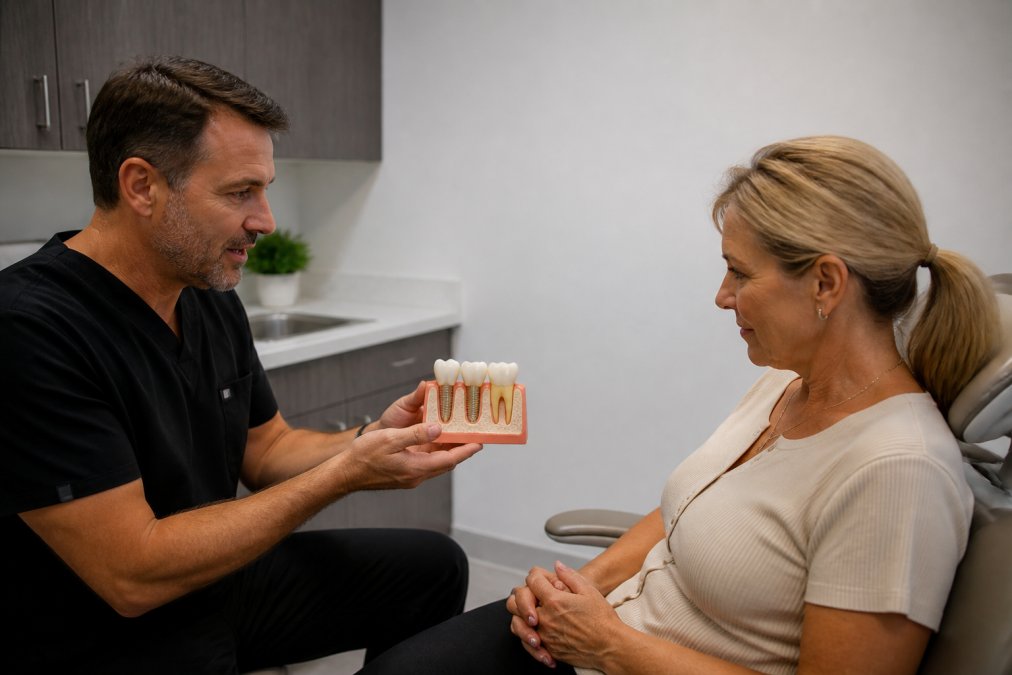
A structured dental implant maintenance schedule is the single most reliable way to protect both your warranty and your long-term oral health. Think of it as a partnership: the warranty covers manufacturing and clinical errors, while your daily habits and professional visits cover everything else.
Daily Care at Home
Your home routine directly influences whether your warranty remains valid. Brush twice daily with a soft-bristle brush, paying attention to the gumline around the implant. Floss with implant-specific tape or use a water flosser to clean beneath the prosthesis where bacteria accumulate.
Avoid abrasive toothpaste that can scratch the crown's surface. If you grind your teeth, ask about a night guard, since untreated bruxism is a leading cause of prosthetic failure and a common reason manufacturers deny claims.
Professional Checkups and Cleanings
Professional maintenance every six months allows your dentist to perform a torque check on the abutment screw, evaluate the occlusion, and take periodic radiographs to confirm the bone level around the fixture remains stable. These visits are rarely optional when warranty coverage is at stake.
Your dental hygienist uses specialized instruments that will not scratch the titanium surface. Standard metal scalers can damage the implant, so confirm your practice uses plastic or ultrasonic tips designed for implant care.
Average Lifespan of Dental Implants vs. Warranty Period
The average lifespan of dental implants is measured in decades, but the warranty period is measured in years, and confusing the two leads to disappointment. With proper maintenance, an implant fixture can last 25 years or more, often for the rest of the patient's life.
The prosthetic crown, however, typically needs replacement every 10 to 15 years due to normal wear and tear on the chewing surface. This means you will likely outlive your warranty long before the implant itself shows any sign of failure. A five-year crown warranty does not mean the crown will fail at year five; it simply means the manufacturer only guarantees it against defects for that window.
This distinction matters for budgeting. Plan for eventual component replacement even if your implant never fails. The fixture is the durable foundation, but the visible parts are consumables that require periodic renewal, much like the tires on a car that will outlast them.
Questions to Ask Before You Commit
Before signing any treatment agreement, ask your provider to explain the warranty in plain language. Request a written copy of both the manufacturer's warranty and the practice's own guarantee, since they operate independently.
Specific questions worth asking include whether the warranty transfers if you move or change dentists, what documentation you must keep to maintain coverage, and whether third-party warranty validation is available for additional peace of mind. Many patients also overlook the difference between insurance and warranty: insurance covers unexpected events like trauma, while a warranty addresses manufacturing defects and clinical failures.
Clarify who handles the cost of the temporary restoration if a component fails and needs replacement. The implant fixture may be covered, but the laboratory fee for a new crown often falls to the patient. Knowing these details before treatment prevents disputes later.
Insurance vs. Warranty: Two Different Safety Nets
A common point of confusion is assuming your dental insurance will cover a warranty claim. These are separate systems with different purposes, and understanding the distinction can save you hundreds of dollars.
Dental insurance is a benefit plan that helps pay for procedures, including repairs, but it operates on a fee schedule and typically has annual maximums. If your crown fractures in year three, your insurance may cover a portion of the replacement, but only up to your plan's annual limit, and only if the procedure is a covered benefit. It does not care whether the failure was a manufacturing defect or normal wear; it simply pays its contracted share.
A warranty is a contractual guarantee from the manufacturer or the practice. It covers specific failures, usually manufacturing defects or clinical errors, and it does not involve your insurance carrier. A warranty claim is processed directly between the practice and the manufacturer.
The critical interaction: if a component fails and the warranty covers the part but not the labor, your insurance may step in to cover the clinical fee for placing the replacement. This is a legitimate use of your benefits, but you must coordinate it. Ask the practice to provide a treatment plan that separates the part cost from the labor cost so you can submit the appropriate portion to your insurer.
Verifying Genuine Components
A less-discussed but increasingly relevant issue is component authenticity. The dental implant market has seen a rise in counterfeit or 'grey market' parts that look identical to genuine components but lack the manufacturing tolerances and quality control of the original. Using a non-genuine part is an automatic warranty void for most manufacturers.
Before treatment, ask the practice whether they use components sourced directly from the manufacturer or an authorized distributor. If they use a third-party laboratory for the crown, ask whether that lab is certified by the implant manufacturer. Many manufacturers, including Straumann and Nobel Biocare, offer verification systems or serial numbers on their packaging. Ask to see the packaging for your implant and abutment before they are placed.
The Bottom Line on Warranties and Aftercare
A dental implant warranty provides meaningful protection, but only when you understand its boundaries and honor the maintenance requirements attached to it. The implant fixture is built to last; the warranty period is shorter, and your daily care determines whether either reaches its potential.
At Trinity Dental Arts, our board-certified implantologist and in-house lab ensure precision at every stage, from the initial treatment plan to the final restoration. We design warranties and aftercare programs that reflect the realities of implant dentistry, not just the marketing ideal.
Frequently Asked Questions
How long are dental implants warrantied for?
The warranty period varies by component. The implant fixture, the titanium post that fuses with your bone, often carries a lifetime guarantee from manufacturers. The prosthetic parts on top, such as the crown or bridge, typically have a separate warranty lasting 5 to 10 years. Your dentist should give you a written breakdown of both coverage periods before treatment begins.
What is the number one reason dental implants fail?
The most common cause of long-term implant failure is peri-implantitis, a bacterial infection that causes inflammation and bone loss around the implant. Poor oral hygiene and skipping professional cleanings are major contributors. This is why your dental implant maintenance schedule is so critical. While the initial osseointegration process can fail early on, peri-implantitis is the primary threat to an implant's long-term success.
Can I get a refund for failed dental implants?
A warranty typically covers the cost of replacing a failed implant fixture or prosthetic component, not a cash refund. Most warranties will cover the replacement parts and often the surgical placement fee, but you may still be responsible for lab fees and other associated costs. Review your warranty document closely to understand the difference between a replacement and a refund, and ask your provider to clarify their specific policy.
What should I ask my dentist about implant warranties before surgery?
Ask for a clear breakdown of what is covered under the implant fixture warranty versus the warranty on the crown or bridge. Clarify what voids a dental implant warranty, such as missing maintenance appointments. Confirm if the warranty is transferable and what the process is for filing a claim. Finally, ask who is responsible for lab fees if a component needs replacement under warranty.
Choosing an implant provider means evaluating their clinical expertise and their willingness to stand behind the work. Trinity Dental Arts combines advanced surgical training with same-day full-arch solutions and comprehensive follow-up care. Get started with Trinity Dental Arts and protect your smile for the long term.
This article was written using GrandRanker
Frequently Asked Questions
Q: How long are dental implants warrantied for?
A: The warranty period varies by component. The implant fixture, the titanium post that fuses with your bone, often carries a lifetime guarantee from manufacturers. The prosthetic parts on top, such as the crown or bridge, typically have a separate warranty lasting 5 to 10 years. Your dentist should give you a written breakdown of both coverage periods before treatment begins.
Q: What is the number one reason dental implants fail?
A: The most common cause of long-term implant failure is peri-implantitis, a bacterial infection that causes inflammation and bone loss around the implant. Poor oral hygiene and skipping professional cleanings are major contributors. This is why your dental implant maintenance schedule is so critical. While the initial osseointegration process can fail early on, peri-implantitis is the primary threat to an implant's long-term success.
Q: Can I get a refund for failed dental implants?
A: A warranty typically covers the cost of replacing a failed implant fixture or prosthetic component, not a cash refund. Most warranties will cover the replacement parts and often the surgical placement fee, but you may still be responsible for lab fees and other associated costs. Review your warranty document closely to understand the difference between a replacement and a refund, and ask your provider to clarify their specific policy.
Q: What should I ask my dentist about implant warranties before surgery?
A: Ask for a clear breakdown of what is covered under the implant fixture warranty versus the warranty on the crown or bridge. Clarify what voids a dental implant warranty, such as missing maintenance appointments. Confirm if the warranty is transferable and what the process is for filing a claim. Finally, ask who is responsible for lab fees if a component needs replacement under warranty.