 comparison
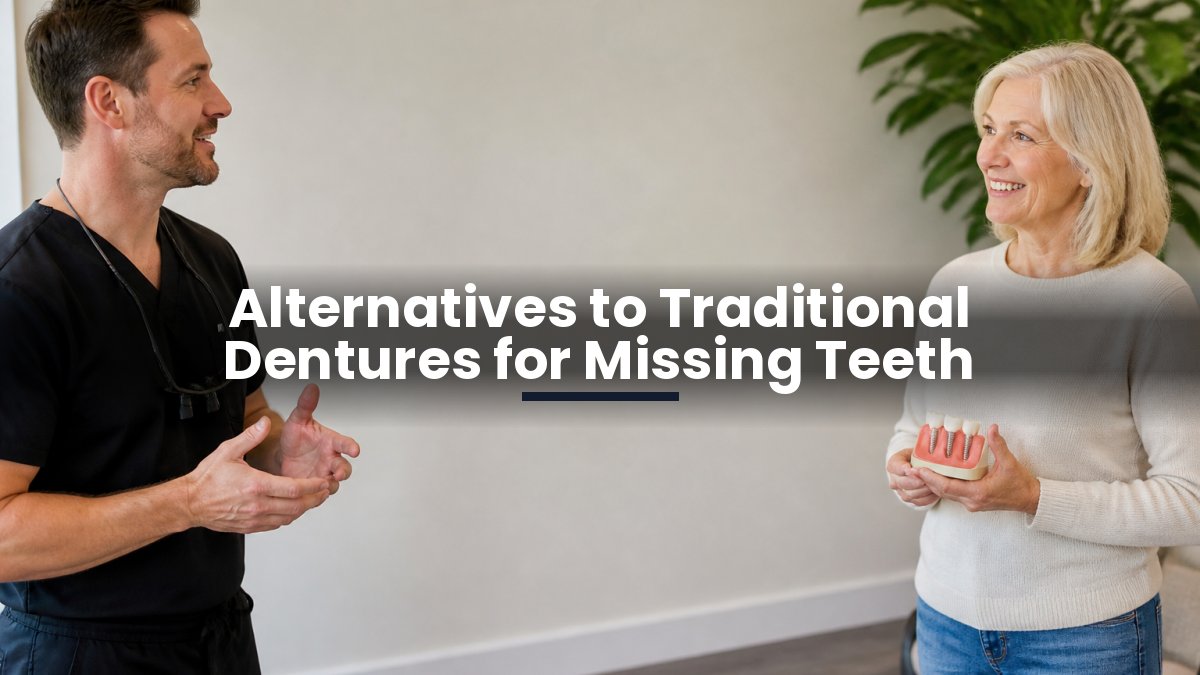
Alternatives to Traditional Dentures for Missing Teeth
Table of Contents
- Why People Seek Alternatives to Traditional Dentures
- Dental Implants vs Dentures: Core Differences
- Full-Arch Dental Implants for Complete Tooth Replacement
- Implant-Supported Dentures and Overdentures
- Fixed Dental Bridges for Single or Multiple Teeth
- Cost of Dental Implants vs Dentures: Long-Term Investment
- Candidacy, Risks, and Recovery Timelines
- Maintenance and Daily Care for Each Option
- Frequently Asked Questions
Last Updated: October 17, 2026
Why People Seek Alternatives to Traditional Dentures
When you're missing teeth, traditional dentures represent one path forward, but alternatives to traditional dentures for missing teeth offer better options. Many people who've worn conventional removable dentures find them uncomfortable, unstable, or simply incompatible with their lifestyle. They slip during conversation. They require constant adjustment. They make eating certain foods impossible. This is why so many patients actively seek alternatives to traditional dentures for missing teeth that offer better stability, comfort, and functionality.
At Trinity Dental Arts, we understand how the right tooth replacement option transforms not just how someone eats or speaks, but their confidence and quality of life. The good news is that modern dentistry offers several solutions that address the real frustrations people experience with removable dentures. From fixed bridges to implant-supported systems, each alternative works differently and suits different situations.
Understanding your options isn't just about choosing between removable and fixed teeth. It's about matching the solution to your specific needs, timeline, budget, and oral health. Some alternatives work best if you're missing one tooth. Others excel when you've lost multiple teeth or your entire arch. Some require significant healing time. Others deliver results in days.
Dental Implants vs Dentures: Core Differences
The fundamental distinction between dental implants and traditional dentures comes down to how they stay in place and function. Dental implants are artificial tooth roots surgically placed into your jawbone, providing a permanent anchor for replacement teeth. Dentures, by contrast, rest on your gums and rely on suction and adhesive to stay put.
Implants integrate with your bone over time through a process called osseointegration. Once healed, they function like natural teeth because they're anchored directly to your jaw. You bite and chew with full force. They don't move. They don't require special cleaning routines beyond regular brushing and flossing. Dentures, meanwhile, need to be removed daily, soaked, and cleaned. They can shift while you're eating or speaking.
For single missing teeth or small gaps, a dental bridge offers a fixed middle ground. It doesn't require implants or surgery, but it does require grinding down adjacent healthy teeth to support the prosthetic tooth. It's a permanent solution that looks and functions like a natural tooth, but it sacrifices healthy tooth structure.
The choice between these approaches depends on how many teeth you're missing, where they're located, how much bone you have, your timeline, and what you can invest.
Full-Arch Dental Implants for Complete Tooth Replacement
When you've lost all or most of your teeth, full-arch dental implants represent the most permanent and functional solution available. Instead of replacing individual teeth, this approach uses a series of implants to support an entire arch of replacement teeth, either your upper jaw, lower jaw, or both.
Full-arch implants feel and function like natural teeth because they're anchored directly to your jawbone. You don't remove them. You don't use adhesive. You brush and floss them like natural teeth. The stability is complete, which means you can eat virtually anything without worry.
The treatment typically involves placing 4 to 8 implants along your jaw, depending on bone volume and the specific system used. Once implants are placed, they integrate with bone over several months. During this healing period, you may wear a temporary denture. Once integration is complete, your permanent replacement teeth are attached to the implants.
All-on-4 and All-on-6 Systems
Two popular approaches for full-arch replacement have emerged as the industry standard: All-on-4 and All-on-6 systems. Both use strategically placed implants to support a complete arch of teeth.
All-on-4 uses four implants per arch, two at the front of your jaw and two angled toward the back. This approach works well for patients with moderate bone volume. It's less invasive than traditional implant placement, which means shorter surgery time and potentially faster healing. The four implants are positioned to maximize contact with available bone, making it viable even if you've experienced some bone loss.
All-on-6 uses six implants per arch and provides additional support and stability. It's ideal for patients with good bone volume or those who want maximum durability and longevity. The extra implants distribute bite force more evenly, which can extend the lifespan of your replacement teeth and reduce stress on individual implants.
Both systems can deliver same-day or next-day temporary teeth, which means you don't have to wait months for replacement teeth. Trinity Dental Arts specializes in same-day full-arch teeth using advanced technology and in-house lab services.
Implant-Supported Dentures and Overdentures
If you're missing all your teeth but implant-supported fixed teeth aren't right for you, whether due to budget, timeline, or personal preference, implant-supported dentures offer a middle path. These are removable dentures, but instead of resting on gums alone, they're supported by and attached to implants.
An implant-supported overdenture typically uses 2 to 4 implants per arch. The denture snaps onto these implants using special attachments, which keeps it stable and secure. You can remove it for cleaning, but it stays in place during eating and speaking because it's locked to the implants. This eliminates the slipping and shifting that frustrates people with traditional removable dentures.
The advantage over traditional dentures is significant: better stability, improved chewing ability, and less bone loss over time because the implants stimulate the jaw. The advantage over fixed full-arch implants is cost and simplicity, fewer implants are needed, and the procedure is less complex. The trade-off is that you still remove the denture daily, which some patients prefer and others don't.
Fixed Dental Bridges for Single or Multiple Teeth
When you're missing one to three consecutive teeth, a fixed dental bridge is often the most practical alternative to implants. A bridge literally bridges the gap by anchoring a prosthetic tooth (or teeth) to the teeth on either side of the gap.
The bridge requires preparing the adjacent teeth by removing a small amount of tooth structure, then placing a crown on each prepared tooth. The prosthetic tooth or teeth hang between these crowns, replacing the missing tooth or teeth. Once cemented in place, the bridge is permanent, you don't remove it.
Bridges are less invasive than implants because they don't require surgery or bone integration time. You can have a bridge completed in a few weeks. They're also typically less expensive than implants. The downside is that you sacrifice healthy tooth structure on adjacent teeth, and the bridge doesn't prevent bone loss beneath the missing tooth because there's no implant to stimulate the bone.
Bridges work best when the teeth on either side of the gap are healthy and strong enough to support the bridge, and when you're replacing only a few consecutive teeth. If you're missing many teeth or teeth in multiple locations, bridges become impractical.
Cost of Dental Implants vs Dentures: Long-Term Investment
Understanding the financial picture requires looking beyond the initial price tag. While traditional dentures typically cost less upfront, the long-term total cost of ownership often favors implants when you factor in replacement, adjustment, and maintenance over decades.
Traditional dentures may seem affordable initially, but they require replacement every 5 to 8 years as your jaw bone shrinks and the denture no longer fits properly. Each replacement costs money. You'll also need adhesive, cleaning solutions, and regular adjustments. Over 20 years, these costs accumulate significantly.
Dental implants have a higher upfront cost, but they're designed to last 20 years or more, often a lifetime with proper care. Once placed and healed, they require no special maintenance beyond regular brushing, flossing, and dental checkups. There's no daily removal, no adhesive, no replacement cycle.
Implant-supported dentures fall between these two extremes. They cost more than traditional dentures but less than fixed full-arch implants. They require replacement less frequently than traditional dentures but more often than fixed implants.
For a realistic picture, consult with Trinity Dental Arts about your specific situation. Our team can outline the investment for each option and help you understand the long-term financial and functional implications.
Candidacy, Risks, and Recovery Timelines
Not everyone is a candidate for every tooth replacement option. Your eligibility depends on bone volume, overall health, the number and location of missing teeth, and your gum health.
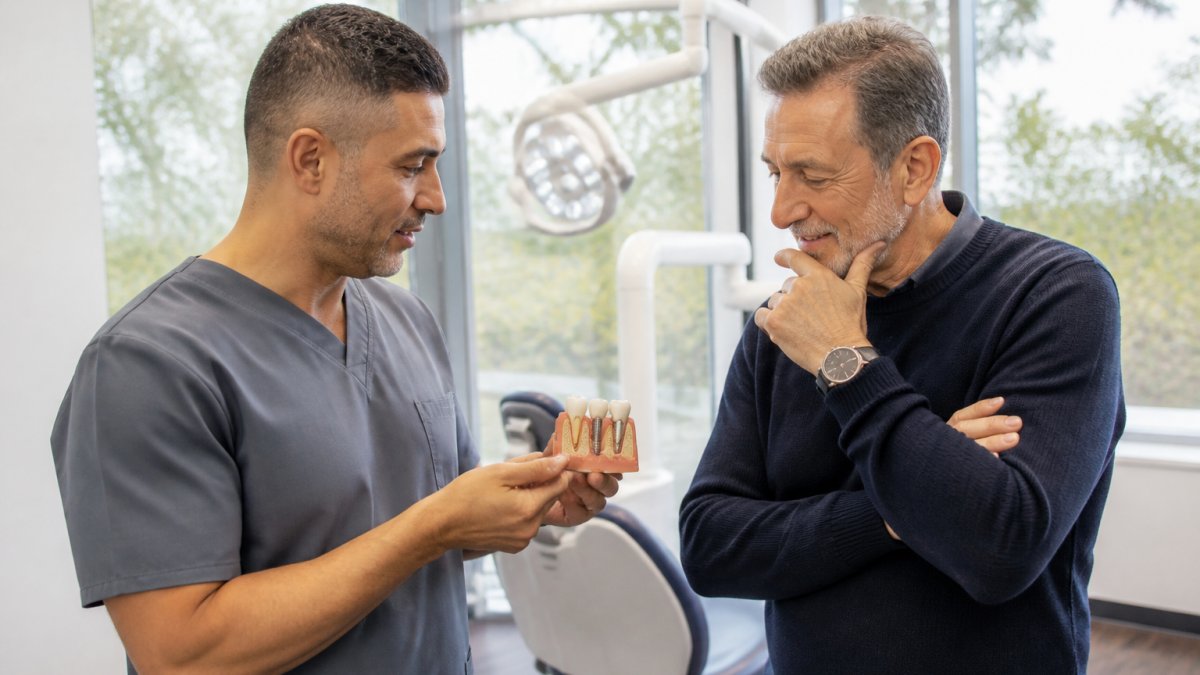
Dental implants require adequate bone volume. If you've worn dentures for years or experienced significant bone loss, you may need bone grafting before implants can be placed. This adds time and cost to the process.
Fixed bridges require healthy adjacent teeth. If the teeth next to your gap are decayed, weak, or already heavily restored, they may not support a bridge.
All patients should have good gum health. Gum disease compromises the success of any tooth replacement option.
Recovery timelines vary significantly. Traditional dentures are ready to wear within a few weeks. Fixed bridges typically take 2 to 3 weeks.
Risks are generally low with modern techniques, but they exist. Implant placement carries typical surgical risks: infection, nerve damage, or implant failure. Bridges can develop decay around the margins if not properly maintained. Dentures can cause sore spots and require ongoing adjustment.
Trinity Dental Arts works with you to assess your candidacy, discuss realistic timelines, and explain potential complications specific to your situation. Our board-certified implantologist evaluates your bone structure, gum health, and overall health to recommend the option most likely to succeed for you.
Maintenance and Daily Care for Each Option
How you care for your replacement teeth affects how long they last and how well they function. Different options require different routines.
Dental implants require the least maintenance. Brush and floss them like natural teeth. See your dentist twice yearly for checkups. Avoid smoking and excessive alcohol, which can compromise osseointegration and long-term implant health.
Fixed bridges require careful flossing around and under the bridge to prevent decay on the supporting teeth. Use a floss threader or water flosser to clean beneath the bridge. Brush normally. Avoid chewing hard foods directly on the bridge.
Traditional dentures require daily removal and soaking in cleaning solution. Brush them gently with a soft denture brush. Rinse after eating. Store them in water or denture solution overnight. Handle them carefully to avoid dropping and breaking them.
Implant-supported dentures combine both routines. The denture itself requires daily removal and cleaning like a traditional denture. However, the implants anchoring it require the same care as standalone implants, brushing, flossing, and regular dental visits.
Choosing an alternative to traditional dentures for missing teeth is a personal decision that depends on your specific situation, preferences, and goals. Dental implants offer permanence and natural function but require surgery and time.
Frequently Asked Questions
What are the best alternatives to traditional dentures for missing teeth?
Dental implants, fixed bridges, and implant-supported dentures are the primary alternatives to traditional dentures. Dental implants offer the most stable and permanent solution for single or multiple missing teeth, while fixed bridges replace one or more teeth without surgery. Implant-supported dentures combine the stability of implants with the coverage of a denture, making them ideal for patients missing all their teeth who want better security than traditional dentures provide.
How do dental implants vs dentures compare for comfort and function?
Dental implants feel and function like natural teeth, offering superior chewing ability and comfort because they integrate with the jawbone. Traditional dentures rest on gum tissue and can shift during eating or speaking, requiring adjustment and denture adhesive. Implants eliminate the need for adhesive and provide consistent performance. However, implants require surgery and bone volume, while dentures are non-invasive. For patients with adequate bone and good oral health, implants typically deliver better long-term comfort.
What is the difference between implant-supported dentures and traditional dentures?
Implant-supported dentures attach to dental implants surgically placed in the jawbone, providing superior stability and preventing the shifting and slipping common with traditional dentures. Traditional dentures rest only on gum tissue and rely on suction and adhesive for retention. Implant-supported dentures preserve more jawbone, reduce bone loss over time, and allow patients to eat harder foods with confidence. They require implant surgery but eliminate many of the daily management issues associated with removable traditional dentures.
How much do full-arch dental implants cost compared to traditional dentures?
Full-arch dental implants typically require a larger initial investment than traditional dentures, but offer better long-term value. Traditional dentures have lower upfront costs but require ongoing adjustments, relines, replacements every 5-8 years, and daily maintenance with adhesives and cleaners. Dental implants have higher initial expense but can last 20+ years with proper care and minimal maintenance. The total cost of ownership, including replacements and maintenance, often favors implants over decades. Contact your dental provider for specific pricing and financing options.