 comparison
Adult Braces in Trinity: Options, Costs & Timeline
Table of Contents
- Adult Orthodontic Treatment Options in Trinity
- Braces vs Invisalign for Adults: A Direct Comparison
- How Long Do Adult Braces Take? Treatment Duration and Frequency
- Adult Braces Cost With Insurance in Florida
- Orthodontic Consultation Questions to Ask Your Provider
- Candidacy, Dental Health, and Retreatment Considerations
- Finding the Right Adult Braces Provider in Trinity
- Frequently Asked Questions
Last Updated: October 14, 2026
Adult Orthodontic Treatment Options in Trinity
Adults seeking to straighten their teeth now have more choices than ever, and adult braces trinity options range from traditional metal brackets to nearly invisible clear aligners. Whether you've always wanted a healthier smile or your teeth have shifted over time, adult braces trinity options range from traditional metal brackets to nearly invisible clear aligners. At Trinity Dental Arts, we understand that orthodontic treatment isn't just for teenagers; it's a practical investment in oral health and confidence at any age.
The decision between treatment types depends on your lifestyle, budget, timeline, and how visible you want your orthodontics to be. Let's break down what's actually available and what matters most when comparing them.
Traditional Metal Braces
Metal braces remain the most effective option for complex tooth movements and severe bite problems. They use stainless steel brackets bonded to each tooth, connected by a wire that applies steady pressure to guide teeth into alignment.
What works with metal braces: they're durable, require no patient compliance (you can't forget to wear them), and handle even difficult cases. The cost tends to be lower than clear alternatives. Treatment typically moves teeth at a predictable pace, and your orthodontist can make adjustments at regular appointments.
What doesn't: they're visible, they require careful cleaning around brackets and wires, and eating certain foods becomes complicated. Many adults avoid them specifically because they're noticeable. If you eat sticky or hard foods regularly, metal braces create extra maintenance burden.
Ceramic Braces
Ceramic braces work identically to metal braces but use tooth-colored or clear brackets instead of stainless steel. The wire may still be visible, but the brackets blend into your teeth much better.
The tradeoff is straightforward: ceramic brackets cost more than metal ones, and they're slightly more fragile. If you have a habit of biting down hard or grinding your teeth, ceramic can chip. For adults who want the reliability of fixed braces without the metal look, they're a reasonable middle ground.
Clear Aligners and Invisalign
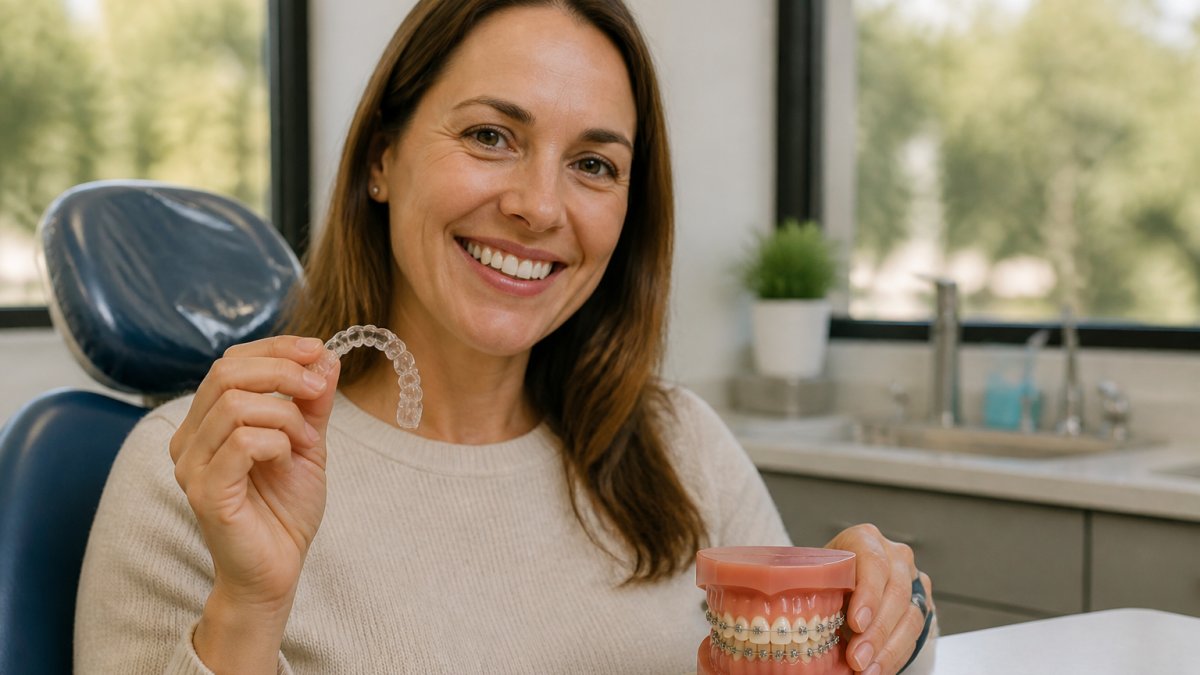
Clear aligners are removable plastic trays that gradually shift teeth. You wear a new set every week or two, and each set is engineered to move your teeth incrementally toward the final position.
The appeal is obvious: they're nearly invisible, removable for eating and cleaning, and require no wire adjustments. Many adults prefer them because treatment feels less intrusive.
The limitation: aligners work best for mild to moderate crowding or spacing. Complex bite problems, severe rotations, or cases requiring vertical tooth movement often need fixed braces instead.
Braces vs Invisalign for Adults: A Direct Comparison
Choosing between fixed braces and clear aligners comes down to three factors: how complex your case is, how visible you want treatment to be, and how much daily management you're willing to handle.
Effectiveness and Complexity
Fixed braces, whether metal or ceramic, move teeth in three dimensions. They can intrude teeth (pull them up into the jaw), extrude them (push them down), rotate them, and close gaps with precision. Orthodontists can make real-time adjustments at each appointment. For severe crowding, bite problems, or cases where teeth need to move vertically, fixed braces are more reliable.
Clear aligners excel at horizontal and vertical movements but struggle with intrusion and complex rotations. They work best when crowding is mild to moderate and your bite is relatively close to normal. If your case requires moving teeth in ways aligners can't handle, your orthodontist may recommend braces instead, or a hybrid approach starting with aligners and finishing with braces.
Comfort, Appearance, and Lifestyle
Braces create initial discomfort as your teeth adjust to pressure. Brackets can irritate your lips and cheeks for the first week or two. You'll need to avoid sticky candies, popcorn, nuts, and hard foods. Cleaning requires a special floss threader and extra time. Most people adjust quickly, but the maintenance is real.
Aligners feel smoother initially, no sharp brackets or wires. You remove them to eat, so there's no food restriction. Cleaning is easier: just take out the trays, brush normally, and rinse the aligners. The catch: you must remember to wear them consistently.
Appearance-wise, aligners win decisively for adults concerned about looking professional. They're nearly invisible. Fixed braces are visible, though ceramic braces are less noticeable than metal ones.
| Treatment Type | Visibility | Food Restrictions | Daily Maintenance | Best For |
|---|---|---|---|---|
| Metal Braces | High | Yes | Moderate (floss threader, careful brushing) | Complex cases, severe crowding, budget-conscious patients |
| Ceramic Braces | Low | Yes | Moderate (floss threader, careful brushing) | Adults wanting less visible braces, moderate cases |
| Clear Aligners | Minimal | No | Low (remove, eat normally, clean aligners) | Mild to moderate crowding, adults prioritizing discretion |
How Long Do Adult Braces Take? Treatment Duration and Frequency
Most adult orthodontic treatment takes 18 to 36 months. The exact timeline depends on how much your teeth need to move, how complex your bite is, and which treatment you choose.
Metal and ceramic braces typically move teeth faster than aligners. Aligners move teeth more slowly, which some orthodontists argue is gentler on the roots, though the difference is marginal for most cases.
Your commitment matters. You'll need appointments every 4 to 8 weeks for braces (the orthodontist adjusts wires and checks progress). With aligners, appointments are typically every 6 to 10 weeks, though some practices offer remote monitoring.
Adult teeth move more slowly than children's teeth because your jaw is fully developed. Don't expect dramatic shifts in the first few months, patience is part of the process.
Adult Braces Cost With Insurance in Florida
Cost varies widely based on complexity, treatment type, and your insurance plan. Contact your orthodontist directly for a treatment estimate specific to your case, as pricing depends on the extent of tooth movement needed and which appliances are recommended.
Insurance Coverage and Payment Options
Many dental insurance plans cover a portion of orthodontic treatment for adults, though coverage limits and annual maximums differ by policy. Read your policy carefully: some exclude adults entirely, while others cover them the same as children.
If you don't have insurance or your plan doesn't cover orthodontics, ask about payment plans. Many practices offer monthly installment options, making treatment more manageable. Some also offer discounts for upfront payment.
Trinity Dental Arts works with patients to understand their coverage and explore flexible financing options. We recommend getting a detailed treatment estimate and checking your insurance benefits before committing to a plan.
Orthodontic Consultation Questions to Ask Your Provider
Before starting treatment, ask your orthodontist these questions to make an informed decision:
- What's your diagnosis of my specific case, and which treatment options can address it?
- How long do you estimate treatment will take, and what factors could extend it?
- What's the total cost, what does insurance typically cover, and what payment plans do you offer?
- How often will I have appointments, and how long do they take?
- What happens if I move or want to switch providers partway through?
- How do you handle emergencies, and what's the after-hours contact process?
- What's your experience treating cases like mine specifically?
- Will you take X-rays and photos to track progress, and can I see them?
Candidacy, Dental Health, and Retreatment Considerations
Adult Candidacy and Existing Dental Conditions
Almost all adults can have orthodontic treatment, but some dental conditions affect your options. If you have gum disease, your orthodontist will likely recommend treating that first, moving teeth on unhealthy gums can worsen the problem.
Missing teeth, previous root canals, and large fillings don't automatically disqualify you, but they require careful treatment planning. Your orthodontist may recommend implants or bridges before or after braces to fill gaps. Existing crowns can be bonded with brackets, though some older materials don't hold brackets well.
The key: be honest about your dental history. Your orthodontist needs to know about gum disease, bone loss, previous orthodontics, and any teeth you've lost. This information shapes which treatment approach works best and what timeline is realistic.
Orthodontic Relapse and Retreatment
Teeth naturally want to drift back toward their original positions, a process called relapse. This is why retention is crucial. Most orthodontists recommend wearing a retainer every night indefinitely, or at minimum for several years after braces come off.
If you wore braces years ago and your teeth have shifted, retreatment is possible. It's typically faster than the original treatment because your teeth have already been moved once. Some people need just a few months of braces or aligners to re-correct minor shifts; others need more extensive retreatment.
The cost of retreatment is usually lower than initial treatment, but it's still an investment. The best way to avoid it: wear your retainer as directed. Most relapse happens in the first year after treatment, so consistent retention during that time is critical.
Finding the Right Adult Braces Provider in Trinity
Choosing an orthodontist matters as much as choosing the treatment type. You'll spend 18 to 36 months working with this person, attending regular appointments, and trusting their clinical judgment.
Look for an orthodontist who has specific experience treating adults. Ask how many adult patients they see annually and whether they offer the treatment types you're considering.
Ask about their communication style. Do they explain your diagnosis clearly? Will they show you before-and-after photos of similar cases? Can you ask questions without feeling rushed?
At Trinity Dental Arts, we bring specialized expertise to adult cases. As a board-certified implantologist and comprehensive dental practice, we understand how orthodontics fits into your broader oral health picture.
Adult braces in Trinity offer real solutions for teeth that have shifted or never aligned properly.
Frequently Asked Questions
How much do adult braces cost in Trinity with insurance?
Adult braces costs vary based on treatment type, complexity, and your insurance plan. Dental insurance may cover a portion of orthodontic treatment, though coverage limits and annual maximums differ by policy. Contact your insurance provider to understand your specific benefits. Trinity Dental Arts offers Invisalign as part of its cosmetic enhancement services and can provide treatment estimates after a consultation.
Are braces or Invisalign better for adults?
Neither is universally 'better', it depends on your specific needs. Traditional or ceramic braces handle complex tooth movements and severe bite problems more effectively. Clear aligners like Invisalign offer greater convenience, removability, and aesthetic appeal, making them popular with professionals and adults concerned about appearance. Braces require careful eating and oral hygiene habits; aligners demand consistent wear (22+ hours daily) to be effective. Your orthodontist can recommend the best option after evaluating your bite, tooth position, and lifestyle.
How long does adult orthodontic treatment take?
Adult braces typically take 18 to 36 months, depending on the complexity of tooth movement and bite correction needed. Clear aligners often complete in 12 to 24 months for mild to moderate cases. Adults may require longer treatment than teenagers because adult bone density resists tooth movement. Your orthodontist will provide a personalized timeline during your consultation. Consistent follow-up appointments every 6 to 8 weeks help keep treatment on schedule.
What should I ask at an orthodontic consultation?
Ask about treatment options available for your specific case, estimated treatment duration, appointment frequency, total cost and payment plans, insurance coverage, and what happens if relapse occurs. Inquire about the provider's experience with adult patients, their approach to managing dental anxiety, and how they handle emergencies. Request before-and-after examples and ask about their in-house capabilities, Trinity Dental Arts, for example, features an in-house lab for same-day crowns and precision work. Understand daily care requirements, dietary restrictions, and any lifestyle adjustments needed.
Can adults get braces if they've had orthodontic treatment before?
Yes, adults can undergo orthodontic retreatment if their teeth have shifted over time, a condition called orthodontic relapse. This can happen years after the original treatment ended. Retreatment is often shorter than initial treatment because the teeth have already been moved once. Your orthodontist will evaluate the extent of relapse and recommend whether braces, aligners, or other options are most appropriate. Wearing a retainer as prescribed after your first treatment significantly reduces the risk of relapse.