 blog
Alternatives to Braces for Crooked Teeth
Table of Contents
- Why People Seek Alternatives to Traditional Braces
- Clear Aligners for Crooked Teeth: How They Work and What to Expect
- Porcelain Veneers for Crooked Teeth: Cosmetic Correction
- Dental Bonding and Composite Resin Solutions
- Ceramic and Lingual Braces: Discreet Orthodontic Options
- Comparing Candidacy, Cost, and Treatment Timelines
- Risks, Trade-offs, and When Braces Are Still Necessary
- Choosing the Right Option for Your Smile
- Frequently Asked Questions
Last Updated: October 9, 2026
Why People Seek Alternatives to Traditional Braces
Alternatives to braces have become increasingly popular as patients explore options beyond metal brackets and wires.
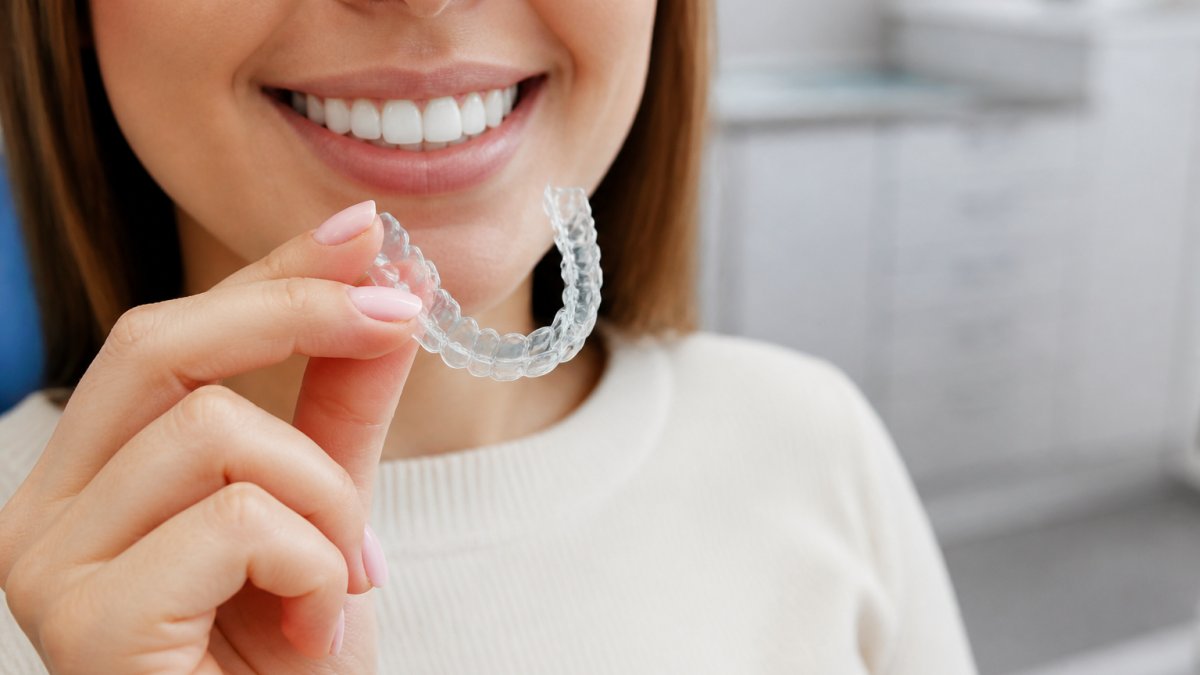
Modern dentistry offers several proven alternatives, clear aligners, veneers, bonding, ceramic braces, and more. The challenge is matching the right treatment to your needs, budget, and timeline.
This guide covers the most effective alternatives to braces for crooked teeth, including how each works and the trade-offs to know before deciding.
Clear Aligners for Crooked Teeth: How They Work and What to Expect
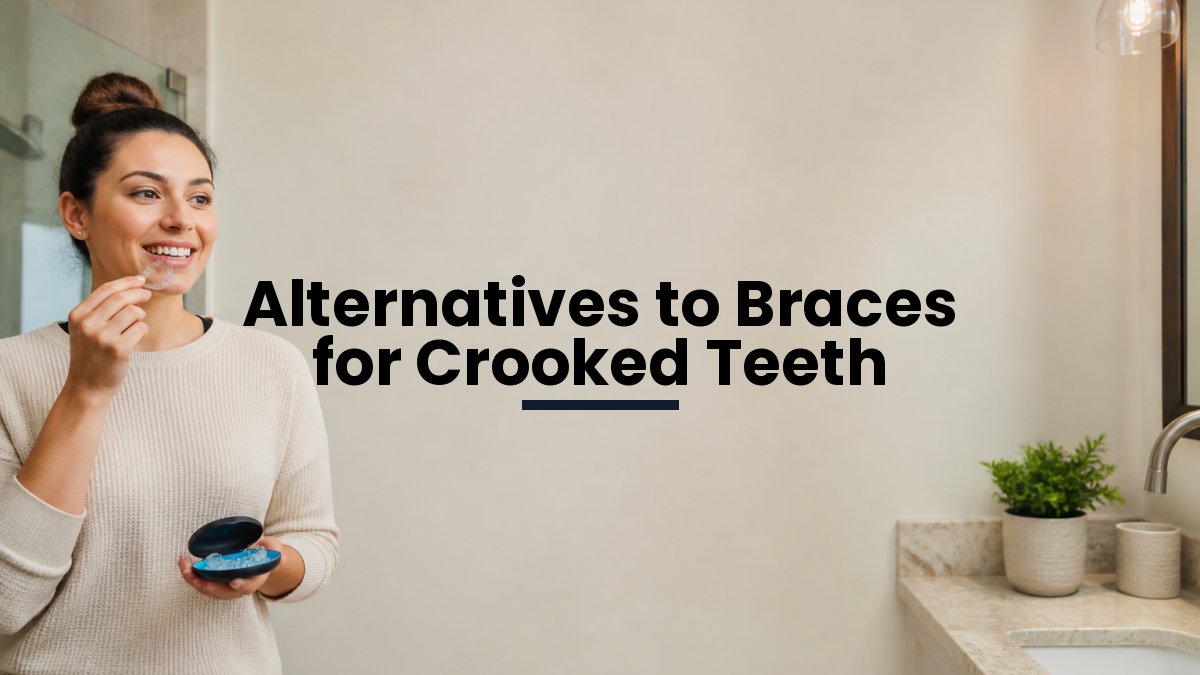
Clear aligners are custom-made transparent trays that gradually move teeth into alignment. Unlike braces, they're removable, nearly invisible, and require no metal or wires. Sequential trays apply gentle, consistent pressure to shift teeth over time.
The process starts with digital imaging. A treatment plan maps the exact movements needed, and a lab manufactures your custom trays.
Clear aligners work best for mild to moderate crowding and spacing. They're less effective for severe bite problems or complex rotations, and may not grip properly on bridges or implants.
How Long Do Clear Aligners Take to Straighten Teeth
Clear aligners typically take 6 to 18 months, depending on how much movement is needed and how consistently you wear the trays. Most patients see noticeable results within 3 to 4 months.
Consistency matters enormously, aligners only work when worn. The recommended protocol is 20 to 22 hours per day; removing them frequently slows progress. If you won't commit to that schedule, aligners may frustrate you.
Clear Aligners vs Braces: Key Differences
| Factor | Clear Aligners | Traditional Braces |
|---|---|---|
| Visibility | Nearly invisible | Highly visible |
| Removability | Yes, easily | No |
| Eating restrictions | None | Yes, many foods avoided |
| Cleaning teeth | Easier | More difficult |
| Treatment time | 6-18 months typically | 18-36 months typically |
| Comfort | Generally comfortable | Can cause soreness |
| Cost | Variable by case | Generally lower than aligners |
| Effectiveness on severe cases | Limited | Excellent |
The key trade-off: aligners offer discretion and convenience, but braces deliver more powerful tooth movement for complex cases.
Porcelain Veneers for Crooked Teeth: Cosmetic Correction
Porcelain veneers are a cosmetic approach, not an orthodontic one.
Veneers work well for mild misalignment, discoloration, and gaps, delivering immediate results in two to three appointments.
The catch is irreversibility: preparing a tooth for a veneer removes a thin layer of enamel that doesn't grow back, and veneers need periodic replacement for life.
Veneers cost more upfront than aligners and require skilled cosmetic dentistry to look natural.
Dental Bonding and Composite Resin Solutions
Dental bonding uses tooth-colored composite resin to reshape teeth and close gaps. A dentist applies the resin directly and hardens it with a special light, faster and less expensive than veneers, with no tooth preparation.
Bonding works for small gaps, minor chips, and slight crowding, but not severe misalignment. The resin is less durable than porcelain, it can stain, chip, and need replacement every 5 to 10 years.
Think of bonding as a semi-permanent cosmetic fix, a practical starting point for minor concerns and limited budgets.
Ceramic and Lingual Braces: Discreet Orthodontic Options
If you need the power of traditional braces but want them less visible, ceramic and lingual braces are worth considering.
Ceramic braces use tooth-colored brackets instead of metal. Wires are still visible, but brackets blend better with teeth.
Lingual braces are placed on the back (tongue side) of your teeth, making them completely hidden.
Both maintain the power of traditional braces while improving discretion, take 18 to 36 months, and require the same dietary restrictions and oral hygiene challenges as metal braces.
Comparing Candidacy, Cost, and Treatment Timelines
Choosing the right alternative depends on three factors: what your teeth need, what you can afford, and how long you'll wait.
| Option | What it actually does | Best suited for | Typical treatment time | Relative cost |
|---|---|---|---|---|
| Clear aligners | Moves teeth | Mild to moderate crowding, spacing, some bite correction | 6-18 months | Mid to high |
| Metal braces | Moves teeth | Mild to severe cases, complex bites | 18-36 months | Low to mid |
| Ceramic braces | Moves teeth | Same as metal, less visible | 18-36 months | Mid to high |
| Lingual braces | Moves teeth | Mild to severe, fully hidden | 18-36 months | High |
| Porcelain veneers | Covers teeth only | Mild misalignment plus discoloration or shape concerns | 2-3 visits | High |
| Dental bonding | Covers teeth only | Small gaps, chips, slight crowding | 1 visit | Low |
| Retainers | Holds or makes minor shifts | Relapse prevention, tiny movements | Ongoing | Low |
| Palatal expander | Widens the upper arch | Crossbite and crowding in growing patients | Months to a year+ | Mid |
Candidacy. The dividing line is function, not appearance.
A few candidacy details worth knowing before you commit:
- Clear aligners struggle with severe rotations, large gaps, and significant bite correction. They also grip poorly on crowns, bridges, and implants, which can limit their use if you have existing dental work.
- Veneers require removing a thin layer of enamel, which is permanent. They are a poor fit for anyone with active decay, gum disease, or heavy clenching and grinding.
- Bonding is reversible in the sense that it can be removed, but the resin is the least durable option and is best reserved for small, isolated concerns.
- Palatal expanders work best in growing patients whose sutures have not yet fused. In adults, expansion usually requires a surgical component.
Cost. Fees vary widely by region, provider, and case complexity, so treat any number as a starting point, not a quote. As a general pattern:
- Bonding is the least expensive, often a few hundred dollars per tooth.
- Clear aligners commonly run from roughly $3,000 to $8,000 depending on the number of trays and case difficulty.
- Metal braces typically fall in the $3,000 to $7,000 range; ceramic braces run higher because of the bracket material.
- Lingual braces are usually the most expensive orthodontic option, often $8,000 and up, partly because fewer providers offer them.
- Porcelain veneers are priced per tooth and commonly range from about $900 to $2,500 per tooth, so a full smile can exceed the cost of orthodontics.
Insurance. Dental and orthodontic coverage is usually separate.
Financing. Most practices offer in-house payment plans, and third-party financing (such as CareCredit) is common for larger cases.
Timeline. If you have a deadline, a wedding, graduation, job interview, the timeline drives the choice.
American Dental Association, orthodontics and dental benefits overview
American Association of Orthodontists, find an orthodontist and understand treatment options
Risks, Trade-offs, and When Braces Are Still Necessary
Every alternative carries trade-offs, and the ones that matter most are irreversible. This section covers what can go wrong and when traditional braces remain the better, sometimes only, choice.
Irreversible trade-offs
Enamel removal for veneers. Preparing a tooth for a veneer permanently removes a thin layer of enamel, which does not regenerate.
Bonding wear and staining. Composite resin is porous compared to porcelain, absorbing pigment from coffee, tea, red wine, and tobacco, and chipping more easily.
Lingual brace adaptation. Lingual braces sit against the tongue, affecting speech and swallowing for the first few weeks.
Risks of unsupervised tooth movement
This is the risk most guides omit. Clear aligners are now widely available through direct-to-consumer and remote-monitoring models, lower cost, no office visits, trays shipped to your door. But tooth movement is a biological process that needs professional oversight.
- Moving teeth without addressing the bite can create or worsen problems with the jaw joint, chewing, and uneven wear.
- Root resorption, shortening of the tooth roots, can occur with any orthodontic movement, and it is more likely when forces are poorly controlled or treatment runs longer than planned.
- Gum recession and bone loss can follow if teeth are moved beyond the limits of the supporting bone.
- Relapse is common when treatment ends without a retainer plan, and relapse is harder and more expensive to correct the second time.
Why professional monitoring matters
A remote aligner program isn't automatically unsafe, but quality depends on built-in clinical oversight. Ask directly: Who reviews my scans or photos, and how often? What happens if my teeth don't track? Is there an in-person exam with imaging and a bite assessment before treatment?
A proper diagnostic workup includes a visual exam, dental radiographs or a panoramic image, intraoral scans or impressions, and an assessment of how your upper and lower teeth meet.
When braces are still the better choice
Traditional braces remain the standard for several situations:
- Severe crowding or rotations that require sustained, precisely controlled force.
- Complex bite problems, significant overbite, underbite, open bite, or crossbite, especially when jaw growth or surgery is involved.
- Cases involving missing teeth, impacted teeth, or teeth that need to be moved into an extraction site.
- Patients who cannot or will not commit to 20 to 22 hours of daily aligner wear. Braces work continuously, whether or not the patient remembers to put them in.
- Growing patients whose jaws are still developing and who may benefit from growth modification or expansion.
If an orthodontist recommends braces over aligners, it's usually about what will move your teeth safely and predictably, not convenience or cost.
The functional bottom line
Misaligned teeth aren't just cosmetic. Crowding and bite problems can contribute to uneven wear, gum inflammation, difficulty cleaning between teeth, jaw discomfort, and sometimes chewing or speech difficulties. Cosmetic fixes like veneers or bonding leave those functional issues in place; true orthodontic treatment, braces or aligners, addresses both appearance and function, which is why the diagnostic assessment matters more than the marketing.
American Association of Orthodontists, orthodontic treatment and safety information
Choosing the Right Option for Your Smile
The best alternative to braces depends on your situation.
For mild misalignment and strong commitment to consistency, clear aligners offer discretion and convenience. For severe cases or complex bites, traditional braces remain the gold standard.
At Trinity Dental Arts, we combine clinical expertise with modern technology to help you choose the right path.
The right alternative to braces isn't the most popular one, it's the one that solves your actual problem and fits your real life.
Straightening crooked teeth requires matching the right treatment to your needs. Trinity Dental Arts specializes in comprehensive dental care with advanced cosmetic enhancements, including same-day crowns and full mouth restoration.
Frequently Asked Questions
Can crooked teeth be fixed without braces?
Yes. Clear aligners, veneers, dental bonding, ceramic braces, and lingual braces all offer ways to address crooked teeth without traditional metal braces. The best option depends on the severity of misalignment, your budget, and how quickly you want results. Veneers and bonding work best for minor cosmetic concerns, while clear aligners and ceramic braces handle moderate to severe crowding. A consultation with a qualified orthodontist or cosmetic dentist can determine which alternative suits your specific situation.
How long do clear aligners take to straighten teeth?
Clear aligners typically take 6 to 18 months to straighten teeth, though some cases resolve in as little as 3 months for minor misalignment. Treatment duration depends on how much tooth movement is needed, how consistently you wear the aligners (ideally 20-22 hours daily), and your individual biology. More severe crowding or spacing issues naturally require longer treatment. Your dentist will provide a personalized timeline after evaluating your bite and alignment needs.
Are veneers a good alternative to braces for crooked teeth?
Veneers work well for mild cosmetic concerns like slight crowding, gaps, or discoloration, but they don't actually move teeth like braces or clear aligners do. Instead, they mask imperfections by covering the front surface. Veneers require permanent tooth preparation and have a lifespan of 7-15 years before replacement. They're ideal if you want immediate results and don't mind the irreversible nature of the procedure. For functional bite problems or severe misalignment, orthodontic solutions are more appropriate.
When are braces necessary instead of clear aligners?
Traditional braces are often necessary for severe crowding, significant bite problems, complex tooth rotations, or cases requiring precise three-dimensional control. Braces apply continuous pressure and are more effective for intricate movements that clear aligners cannot achieve. Patients with poor compliance (difficulty wearing aligners consistently) or certain anatomical factors may also benefit more from fixed braces. Your orthodontist can determine whether your specific alignment issue requires braces or whether clear aligners are sufficient.