 comparison
Implants vs Dentures for Missing Teeth: 2026 Guide
Table of Contents
- Implants vs Dentures: Quick Comparison
- What Are Dental Implants?
- What Are Dentures?
- Cost of Full Mouth Dental Implants vs Dentures
- Dental Implant Recovery Timeline and Healing
- Benefits of Implant-Supported Dentures
- Key Differences: Durability, Maintenance, and Long-Term Impact
- Which Option Is Right for You?
- Frequently Asked Questions
Last Updated: September 1, 2026
Implants vs Dentures: Quick Comparison
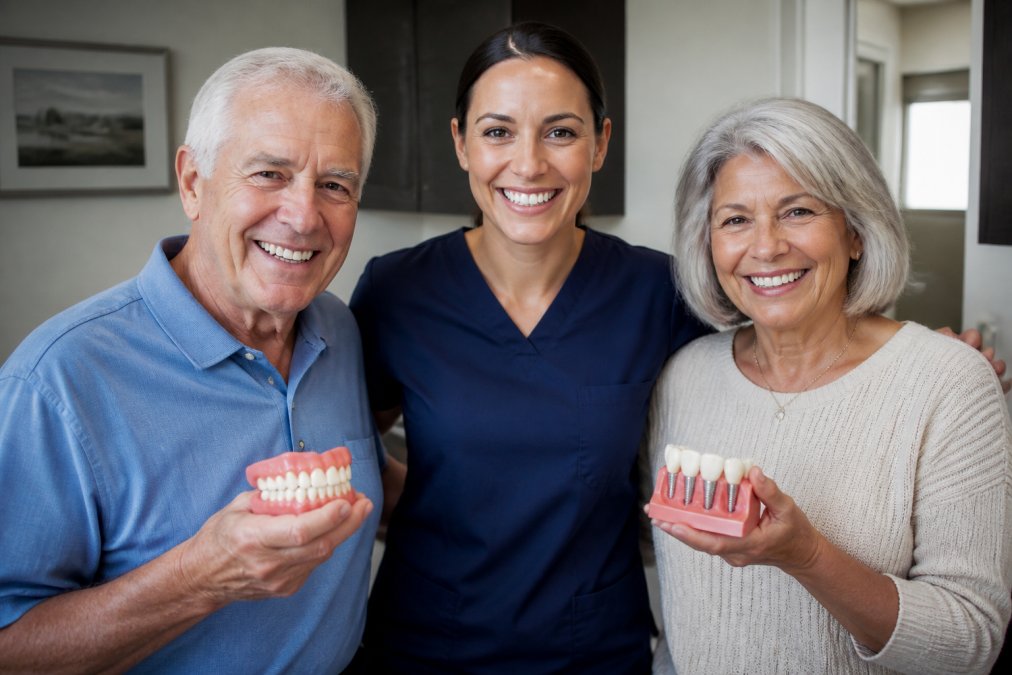
Choosing between implants and dentures affects how your teeth look, feel, and function for decades. Implants vs dentures comes down to three core trade-offs: permanence versus affordability, surgical commitment versus simplicity, and long-term bone preservation versus immediate function. Implants are surgically anchored replacements that function like natural teeth. Dentures are removable prosthetics that rest on your gums.
If you have adequate jawbone density, budget, and patience for a multi-month process, implants deliver superior long-term outcomes. If you need teeth fast, have limited finances, or prefer to avoid surgery, dentures solve the problem immediately. Implant-supported dentures split the difference, offering stability closer to implants at lower cost.
What Are Dental Implants?
Dental implants are surgically placed titanium posts that anchor replacement teeth directly into your jawbone. The post fuses with the bone through osseointegration, creating a permanent foundation that functions like a natural tooth root. A crown or bridge is then attached to the post.
Implants work because titanium integrates with bone tissue without triggering rejection. Once the implant bonds with the jawbone, typically 3 to 6 months after placement, it becomes as stable as a natural root.
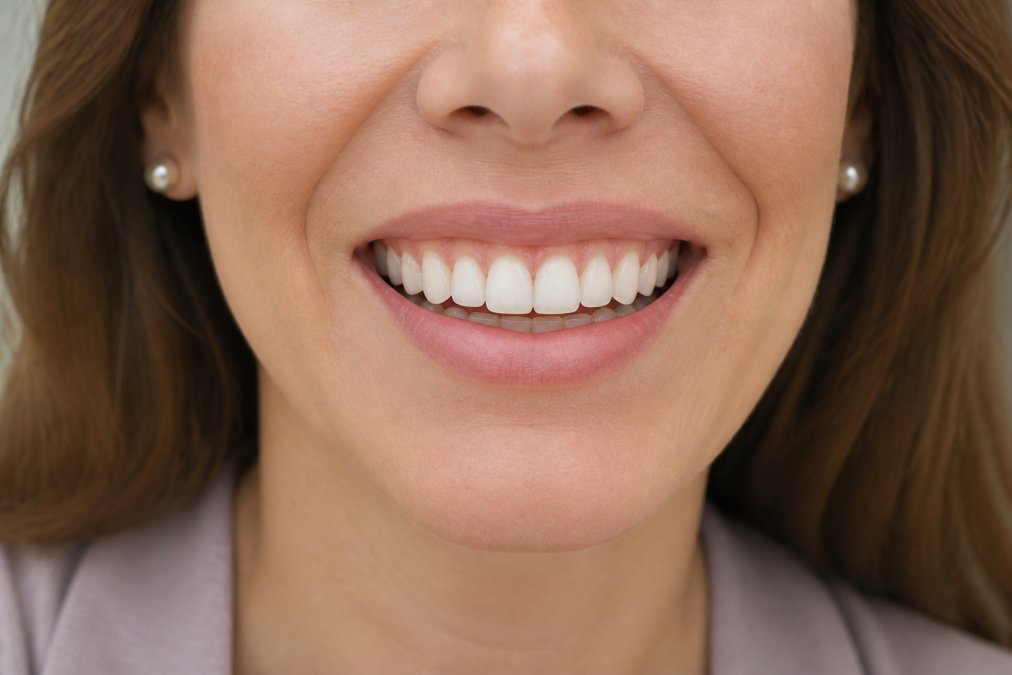
The surgical procedure involves placing the titanium post into the jawbone, waiting for osseointegration to complete, then attaching the crown or bridge. For patients with significant tooth loss, All-on-4 dental implants use just four strategically angled implants to support an entire row of teeth, often eliminating the need for bone grafting and providing immediate function with a temporary restoration.
Implants require adequate jawbone density to succeed. If bone has resorbed significantly, you may need a bone graft before implant placement. Trinity Dental Arts offers in-house lab services and board-certified implant expertise to handle complex cases requiring bone grafting.
The long-term stability of implants is their defining advantage. Unlike dentures, which shift and require periodic adjustments, implants don't move. They preserve jawbone structure because the titanium post stimulates bone the way a natural root does, preventing the bone loss that occurs under dentures.
What Are Dentures?
Dentures are removable prosthetics made from acrylic resin that replace missing teeth by resting on your gums. They're held in place by suction and denture adhesive. Conventional full dentures replace an entire arch; partial dentures replace a few missing teeth while natural teeth remain.
Dentures solve the problem of missing teeth immediately, no surgery, no healing period, no bone grafting. You can wear them within days or weeks. For patients needing teeth quickly or unable to undergo surgery, dentures are the practical choice.
The trade-off is stability and maintenance. Conventional dentures shift during eating and speaking because they rely on your gum ridge for retention. The gum ridge changes shape over time through bone resorption, requiring periodic adjustments and new bases every 5 to 8 years. Dentures demand daily maintenance: remove at night, soak in cleaning solution, and brush like natural teeth.
Removable partial dentures (RPDs) replace a few missing teeth while preserving remaining natural teeth. They attach with clasps or precision attachments, preventing remaining teeth from shifting.
Snap-in dentures (implant-supported overdentures) attach to 2-4 dental implants placed in the jawbone. The implants provide stability that conventional dentures lack, and you can still remove the denture for cleaning. Snap-in dentures preserve more jawbone than conventional dentures and offer comfort closer to fixed implants at lower cost.
Cost of Full Mouth Dental Implants vs Dentures
Cost is often the deciding factor, and the comparison depends on your timeline and how long you keep your teeth.
Conventional full dentures start around $1,000 to $3,000 per arch. Over 10 years, you might spend $5,000 to $8,000 total if you need replacement or significant relines.
All-on-4 dental implants typically range from $18,000 to $38,000 per arch. However, implants last 25+ years with proper care. When calculated per year over 25 years, implants become cost-competitive with dentures, which require replacement every 5 to 8 years.
Snap-in dentures typically cost $3,000 to $10,000 per arch, offering implant stability without full implant costs.
Insurance coverage varies widely. Many dental plans cover a portion of implant costs if deemed medically necessary, though coverage limits often cap at $1,000 to $2,000 per year. Dentures are typically covered more generously. Ask your insurance provider about your specific coverage before deciding. Many practices, including Trinity Dental Arts, offer payment plans or work with third-party financing to spread costs over 12 to 36 months.
Dental Implant Recovery Timeline and Healing
The dental implant recovery timeline is longer than denture fitting. Understanding the phases helps you decide if you have the patience implants require.
Phase 1: Implant Placement (Day 1) The surgeon places the titanium post into the jawbone in 30 minutes to 2 hours under local anesthesia. Most patients report mild to moderate discomfort for 3 to 7 days, managed with over-the-counter pain relief and ice.
Phase 2: Osseointegration (3 to 6 months) Your bone fuses with the titanium post. You cannot chew on the implant site. Many patients wear a temporary denture or bridge to maintain function and appearance. Some implant systems allow immediate loading, placing a temporary crown right after surgery, suitable only for certain cases with excellent bone quality.
Phase 3: Abutment Placement (Month 4-7) Once osseointegration is complete, the surgeon places an abutment (connector piece) on top of the implant. Recovery is quick, a few days of mild soreness.
Phase 4: Crown or Bridge Placement (1-2 weeks after abutment) Your final crown or bridge is attached to the abutment. You can eat normally immediately, though you'll avoid very hard foods for the first week.
Total timeline: 4 to 7 months from implant placement to wearing your final restoration. Patients needing bone grafting add 3 to 6 months before implant placement. This timeline is a commitment. If you have a major event in 6 months, implants won't be ready. If your job requires you to be cosmetically at your best within weeks, dentures are the practical choice.
All-on-4 implants compress the timeline in some cases. Because they use only four implants and strategic angling, they often avoid bone grafting. Some patients receive a temporary bridge immediately after implant placement and a permanent bridge after 4 to 6 months of healing.
Recovery discomfort with implants is generally mild. Most patients manage pain with ibuprofen or acetaminophen. Swelling peaks at 24 to 48 hours and subsides within a week. You can return to desk work within days, though strenuous exercise should wait 7 to 10 days.
Benefits of Implant-Supported Dentures
Implant-supported dentures deliver a compelling middle ground that many patients overlook, combining implant stability with denture removability and lower cost.

The core benefit is stability. A conventional denture shifts during eating and speaking. An implant-supported denture snaps onto 2 to 4 implants embedded in your jawbone, anchoring it firmly so it doesn't move. You regain chewing efficiency and speech clarity that conventional dentures can't provide.
Bone preservation is the second major benefit. Because implants stimulate your jawbone, bone resorption slows dramatically compared to conventional dentures. Over 10 years, patients with implant-supported dentures experience far less facial collapse.
You still remove the denture for cleaning, which some patients prefer. The denture base can be thinner and more comfortable because implants carry the load, not just your gum ridge. Cost is lower than full implant bridges, typically $3,000 to $10,000 per arch, less than half the cost of a full implant bridge. The recovery timeline is shorter than full implants. After your implants integrate (3 to 6 months), your denture is fitted.
Implant-supported dentures suit patients who want implant-level stability without full implant costs, or who prefer removing their teeth for cleaning and adjustments. They're especially valuable for patients with significant bone loss, where implants prevent further resorption while the denture provides full-arch coverage.
Key Differences: Durability, Maintenance, and Long-Term Impact
The practical differences between these options play out over years and decades.
Durability and Lifespan
Implants last 25+ years, often for life, with proper maintenance. The titanium post doesn't decay or wear out. The crown or bridge may need replacement after 15 to 20 years due to porcelain wear, but the implant itself remains stable.
Dentures last 5 to 8 years before needing replacement or significant relines. As your jawbone resorbs, the denture base no longer fits properly. Snap-in dentures fall between these timelines, with the denture base needing replacement every 7 to 10 years while implants remain permanent.
Maintenance and Daily Care
Implants require the same care as natural teeth: brush twice daily, floss, and regular dental checkups. Dentures demand more attention: remove daily, brush with a denture brush, soak overnight in cleaning solution, and rinse before wearing. If you develop arthritis or have limited dexterity, the daily routine becomes burdensome. Snap-in dentures require the same daily cleaning as conventional dentures, but implant anchors mean less food lodges underneath.
Bone Preservation
When teeth are missing, the jawbone gradually resorbs because there's no root stimulating it. Under a conventional denture, bone loss accelerates, causing significant facial collapse over 10 years, your face looks sunken, your chin recedes, and your bite changes.
Implants and implant-supported dentures stop this process. The titanium posts or implant anchors stimulate bone, preserving your facial structure and preventing the aged, sunken appearance that conventional denture wearers often develop.
Chewing Efficiency and Comfort
Implants restore close to 100% of your natural chewing ability. Conventional dentures restore about 25% to 40% of chewing ability, limiting you to soft to moderately firm foods. Snap-in dentures restore 60% to 80% of chewing ability, significantly better than conventional dentures but not quite at implant levels.
Speech and Confidence
Conventional dentures can affect your speech, causing clicking or popping when you talk. Implants feel like natural teeth, so speech is unaffected. Snap-in dentures improve speech compared to conventional dentures because implants stabilize the denture base, reducing movement and clicking.
Tooth loss affects how people see themselves. Implants restore not just function but confidence. Patients report feeling like themselves again, able to smile without self-consciousness and engage socially without anxiety.
Which Option Is Right for You?
The decision depends on five factors: your jawbone density, your budget, your timeline, your maintenance tolerance, and your long-term goals.
Choose implants if:
- You have adequate jawbone density (or are willing to undergo bone grafting)
- You can afford the upfront cost and have access to financing
- You can wait 4 to 7 months for the complete process
- You want to preserve your facial structure long-term
- You prefer not to remove your teeth daily
- You want to eat and speak without limitations
- You value psychological confidence in your appearance
Choose conventional dentures if:
- You need teeth immediately
- Your budget is limited to $1,000 to $3,000
- You have significant bone loss and don't want surgery
- You're comfortable with daily removal and cleaning
- You accept dietary restrictions on hard or sticky foods
- You're medically unable to undergo surgery
Choose snap-in dentures if:
- You want implant-level stability without full implant cost
- You're willing to undergo minor implant surgery but prefer removability
- You want better chewing ability than conventional dentures
- You value bone preservation but need a more affordable option
Choose All-on-4 implants if:
- You've lost most or all of your teeth in an arch
- You want a permanent, fixed solution
- You can tolerate a 4 to 7-month timeline
- You want to avoid multiple individual implants or extensive bone grafting
At Trinity Dental Arts, we help patients navigate this decision through consultation and imaging. We assess your jawbone density with 3D scans, discuss your budget and timeline, and explain what each option means for your daily life. Our board-certified implantologist can often offer solutions, like bone grafting or All-on-4 techniques, that expand your options.
The right choice aligns with your values, budget, and life. There's no universally "best" option. Implants offer superior long-term outcomes but demand patience and investment. Dentures solve the problem immediately and affordably but require daily maintenance and accept some lifestyle trade-offs. Snap-in dentures and All-on-4 implants offer middle-ground solutions for patients seeking balance.
Your smile affects how you see yourself and how others perceive you. Whether you choose implants, dentures, or a hybrid approach, the goal is restoring your oral function and confidence. Trinity Dental Arts specializes in comprehensive full mouth restoration, same-day full-arch teeth, and in-house lab services to ensure precision and convenience. If you're ready to explore which solution fits your situation, schedule a consultation with our board-certified implantologist to assess your jawbone, discuss your goals, and build a treatment plan that works for your life.
Frequently Asked Questions
What is the average cost of dentures compared to implants?
Conventional dentures typically cost $1,000-$3,000 per arch, while dental implants and implant-supported solutions are significantly higher. Full-arch implant options like All-on-4 range from $18,000-$38,000 per arch, and implant-supported dentures (snap-in dentures) fall between $3,000-$10,000 per arch. Your specific cost depends on bone density, the number of implants needed, and whether bone grafting is required. Contact Trinity Dental Arts for a personalized quote based on your situation.
How long do dental implants last compared to traditional dentures?
Dental implants can last 25+ years or a lifetime with proper care and osseointegration, while traditional dentures typically need replacement every 5-8 years as the jawbone resorbs and the fit changes. Implant-supported dentures also last longer than conventional dentures because they help preserve jawbone structure. The long-term durability of implants makes them a cost-effective investment despite higher upfront expenses, especially for younger patients who will benefit from decades of use.
What is the dental implant recovery timeline?
Initial healing takes 1-2 weeks, during which swelling and discomfort subside. However, osseointegration (bone fusing to the titanium post) requires 3-6 months for lower implants and up to 6 months for upper implants. Full permanent restoration is completed after osseointegration is confirmed. Your specific timeline depends on bone density and whether bone grafting is needed. Trinity Dental Arts can discuss your individual recovery expectations during a consultation.
Do you have no teeth while waiting for implants?
Not necessarily. Many practices, including Trinity Dental Arts, offer temporary or same-day teeth solutions that allow you to maintain function and appearance during the healing phase. Temporary prosthetics are placed immediately after implant surgery, so you leave the office with teeth. Once osseointegration is complete (typically 3-6 months), your permanent restoration is placed. This approach minimizes the time without teeth and helps you return to normal eating and speaking quickly.
What are the benefits of implant-supported dentures?
Implant-supported dentures (snap-in dentures) combine the stability of implants with the removability of dentures. They anchor to 2-4 implants, providing significantly better stability than conventional dentures, which rely on suction and gum shape. Benefits include improved chewing efficiency, better speech clarity, reduced bone resorption, increased confidence, and easier maintenance than fixed implant bridges. They're ideal for patients who want implant security but prefer removable dentures for cleaning and overnight care.
This article was written using GrandRanker