 how-to
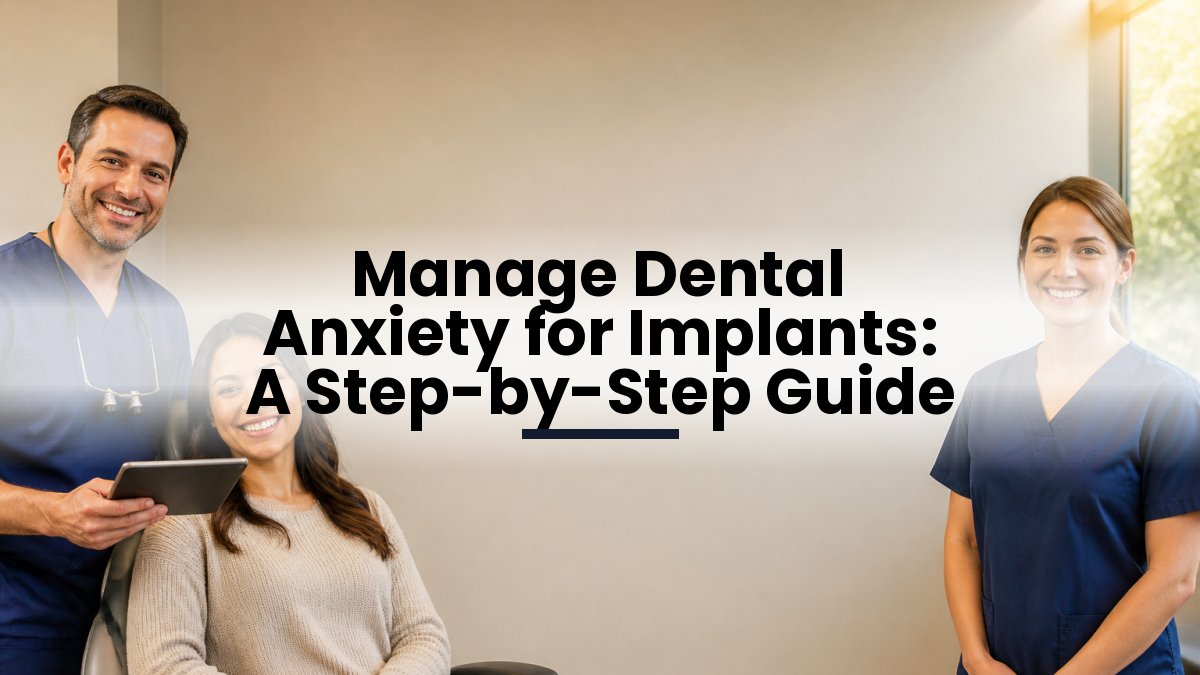
Manage Dental Anxiety for Implants: A Step-by-Step Guide
Table of Contents
- Understanding Dental Anxiety and Implant Treatment
- Sedation Dentistry for Dental Implants: Your Comfort Options
- How to Calm Anxiety Before a Dentist Appointment
- What to Expect During Dental Implant Surgery
- Questions to Ask Before Dental Implant Surgery
- Communicating Your Anxiety With Your Dental Team
- Managing Anxiety During Your Implant Journey
- Frequently Asked Questions
Last Updated: October 19, 2026
Understanding Dental Anxiety and Implant Treatment
Dental anxiety is a real barrier that prevents many people from seeking the care they need. The good news: you don't have to face implant surgery alone or unprepared, there are proven strategies to manage dental anxiety implants.
We understand that fear of the dentist is common and valid. The anxiety you feel about dental implants isn't a character flaw, it's a normal response to something unfamiliar and potentially uncomfortable.
Dental anxiety comes in many forms. Some people fear pain. Others worry about losing control or feeling trapped. Some have had bad experiences in the past. Whatever your specific concern, there are proven ways to manage it.
The implant process itself takes months. But the anxiety management happens in stages too. Each stage has its own challenges and its own solutions. This guide walks you through every one.
Sedation Dentistry for Dental Implants: Your Comfort Options
When it comes to comfort during implant surgery, sedation is one of your most powerful tools. Sedation dentistry lets you relax deeply while your dentist works. You remain safe the entire time.
There are several sedation options available. Each one works differently. Each one suits different levels of anxiety and different types of procedures.
Local Anesthesia and Nitrous Oxide
Local anesthesia numbs the area where your implant will be placed. You stay awake and alert. You won't feel pain, but you may feel pressure or vibration.
Nitrous oxide, sometimes called laughing gas, is a mild sedative. It reduces anxiety and makes time pass quickly. You breathe it through a mask. The effects wear off immediately after your appointment.
These two options work well together. Many patients use local anesthesia plus nitrous oxide for routine implant work. You remain conscious and can communicate with your dental team.
What to expect:
- Local anesthesia takes effect in 5-10 minutes
- Nitrous oxide works within minutes of breathing it in
- You stay awake but deeply relaxed
- The dentist can talk to you during the procedure
- Effects wear off completely within 30 minutes
Conscious Sedation and IV Sedation
Conscious sedation goes deeper than nitrous oxide. You're relaxed and may feel drowsy. You can still respond to commands, but you won't remember much of the procedure.
IV sedation is stronger. A medication flows directly into your bloodstream through an IV line. You drift into a twilight state, not fully asleep, but not fully aware. Time seems to disappear.
IV sedation requires monitoring throughout the procedure. Your heart rate, blood pressure, and oxygen levels are tracked continuously. A trained anesthesia professional stays with you the entire time.
When to choose these options:
- You have significant dental anxiety
- Multiple implants are being placed
- The surgery will take several hours
- You want little to no memory of the procedure
Recovery takes longer with IV sedation. You'll need someone to drive you home. Plan for the rest of the day to rest.

How to Calm Anxiety Before a Dentist Appointment
The days and hours before your appointment matter. What you do now shapes how you feel in the chair.
Preparation Steps Before Your Appointment
Start by gathering information. Gather information. What will happen? How long will it take? What should you bring? What should you avoid?
Knowledge reduces fear. The more you know, the less your mind fills in with worst-case scenarios.
Schedule your appointment at a time when you're not rushed. A morning appointment often feels less stressful than late afternoon. You won't have all day to worry.
Get good sleep the night before. Fatigue amplifies anxiety. A rested body handles stress better.
Eat a light meal before your appointment. Low blood sugar makes anxiety worse. But don't eat a heavy meal, you want to feel comfortable in the chair.
Wear comfortable clothing. Loose pants and a soft shirt help you relax. Avoid anything tight around your neck or wrists.
Day-of checklist:
- Get 7+ hours of sleep
- Eat a light meal 1-2 hours before
- Wear comfortable, loose clothing
- Arrive 10-15 minutes early
- Bring headphones if the dentist allows it
- Leave your phone on silent
Day-of Relaxation and Breathing Techniques
The hour before your appointment is critical. This is when anxiety peaks.
Try the 4-7-8 breathing technique. Breathe in through your nose for 4 counts. Hold for 7 counts. Exhale through your mouth for 8 counts. Repeat 5-10 times. This activates your body's relaxation response.
Progressive muscle relaxation works too. Tense each muscle group for 5 seconds, then release. Start with your toes and work up to your head.
Listen to calming music or a guided meditation. Many dentists allow patients to wear headphones during the procedure. The right music can transport you somewhere calm.
Arrive early. Rushing creates stress. Sitting quietly in the waiting room for 10 minutes lets your nervous system settle.
Talk to the dental team. Tell them about your anxiety. Tell them what helps you relax. Tell them what makes it worse. They want to help.
What to Expect During Dental Implant Surgery
Uncertainty feeds anxiety. Knowing exactly what happens reduces fear.
The Consultation and Treatment Planning Phase
Your first visit is a consultation, not surgery. You meet the dentist. They examine your mouth. They take X-rays and scans. They listen to your concerns.
This is when you discuss sedation options. This is when you ask all your questions. This is when you build trust with your dental team.
The dentist explains the treatment plan. They show you images. They describe each step. They tell you how long it will take. They discuss what to expect afterward.
This consultation phase sets the tone. A dentist who takes time to explain and listen reduces your anxiety immediately.
The Implant Placement Surgery
On surgery day, you arrive early. The dental team reviews the plan one more time. They answer any last-minute questions.
They place an IV if you're having IV sedation. They give you the sedative medication. Within minutes, you feel deeply relaxed.
Your dentist numbs the area with local anesthesia. You may feel pressure as the needle goes in, but no pain. After a few minutes, the area is completely numb.
The dentist makes an incision in your gum. You feel pressure and vibration, but not pain. They prepare the bone where the implant will go. This takes time, sometimes 20-30 minutes depending on bone density.
The implant, a small titanium screw, is placed into the bone. You feel pressure. You hear sounds. But you feel no pain.
The gum is closed with stitches.
If you had IV sedation, you wake up as the procedure ends. Time will have passed in what feels like minutes. You'll have little memory of the surgery.
Recovery and Post-Operative Comfort
Recovery starts immediately. Your mouth will be numb for 2-4 hours. Don't eat or drink until the numbness wears off.
Swelling peaks around day 2-3. Ice packs help. Apply ice for 20 minutes, then rest for 20 minutes. Do this for the first 24 hours.
Pain is usually mild. Over-the-counter pain relievers work well. Take them as directed on the package.
Avoid hard, hot, or crunchy foods for the first week. Stick to soft foods: yogurt, soup, mashed potatoes, smoothies.
Sleep with your head elevated. This reduces swelling. Use 2-3 pillows.
Full healing of the bone takes 3-6 months.
Questions to Ask Before Dental Implant Surgery
Asking questions helps you. It reduces uncertainty. It builds confidence in your dentist.
Before your surgery, ask these questions:
About the procedure:
- How long will the surgery take?
- What type of sedation do you recommend for me?
- Will I feel anything during the surgery?
- What sounds will I hear?
- Can I bring headphones or music?
About comfort:
- What pain management options are available?
- What should I do if I feel anxious during the procedure?
- How will you know if I'm in pain?
- Can you pause if I need a break?
About recovery:
- What should I expect in the first 24 hours?
- When can I return to normal activities?
- What foods should I avoid?
- When do I come back for follow-up care?
About your anxiety:
- Have you worked with anxious patients before?
- What's your approach to helping nervous patients?
- What can I do to feel more comfortable?
- Is there anything I should tell you about my anxiety?
Write these questions down. Bring the list to your appointment. Check them off as you get answers.
Communicating Your Anxiety With Your Dental Team
Your anxiety is not a burden. It's information your dental team needs.
Tell your dentist about your fears. Be specific. Don't just say "I'm nervous." Say what you're nervous about.
"I'm afraid of pain" is different from "I'm afraid of losing control." Your dentist handles each fear differently.
Share your past experiences. If you had a bad experience at another dental office, say so. Your dentist can adjust their approach.
Discuss your anxiety triggers. Does the sound of the drill bother you? Does the smell? Does the feeling of someone in your mouth? Once your dentist knows, they can help.
Develop a signal system. Agree on a hand signal that means "pause" or "I need a break." Knowing you can stop the procedure at any time reduces anxiety.
Ask your dentist to narrate what they're doing. "I'm about to numb the area now." "You'll feel pressure for a moment." Knowing what's coming prevents surprises.
Many anxious patients do best with a dentist they trust. Take time to build that relationship. Your comfort matters.
Managing Anxiety During Your Implant Journey
The implant process takes months. Anxiety management is ongoing.
After your first surgery, you may feel proud and relieved. That's normal. You survived it. You did it.
You may also feel anxious about what comes next. That's normal too.
Between appointments, stay informed. Ask when your next visit is. Ask what will happen at that visit. Knowing the schedule reduces uncertainty.
Practice the relaxation techniques that worked before. Deep breathing. Progressive muscle relaxation. Meditation. These tools work even better once you've used them successfully.
Stay connected with your dental team. If anxiety creeps back up, call. They can reassure you. They can answer questions. They can adjust your plan if needed.
Remember why you're doing this. Dental implants restore your ability to eat, speak, and smile. That's worth the temporary discomfort and anxiety.
Many patients find that each appointment gets easier. You learn what to expect. You build trust with your dental team. Your anxiety naturally decreases.
Managing dental anxiety for implants is absolutely possible. It starts with understanding your specific fears.
Frequently Asked Questions
Can I get dental implants if I have dental anxiety?
Yes. Dental anxiety should not prevent you from getting implants. Many anxious patients successfully complete implant treatment with the right support. Your dental team can work with you to manage anxiety through sedation options, relaxation techniques, and clear communication. Discuss your specific fears during your consultation so your dentist can tailor the approach to your needs and comfort level.
What sedation options are available for dental implant surgery?
Common sedation options include nitrous oxide (laughing gas), which keeps you awake but relaxed; local anesthesia to numb the area; conscious sedation, where you remain responsive but deeply relaxed; and IV sedation, which produces deeper relaxation or light sleep. Your dentist will discuss which option suits your anxiety level and medical history during your consultation.
Does dental implant surgery hurt?
The surgical area is numbed with local anesthesia, so you should not feel sharp pain during the procedure. You may feel pressure, vibration, or hear sounds, but pain itself should be minimal. Post-operative discomfort is typically manageable with prescribed or over-the-counter pain medication. Sedation options can further reduce anxiety about potential discomfort.
How can I tell my dentist I am afraid of dental treatment?
Be direct and honest. Tell your dentist about your specific fears, whether it is pain, loss of control, or past negative experiences. Explain how anxiety affects you. Your dental team wants to help and can adjust their approach, use signals to pause if needed, and explain each step. Open communication builds trust and allows your dentist to provide better support throughout your implant treatment.