 how-to
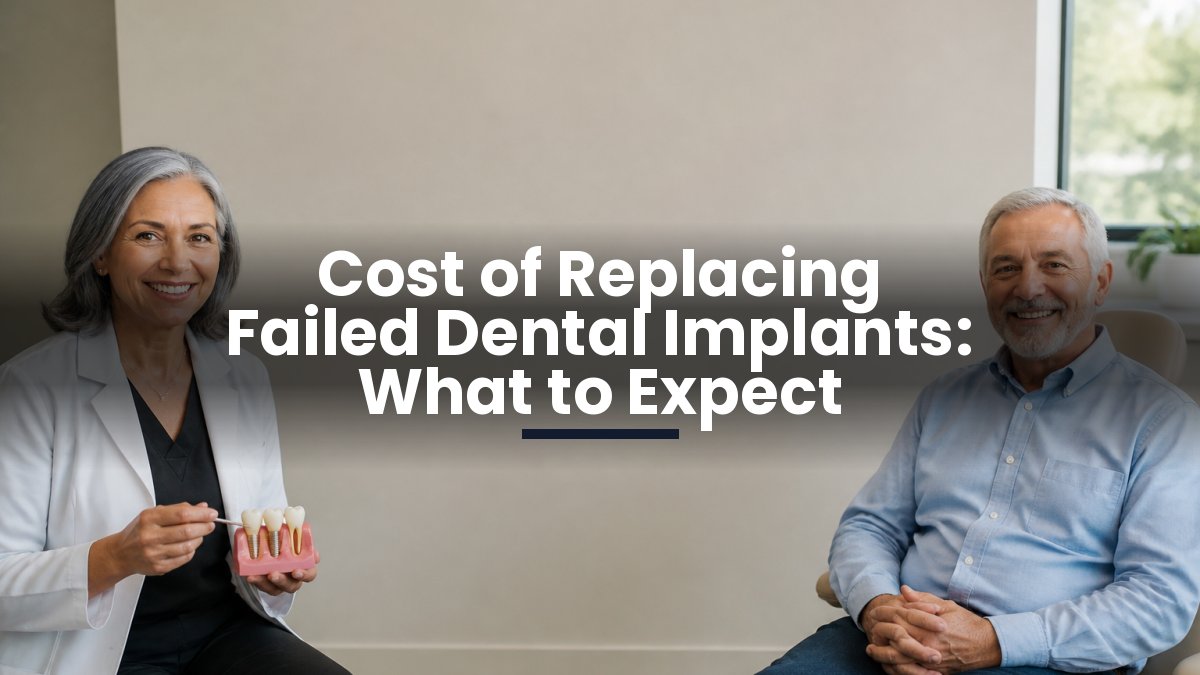
Cost of Replacing Failed Dental Implants: What to Expect
Last Updated: October 23, 2026
Quick Summary
Replacing failed dental implants usually involves three separate costs: removal of the old implant, bone grafting if bone was lost, and a new restoration. Because each stage is billed separately, the total depends on your failure diagnosis, so ask for an itemized plan with a price next to each line.
- Removal fees are priced by complexity, so get imaging first and ask for a fee range tied to your failure category.
- If the metal post is stable, only the crown or abutment needs replacing, which is the cheapest scenario.
- Bone grafting is priced by graft material, membrane use, and number of sites, and adds months before reimplantation.
- Insurance rarely covers the full replacement, and manufacturer warranties usually cover the part, not the surgery.
- Replacing an implant without addressing why the first one failed often leads to a second failure.
Table of Contents
- What Replacing Failed Dental Implants Really Costs
- The Failed Dental Implant Removal Cost and What Comes Before Replacement
- Dental Implant Crown Replacement Cost When the Post Is Still Stable
- Bone Grafting and Other Line Items That Change the Price
- Dental Implant Recovery Time and How It Affects Your Timeline
- Dental Implant Insurance Coverage and Warranty Options After Failure
- Repair, Remove, or Replace: A Decision Framework
- Questions to Ask Before You Commit to a New Implant
- Frequently Asked Questions
What Replacing Failed Dental Implants Really Costs
Replacing failed dental implants is rarely a single line on a bill. It is a sequence of clinical steps, and each step carries its own cost. The total for replacing a failed dental implant usually includes removal, possible bone grafting, and a new restoration. Below, we break down each stage so you can plan for the full number, not just the implant itself. You can also compare our implant costs and financing options to anchor your expectations.
Why the Total Is More Than One Procedure
Most people assume the failed implant gets swapped out like a part. It doesn't work that way. The cost of replacing failed dental implants reflects three separate phases: taking the old implant out, rebuilding the site if bone was lost, and placing a new restoration. Skipping or delaying any stage raises the risk of a second failure. That's the part most cost guides leave out.
The Failed Dental Implant Removal Cost and What Comes Before Replacement
Failed dental implant removal cost is not a single fee. It is a small bundle of diagnostic and surgical charges, and the total moves depending on why the implant is failing. In many practices, the pre-removal workup is separated from the removal itself, so patients see each line before they commit.
What Happens Before Removal
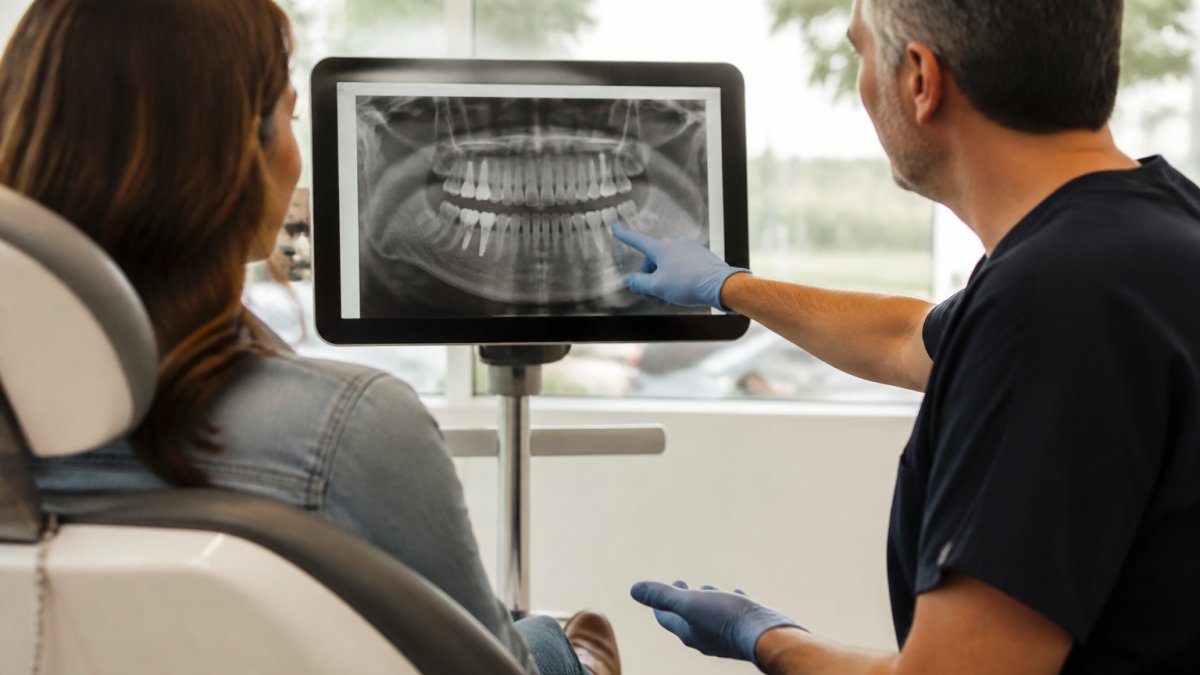
Before any instrument touches the implant, your dentist needs to know what is failing and how much bone is left. That workup usually includes:
- Limited or full-mouth radiographs to check bone level around the implant and adjacent teeth
- Cone-beam CT (CBCT) imaging when the dentist needs a three-dimensional view of bone volume, implant position, and proximity to nerves or the sinus
- Periodontal probing and mobility testing to measure pocket depth and confirm whether the implant is loose
These diagnostic fees are often billed separately from the surgery, and they are the reason two patients with the same "failed implant" can receive very different first invoices.
How the Failure Cause Changes the Removal Fee
Removal is priced by complexity, and complexity tracks the failure cause:
- Failed osseointegration (the implant never fused): Often the least involved removal. A non-integrated implant may be gently reversed out or removed with minimal bone trauma, and the site may be re-treated sooner.
- Peri-implantitis with bone loss: The surgeon must debride infected tissue, remove granulation tissue, and sometimes contour the defect. This is a longer surgical procedure and is frequently billed at a higher surgical fee than a simple explantation.
- Mechanical failure (fractured implant, stripped threads, broken abutment screw): Removing a fractured implant can require specialized retrieval instruments and more chair time, which raises the fee.
- Implant in a compromised position: An implant near the inferior alveolar nerve, the maxillary sinus, or an adjacent root may need a more cautious surgical approach.
A useful way to plan is to ask for the removal fee quoted as a range tied to your specific diagnosis, not a single number. If the practice cannot tell you which failure category you are in before quoting, ask for the imaging that would settle it.
Warning Signs That Point to Failure
Watch for these signals, and call your dentist if any appear:
- A loose implant or a crown that feels unstable
- Pain or tenderness around the implant site
- Swelling, bleeding, or discharge at the gumline
- Gum recession that exposes the metal post
Persistent infection around an implant, known as peri-implantitis, is a leading cause of failure. The American Academy of Periodontology's guidance on peri-implant diseases explains how untreated inflammation erodes the bone that holds an implant in place.
Dental Implant Crown Replacement Cost When the Post Is Still Stable
Dental implant crown replacement cost is the cheapest scenario in this whole process, and it's worth knowing when it applies. If the metal post is stable and integrated with the jawbone, only the crown, abutment, or connector needs replacing. That is a restorative procedure, not surgery. The ADA's patient resources on dental implants notes that crowns typically have a shorter lifespan than the implant itself, so crown wear is a normal event, not necessarily a sign of failure.
Bone Grafting and Other Line Items That Change the Price
Bone grafting is the line item that most often surprises patients, and it is also where a full replacement estimate either holds together or falls apart. When an implant fails, the bone around it can shrink. A graft rebuilds that foundation before a new implant can be placed. What most cost guides skip is the itemized total: removal, graft, healing time, reimplantation, abutment, and crown are separate charges incurred at separate visits.
The Itemized Path to a Replacement
A typical replacement sequence, and the cost driver at each stage:
- Diagnostic workup, radiographs, possibly CBCT, probing, and a treatment plan. Billed before anything else.
- Removal of the failed implant, surgical fee scaled to complexity (see the removal section above).
- Site debridement and infection control, often bundled with removal when peri-implantitis is present, sometimes billed separately.
- Bone grafting, priced by graft material (particulate allograft, xenograft, or autogenous), membrane use, and the number of sites. A small localized graft and a large ridge reconstruction are not the same procedure.
- Healing interval, usually several months before reimplantation; follow-up visits during this period may carry exam or imaging fees.
- Reimplantation, a new implant surgical fee, plus any sedation or anesthesia fee.
- Abutment and crown, the restorative fee, which includes impressions or digital scans, the abutment, and the final crown.
Ask for the plan written in this order with a price next to each line. A practice that quotes only a single "implant" number is hiding the graft and restoration stages inside it.
What Moves Each Line
- Number of implants being replaced, multiple adjacent failures multiply removal, graft, and implant fees, though some practices discount the surgical fee per additional site.
- Graft material and volume, synthetic and allograft materials differ in price, and membrane use adds a line.
- Provider type, an oral surgeon or periodontist typically charges more for the surgical stages than a general dentist, but may handle complex grafting that a general practice refers out.
- Sedation or anesthesia, IV sedation is billed by time and is separate from the surgical fee.
Cost Differences by Failure Cause
The same "failed implant" label produces different totals depending on the cause:
- Failed osseointegration with adequate bone: removal plus reimplantation, often with little or no grafting. The lowest-complexity replacement path.
- Peri-implantitis with bone loss: removal, debridement, grafting, and an extended healing interval before reimplantation. The graft and the extra months are the cost drivers.
- Mechanical failure with intact bone: removal of the fractured component, possible replacement of the abutment or crown only, and reimplantation if the post itself is damaged.
- Repeated failures: a diagnostic reassessment comes first, and the plan may shift to a different restoration type entirely.
If you're worried about bone loss, read our guide on whether implants can work after bone loss before your consultation.
Dental Implant Recovery Time and How It Affects Your Timeline
Dental implant recovery time varies by stage. Removal alone usually heals faster than placement. Grafting adds months before a new implant can go in, because the graft needs to integrate with bone. Full osseointegration of a new implant typically takes several months. Plan for a staged timeline rather than a single appointment, and ask your dentist to map each stage in writing.
Dental Implant Insurance Coverage and Warranty Options After Failure
Dental implant insurance coverage rarely pays the full replacement. Learn how out-of-network reimbursement works at our practice. Many plans treat implants as a major service with waiting periods and annual maximums. Some exclude replacement of a failed implant entirely. Manufacturer warranties exist for implant components, but they usually cover the part, not the surgery. Ask for the warranty terms in writing, and read our dental implant warranty guide to understand what aftercare requires.
Repair, Remove, or Replace: A Decision Framework
Use this framework with your dentist, not instead of one:
| Situation | Likely Path | Cost Driver |
|---|---|---|
| Stable post, worn crown | Replace crown only | Crown and abutment |
| Loose implant, no infection | Remove and replace | Removal plus new implant |
| Infection with bone loss | Remove, graft, then replace | Graft plus extended timeline |
| Repeated failures | Reassess candidacy first | Diagnostic workup |
Questions to Ask Before You Commit to a New Implant
Bring these to your consultation:
- Why did the first implant fail?
- Is the bone stable enough for a new implant now?
- What does the full treatment plan cost, itemized?
- What is the healing period at each stage?
If you'd like your case evaluated, you can book a consultation in Trinity, FL and get answers specific to your situation.
For a full picture of what treatment costs, please consult with our practice.
Frequently Asked Questions
Does replacing a failed dental implant cost more than the original implant?
It often does, because replacement usually involves more steps than the first surgery. You may pay for removal of the failed implant, bone grafting if the jaw has lost volume, a healing period, and then a new implant with its abutment and crown. Each of those is typically billed separately, so the total can exceed the original treatment. The exact figure depends on your clinical situation, so ask for an itemized treatment plan rather than a single bundled number.
Can a crown on a dental implant be replaced without replacing the implant itself?
Yes. If the implant post is stable and integrated with the bone, the crown and sometimes the abutment can be swapped while the post stays in place. That is usually the least expensive path because it avoids surgery and bone grafting. Your implant dentist will check stability and look for signs of infection around the implant before deciding whether a crown replacement alone is appropriate.
Will dental insurance cover the cost of replacing failed dental implants?
Coverage varies widely. Many dental plans classify implants as major restorative work with annual maximums and waiting periods, and some exclude replacement of a previously placed implant entirely. Before treatment, request a pre-treatment estimate from your insurer and ask the dental office to submit it. Also check whether the implant manufacturer offers any warranty, since that can reduce your out-of-pocket cost.
How long does it take to replace a failed dental implant?
The timeline depends on why the implant failed. A crown-only replacement can take a few weeks. Full replacement usually means removal, a healing period of several months, possible bone grafting with its own healing time, then implant placement and osseointegration before the final crown. Your dental implant recovery time after each surgical stage matters, so ask for a stage-by-stage schedule in writing before you commit.
A failed implant is stressful, and the cost questions make it worse. Trinity Dental Arts is led by a board-certified implantologist and handles removal, grafting, and replacement in one practice, with an in-house lab for precision restorations. We give fees in writing so you can plan. Get started with Trinity Dental Arts and a clear, itemized plan for replacing your implant.