 ultimate-guide
Cost of Full Mouth Dental Restoration: 2026 Guide
Table of Contents
- What Full Mouth Restoration Actually Involves
- Factors That Drive the Cost of Full Mouth Dental Restoration
- Full Mouth Dental Implants Cost: Breaking Down Each Component
- Full Mouth Reconstruction vs. Dentures: A Direct Comparison
- Dental Financing Options for Major Procedures
- Full Mouth Restoration Recovery Timeline and Long-Term Maintenance
- Quality of Life, Risk Mitigation, and Whether It's Worth the Investment
- Conclusion
Last Updated: August 28, 2026
What Full Mouth Restoration Actually Involves
Full mouth dental restoration is a comprehensive, staged approach to rebuilding every functional and aesthetic aspect of a patient's bite, using a combination of surgical, restorative, and cosmetic procedures tailored to their specific oral health condition. It is not a single treatment but a coordinated plan that may span months and involve multiple specialists working from a shared diagnostic foundation.

Common Procedures: Implants, Crowns, Bridges, and Bone Grafting
A full restoration typically combines dental implants (titanium or zirconia posts that fuse to the jawbone), dental crowns (which cap damaged teeth), dental bridges (which span gaps anchored to adjacent teeth or implants), and bone grafting (which rebuilds jawbone volume lost through tooth loss or periodontal disease). Sinus lift procedures are often required for upper jaw implants when bone height is insufficient. Periodontal treatment addresses gum disease before any restorative work begins.
The scope of these procedures is why oral rehabilitation requires careful sequencing. Placing implants into compromised bone without prior grafting leads to failure. Restoring crowns without correcting bite alignment causes premature wear.
Diagnostic Imaging and Treatment Planning
Accurate treatment planning starts with a CBCT scan, which produces a three-dimensional image of the jaw, bone density, nerve pathways, and sinus anatomy, categorically different from a standard dental X-ray. This allows the prosthodontist and oral surgeon to plan implant placement with precision, identify areas requiring bone grafting, and simulate the final result before any incision is made.
The consultation should include a full periodontal assessment, bite analysis, and photographic documentation. According to American College of Prosthodontists guidance on treatment planning, a thorough diagnostic workup is foundational to predictable outcomes in complex oral rehabilitation cases. Skipping this step to reduce upfront costs is one of the most common reasons patients end up needing corrective procedures later.
Factors That Drive the Cost of Full Mouth Dental Restoration
The cost of full mouth dental restoration varies significantly based on clinical complexity, material selection, geographic location, and the number of procedures required. Any provider who quotes a flat fee before completing a diagnostic workup should prompt caution.
Implant Type: All-on-4, All-on-6, and All-on-8
All-on-4 uses four implants per arch to support a full-arch fixed prosthesis. Two implants are placed vertically at the front of the jaw; two are angled toward the back to maximize contact with available bone. This approach often eliminates the need for bone grafting, reducing both cost and treatment time.
All-on-6 adds two additional implants per arch, increasing load distribution and long-term stability. This is typically recommended for patients with higher bite forces or those who want more conservative stress distribution.
All-on-8 places eight implants per arch and is generally reserved for patients who have undergone significant bone grafting or require maximum structural support.
| Configuration | Implants Per Arch | Bone Grafting Often Required | Best For |
|---|---|---|---|
| All-on-4 | 4 | Rarely | Moderate bone loss, cost-conscious patients |
| All-on-6 | 6 | Sometimes | Higher bite force, added stability |
| All-on-8 | 8 | Often (pre-procedure) | Severe bone loss, maximum support |
Material Choice: Titanium vs. Zirconia
Titanium implants are the established standard, with decades of peer-reviewed data supporting their biocompatibility and osseointegration success rates. Zirconia implants offer a metal-free alternative with strong aesthetic properties, particularly for patients with thin gum tissue where a titanium post might show through.
For the prosthesis itself, acrylic-based options cost less but wear faster. Zirconia prostheses are more durable, more resistant to staining, and more closely mimic natural tooth translucency, but they carry a higher laboratory fee.
Regional Cost Variance
The cost of full mouth dental restoration is not uniform across the country. Practice overhead, local labor costs, and market competition all influence pricing. According to American Dental Association Health Policy Institute data on dental care costs, geographic variation in dental procedure fees is substantial and consistent across procedure types.
Full Mouth Dental Implants Cost: Breaking Down Each Component
Understanding the full mouth dental implants cost means separating the total fee into its clinical components. The major cost components typically include:
- Diagnostic imaging and CBCT scan
- Periodontal treatment
- Extractions
- Bone grafting and sinus lift
- Implant placement surgery
- Temporary prosthesis
- Abutment placement
- Final prosthesis fabrication
Each represents real clinical work, real materials, and real laboratory time. Ask any provider to itemize their treatment plan so you can understand what is and is not included.
For current pricing at Trinity Dental Arts, contact the practice directly for a personalized treatment plan and fee estimate based on your specific diagnostic findings.
Full Mouth Reconstruction vs. Dentures: A Direct Comparison
Full mouth reconstruction using implant-supported prosthetics and traditional removable dentures solve the same surface-level problem but with fundamentally different clinical outcomes, maintenance requirements, and long-term cost profiles.
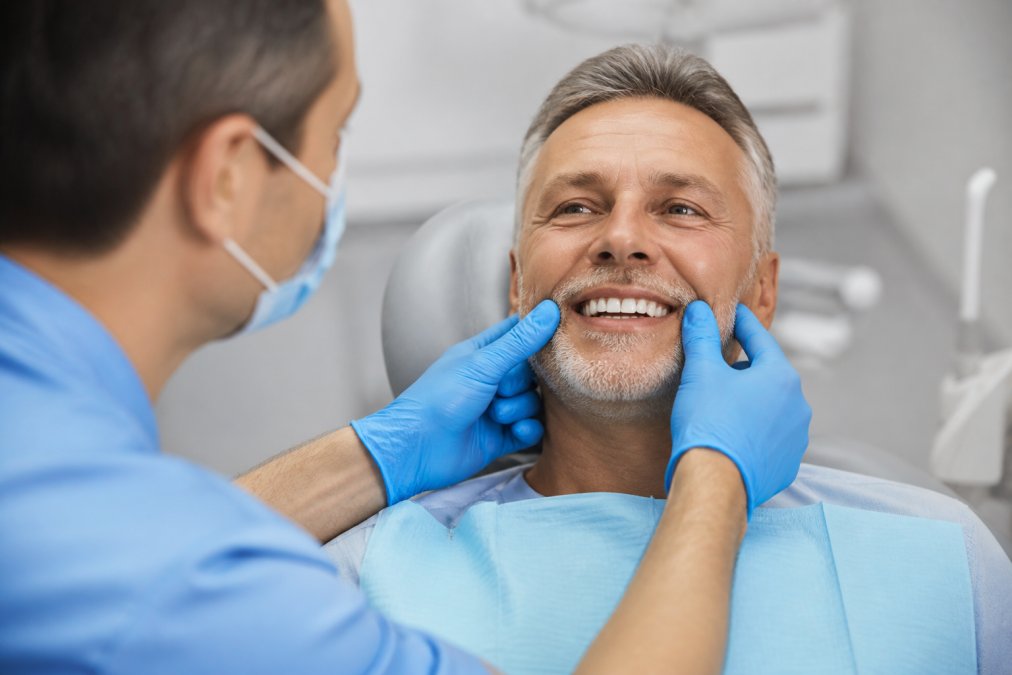
Removable dentures sit on top of the gum tissue and rely on adhesive or suction for retention. They do not stimulate the jawbone, so bone resorption continues after tooth loss, gradually changing jaw shape and causing dentures to fit less well over time. Most patients require denture relining or replacement every five to seven years.
Implant-supported restorations function more like natural teeth. The implant post stimulates the bone, slowing or halting resorption. The prosthesis is fixed and does not move during eating or speaking. Bite force is significantly higher, expanding dietary options and improving nutrition.
| Factor | Removable Dentures | Implant-Supported Restoration |
|---|---|---|
| Bone preservation | No | Yes |
| Stability during eating | Variable | High |
| Maintenance | Daily removal, adhesive | Standard oral hygiene |
| Lifespan before replacement | 5-7 years | Prosthesis 10-20+ years |
| Long-term bone loss | Progressive | Minimal |
| Initial cost | Lower | Higher |
| Total 20-year cost | Often comparable | Often lower |
Dental Financing Options for Major Procedures
Dental financing options for major procedures are more accessible than many patients expect. Most established dental practices offer multiple pathways to make treatment financially manageable.
Dental insurance: Most traditional dental insurance plans provide limited coverage for implant procedures, if any. Coverage is more common for associated procedures like extractions, bone grafting, and crowns. Request a pre-authorization from your insurer before beginning treatment to understand exactly what will and will not be covered.
Flexible Spending Accounts and Health Savings Accounts: FSA and HSA funds can be applied to dental implant procedures, allowing you to use pre-tax dollars and effectively reduce out-of-pocket expenses.
Third-party lending: Healthcare financing companies offer payment plans for dental procedures, often with promotional interest-free periods. Review the full loan agreement carefully, particularly the interest rate that applies after any promotional period ends.
In-house payment plans: Some practices offer direct financing arrangements. Ask specifically whether the practice offers this and what the terms are.
Start investigating financing during the consultation phase rather than waiting until a procedure is urgently needed. Most financing applications require a credit check and approval process that takes time.
Full Mouth Restoration Recovery Timeline and Long-Term Maintenance
What to Expect at Each Stage of Recovery
The full mouth restoration recovery timeline depends on the complexity of the procedures involved. For a patient receiving full-arch implants with prior bone grafting, the total treatment sequence commonly spans several months. For patients with adequate bone who qualify for same-day full-arch placement, the timeline is compressed significantly.
A general sequence for a staged full-arch restoration includes:
- Diagnostic phase: CBCT scan, periodontal assessment, treatment planning (1-2 appointments)
- Preparatory procedures: Extractions, periodontal treatment, bone grafting if required (weeks to months for healing)
- Implant placement surgery: Placement of posts; temporary prosthesis delivered (same day or shortly after)
- Osseointegration period: Bone fuses to implant surface; patient wears temporary prosthesis (typically 3-6 months)
- Abutment placement and impressions: Connectors placed; final prosthesis fabricated
- Final delivery: Permanent prosthesis seated and occlusion adjusted
Post-operative recovery after implant surgery typically involves swelling and discomfort for several days, managed with prescribed medication and a soft-food diet. Most patients return to normal activity within a week.
Long-Term Maintenance Costs
The implant posts themselves, once fully integrated, are highly durable. The prosthesis is a different matter. Acrylic-based full-arch prostheses typically require replacement or significant repair within 10-15 years due to wear. Zirconia prostheses last longer but are not indestructible. Abutment screws can loosen and require retightening.
Annual professional maintenance, including professional cleaning around implant abutments, radiographic monitoring, and bite assessment, is essential. Skipping maintenance appointments is one of the leading contributors to late-stage implant complications. Budgeting for long-term maintenance as part of the total cost gives a far more accurate picture of what the investment actually costs over a 20-year horizon.
Quality of Life, Risk Mitigation, and Whether It's Worth the Investment
The clinical case for full mouth reconstruction over removable alternatives is well-documented. According to peer-reviewed literature on implant-supported prosthesis outcomes in the Journal of Prosthetic Dentistry, implant-supported restorations consistently outperform removable dentures on patient-reported outcomes including chewing function, speech, comfort, and overall satisfaction.
Patients who have lived with significant tooth loss frequently report changes in social confidence, dietary habits, and willingness to smile or speak in public. Oral health is connected to systemic health outcomes including cardiovascular risk and nutritional status.
Implant procedures carry surgical risks including infection, nerve proximity complications, and implant failure. Failure rates for dental implants are low when placed by qualified practitioners in well-selected patients, but they are not zero. Patients with systemic conditions including uncontrolled diabetes or active autoimmune disease may face higher complication rates and should discuss this candidly with their provider.
What separates a good outcome from a poor one is largely the quality of the diagnostic workup, the precision of surgical placement, and the patient's adherence to post-operative care and long-term maintenance. Choosing a provider based on the lowest quoted price without evaluating their clinical credentials and diagnostic process is where most implant complications originate.
The cost of full mouth dental restoration is substantial. So is the cost of doing it twice.
The challenge most patients face is not deciding whether to pursue full mouth restoration, it is finding a provider with the clinical depth to execute a complex, multi-stage treatment plan predictably. Trinity Dental Arts is led by a board-certified implantologist with advanced credentials in implant dentistry, and our in-house lab allows us to fabricate same-day crowns and full-arch prostheses with precision. If you are ready to understand what a customized treatment plan would involve for your specific situation, schedule a consultation with our team to get a diagnostic-based estimate rather than a guess.
Frequently Asked Questions
How much can a full mouth restoration cost?
Full mouth restoration cost varies widely based on the number of implants needed, whether bone grafting or a sinus lift is required, the materials selected (titanium vs. zirconia), and the complexity of your bite alignment issues. Because every treatment plan is customized, there is no single price that applies to all patients. The most accurate way to understand your out-of-pocket expenses is to schedule a consultation that includes diagnostic imaging so your provider can assess your specific oral health needs.
Does dental insurance typically cover full mouth reconstruction?
Most dental insurance plans cover portions of full mouth reconstruction on a procedure-by-procedure basis rather than as a single treatment. Crowns, extractions, and periodontal treatment may receive partial reimbursement, while implants and purely cosmetic elements are often excluded. Annual maximums on most plans are modest relative to the total cost of full arch restoration, so patients frequently combine insurance benefits with financing plans or third-party lending to cover the remaining balance. Always verify your specific coverage before treatment begins.
What are the primary differences between dentures and full-arch implants?
Traditional dentures rest on the gum line and can shift during eating or speaking, and they do not prevent bone loss in the jaw. Full-arch implants, such as All-on-4 or All-on-6 systems, are anchored directly into the jawbone with titanium posts, which preserves bone volume over time and provides stable, fixed function. Implant-supported restorations generally require less daily maintenance and do not need adhesives. The upfront cost is higher, but long-term maintenance costs for implants are often lower than the ongoing expenses associated with denture relining and replacement.
How long does the full mouth restoration process take?
The full mouth restoration recovery timeline depends on the procedures involved. Patients who receive a same-day full-arch restoration with a temporary prosthesis can leave with functional teeth on the day of surgery. However, complete osseointegration, the process by which implants fuse with the jawbone, typically takes several months before the final permanent prosthesis is placed. Cases requiring bone grafting or a sinus lift add additional healing time before implant placement can occur. Your prosthodontist will outline a realistic timeline during your initial consultation.
This article was written using GrandRanker