 ultimate-guide
Full Arch Dental Implants Cost 2026: Complete Pricing Guide
Table of Contents
- Understanding Full Arch Dental Implants and Pricing Factors
- Full Arch Implants vs. Dentures: Cost and Value Comparison
- All-on-4 Dental Implants Cost and Treatment Approach
- What Is Included in Full Arch Implant Cost
- Dental Implant Financing Options and Payment Plans
- Evaluating Treatment Plans and Long-Term Value
- Insurance Coverage and Out-of-Pocket Expenses
- Frequently Asked Questions
Last Updated: October 21, 2026
Understanding Full Arch Dental Implants and Pricing Factors
Full arch dental implants represent a comprehensive solution for patients with extensive tooth loss. At Trinity Dental Arts, we understand that the cost of full arch dental implants in 2026 varies significantly based on individual clinical needs, treatment approach, and material selections. Rather than a single fixed price, the total investment depends on multiple interconnected factors that we'll break down throughout this guide.
A full arch restoration replaces all teeth in either the upper jaw, lower jaw, or both. This differs fundamentally from isolated implants because the treatment plan accounts for bone structure, the number of implants needed, and the type of prosthetic (artificial teeth) selected.
What Determines Your Total Cost
The final cost of full arch dental implants in 2026 depends on several clinical and material-related factors. First, bone density and volume directly impact whether preparatory procedures are necessary.
Implant count represents another major cost driver. Some treatment plans call for four implants per arch, while others may use six, eight, or more. The number of implants affects the stability, longevity, and functional capacity of your restoration.
Material selection heavily influences pricing. The prosthetic teeth can be fabricated from acrylic, composite resin, or porcelain. Zirconia and other premium materials offer different aesthetic and durability profiles. The abutments (connectors between implants and prosthetics) also vary in material and design complexity, affecting both cost and clinical outcomes.
Per-Arch vs. Both-Arches Treatment
Many patients ask whether treating one arch at a time costs less than treating both simultaneously. The answer depends on your clinical situation and preferences. A single-arch treatment focuses resources on either the upper or lower jaw, which can reduce the initial financial commitment and allow staged treatment planning.
Both-arches treatment addresses all missing teeth in one comprehensive plan. This approach often provides better bite mechanics and facial support but requires a larger upfront investment. Some patients prefer completing treatment in one phase to minimize the overall treatment duration and achieve their desired smile quickly.
Full Arch Implants vs. Dentures: Cost and Value Comparison
Traditional dentures remain a less expensive initial option compared to full arch dental implants. Dentures require no surgical intervention and can be fabricated relatively quickly.
Dentures demand ongoing adjustments as your jawbone continues to resorb (shrink) over time. This bone loss accelerates after tooth extraction, meaning denture fit deteriorates progressively.
Full arch implants preserve jawbone by providing the stimulation natural tooth roots provide. This biological advantage means your facial structure and bite mechanics remain stable over decades.
The decision between these options involves more than price alone. Consider your age, overall health, bone density, manual dexterity for cleaning, and personal priorities regarding eating, speaking, and appearance.
All-on-4 Dental Implants Cost and Treatment Approach
All-on-4 represents a specific implant strategy that uses four strategically positioned implants to support a full arch restoration. This approach gained popularity because it often allows treatment to proceed without bone grafting, even in patients with moderate bone loss.
All-on-4 treatment typically involves fewer implants than traditional full arch approaches, which generally reduces the overall cost of full arch dental implants in 2026 compared to six- or eight-implant plans. However, the cost savings depend on your individual anatomy.
The All-on-4 approach often enables faster treatment timelines. Many patients receive a temporary prosthesis immediately after surgery, allowing function and appearance to be restored while the implants integrate with bone. This immediate loading capability appeals to patients who cannot afford extended periods without teeth.
What Is Included in Full Arch Implant Cost
Understanding what your quoted price actually covers prevents surprises during treatment. A comprehensive cost estimate should itemize several components that together comprise the full arch dental implants cost.
Surgical implant placement involves the oral surgeon's time, facility costs, anesthesia, and the implant fixtures themselves. These titanium or ceramic implant bodies are precision-manufactured devices that form the foundation of your restoration.
The prosthetic restoration, your new teeth, represents a substantial portion of the cost. Custom fabrication requires multiple appointments for impressions, bite registration, shade selection, and try-in appointments.
Diagnostic imaging, including 3D cone-beam computed tomography (CBCT) scans, enables precise surgical planning.
Hidden Costs and Additional Procedures
Beyond the primary implant and prosthetic costs, several additional procedures may be necessary depending on your starting point. Tooth extraction for remaining natural teeth that cannot be preserved adds to the total investment.
Bone grafting becomes necessary when insufficient bone volume exists to safely place implants. Grafting materials vary in source and cost, ranging from synthetic bone substitutes to autogenous bone harvested from your own body.
Sinus augmentation (sinus lift) may be required for upper arch implants in patients with pneumatized sinuses that encroach on implant space.
Temporary prosthetics used during the integration period (typically 3-6 months) may be included in your treatment plan or quoted separately. Some practices include this as part of the comprehensive cost, while others charge additionally.
| Cost Component | Typical Inclusion | Variation Factor |
|---|---|---|
| Implant fixtures | Included in surgical fee | Implant count, system quality |
| Surgical placement | Included in surgical fee | Complexity, bone grafting needed |
| Diagnostic imaging | Usually included | Advanced imaging required |
| Tooth extraction | May be separate | Number of teeth, difficulty |
| Bone grafting | Usually separate | Extent of grafting needed |
| Prosthetic restoration | Included in prosthetic fee | Material selection, complexity |
| Temporary prosthetic | May be included or separate | Duration needed |
| Follow-up appointments | Usually included | Complication management |
Dental Implant Financing Options and Payment Plans
The cost of full arch dental implants in 2026 represents a significant healthcare investment that many patients cannot pay entirely upfront. Fortunately, several financing mechanisms exist to make treatment more accessible.
Dental insurance coverage varies widely depending on your specific plan. Most traditional dental insurance treats implants as a major restorative procedure and covers a percentage (often 50%) after meeting your annual deductible.
Third-party financing companies specializing in healthcare costs offer payment plans with varying interest rates and terms. These arrangements allow you to spread costs across 12-60 months depending on your approval.
Many dental practices offer in-house payment plans that may provide more flexibility than third-party financing.
Evaluating Treatment Plans and Long-Term Value
When comparing treatment proposals from different dental practices, focus on what each plan includes rather than price alone. Two practices may quote different costs for the full arch dental implants cost because they're proposing different treatment approaches, material selections, or implant systems.
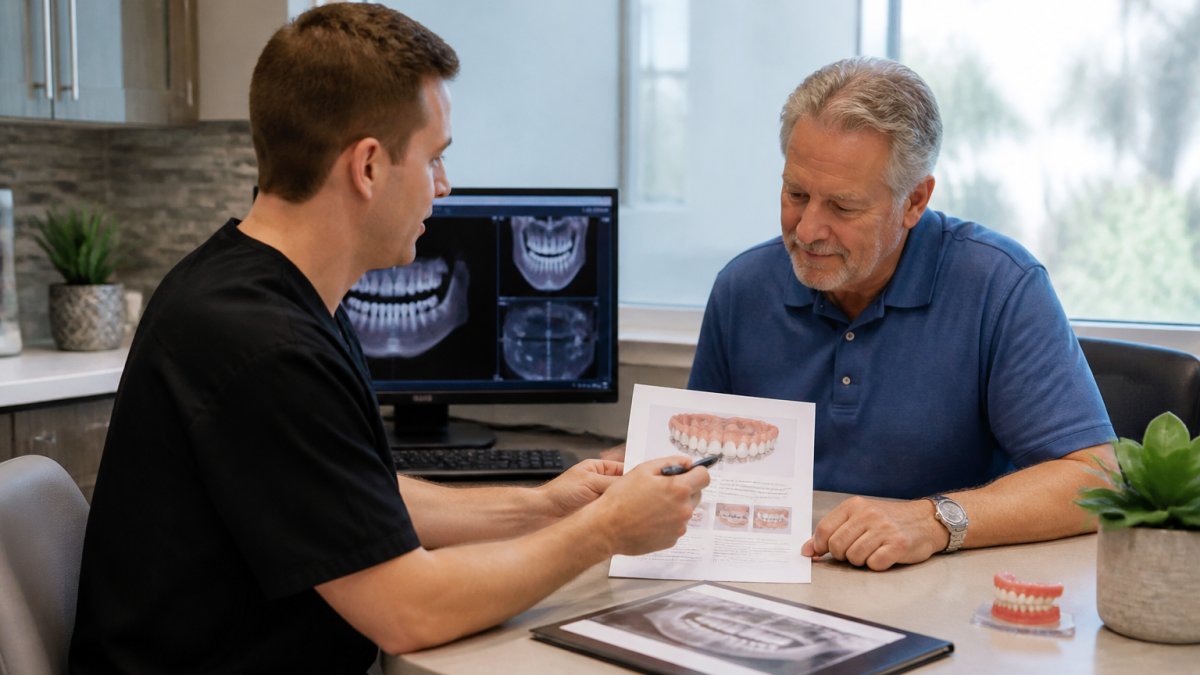
Request itemized estimates that break down each component: implant count, implant system brand, prosthetic material, any preparatory procedures, and follow-up care. This transparency allows meaningful comparison between proposals and helps you understand where cost differences originate.
How to Compare Written Estimates
A detailed written estimate should specify the implant system being used, the number of implants per arch, and the prosthetic material selected. Generic estimates that simply state "full arch implants" without these specifics make comparison impossible.
Pay attention to what's included versus what's quoted separately. Some practices bundle temporary prosthetics, follow-up appointments, and adjustments into the primary cost, while others charge these as separate line items.
Ask about the implant system's track record and longevity data. Different implant manufacturers have varying research supporting their products' long-term success rates. A practice using well-documented, established implant systems may justify higher costs through superior clinical outcomes and warranty support.
Warranty, Maintenance, and Replacement Costs
Understanding what happens after your restoration is complete helps you evaluate true long-term value. Most implant manufacturers provide limited warranties covering implant failure during the integration period (typically 1-5 years). Some practices extend additional warranty coverage on the prosthetic restoration.
Maintenance costs typically involve regular dental visits for professional cleaning and monitoring. Implants cannot develop cavities, but the tissues surrounding them require vigilant care to prevent peri-implantitis (inflammation around implants). Annual or semi-annual professional cleanings cost less than treating advanced implant complications.
If your prosthetic restoration requires repair or replacement years after placement, those costs depend on the specific design and materials used. Screw-retained prosthetics can sometimes be repaired or modified more easily than cemented restorations.
Insurance Coverage and Out-of-Pocket Expenses
Dental insurance typically categorizes implants as major restorative treatment, which means coverage percentages and annual maximums apply. Most plans cover 50% of major restorative costs after you've met your annual deductible.
Calculate your out-of-pocket responsibility by determining your plan's deductible, coverage percentage for major services, and annual maximum benefit.
Some patients strategically time treatment across two calendar years to maximize insurance benefits across multiple annual maximums.
The cost of full arch dental implants in 2026 reflects the complexity of restoring complete dental function and appearance.
Trinity Dental Arts specializes in comprehensive full arch restoration using advanced diagnostic imaging, precise surgical planning, and in-house laboratory services.
Frequently Asked Questions
How much do full arch dental implants cost in 2026?
Full arch dental implant costs vary significantly based on implant count, materials, bone grafting needs, and geographic location. Per-arch treatment typically costs more than single-arch restoration. To get an accurate estimate for your specific situation, schedule a consultation where your dentist can evaluate your bone density, implant placement requirements, and personalized treatment plan. Pricing depends on the complexity of your case and the prosthetic materials selected.
What is included in the cost of full arch implant treatment?
A comprehensive full arch implant cost typically includes diagnostic imaging, implant placement surgery, the prosthetic restoration (teeth), abutments, and initial healing care. However, coverage varies by treatment plan. Some quotes may exclude bone grafting, tooth extractions, temporary prosthesis, or follow-up adjustments. Always request an itemized estimate that clearly lists each component. This transparency helps you compare treatment plans accurately and avoid unexpected expenses later.
How do full arch implants compare to dentures in terms of cost and value?
Full arch implants have a higher upfront cost than traditional dentures but offer significant long-term value. Implants preserve jawbone, require no daily removal or adhesive, and typically last 15-20+ years with proper care. Dentures cost less initially but require replacement every 5-10 years, ongoing adjustments, and daily maintenance. Over a lifetime, implants often become more economical despite their initial investment, plus they restore natural function and appearance.
What financing options are available for full arch dental implants?
Many dental practices offer financing plans through third-party lenders, allowing you to spread payments over 12-60 months with or without interest. Dental discount plans, dental schools offering reduced-cost treatment, and some credit cards provide additional payment options. Before committing, review the interest rate, monthly payment amount, and total cost. Your dentist can also discuss how dental insurance benefits apply to reduce your out-of-pocket expenses.
Does dental insurance cover full arch dental implants?
Most traditional dental insurance plans classify implants as restorative or cosmetic and provide limited or no coverage. However, some plans cover a percentage of the implant cost, while others cover only the crown portion. Coverage limits and annual maximums vary by plan. Review your policy or contact your insurance provider to understand your benefits. Many patients use insurance to offset part of the cost while financing the remainder.
What factors most affect the price of full arch dental implants?
Key pricing factors include the number of implants placed, prosthetic materials (acrylic vs. zirconia), bone grafting requirements, tooth extractions, diagnostic imaging complexity, and your candidacy factors like bone density and healing period. Geographic location and practice expertise also influence cost. A personalized estimate requires a thorough consultation and 3D imaging to assess your jawbone structure and determine the exact implant count and preparatory procedures needed.
Are full arch dental implants worth the investment?
Full arch implants restore chewing function, preserve facial structure, eliminate daily denture maintenance, and provide a natural appearance for 15-20+ years. For patients with multiple missing teeth or severe bone loss from long-term tooth loss, implants often deliver superior quality of life compared to dentures or bridges. However, candidacy depends on bone density, overall health, and commitment to oral hygiene. Discuss your specific situation with a qualified implantologist to determine if implants align with your goals and budget.