 comparison
Best Cosmetic Dentists in Tampa: 2026 Guide
Table of Contents
- Top Cosmetic Dentists in Tampa: Overview and Comparison
- Trinity Dental Arts: Board-Certified Implantology and Same-Day Restoration
- General and Cosmetic Dentistry of Tampa: Multi-Location Convenience
- Muscaro & Martini Dentistry: Cosmetic and Restorative Focus
- New Tampa Smiles: General, Emergency, and Cosmetic Care
- Advanced Dental Associates of Tampa Palms: Cosmetic Specialization
- Cosmetic Dentistry Treatments Available in Tampa
- How Much Does Cosmetic Dentistry Cost: Pricing and Financing
- Frequently Asked Questions
Last Updated: October 12, 2026
Top Cosmetic Dentists in Tampa: Overview and Comparison
Finding the right cosmetic dentist Tampa takes more than picking the first search result. You need credentials that match your procedure, an aesthetic sensibility aligned with your goals, and logistics that fit your life. Here's a repeatable framework for comparing providers.
A Comparison Framework You Can Actually Use
Most people compare cosmetic dentists by star rating and price. That's a mistake. Ratings reflect the whole practice, not the cosmetic work you're paying a premium for, and price without context says nothing about materials, lab quality, or experience with your case.
Instead, score each provider on five weighted factors:
- Credential fit for your procedure, A general dentist can legally place veneers, but complex implant or full-arch cases benefit from advanced training. Look for membership in the American Academy of Cosmetic Dentistry (AACD), which requires documented case submissions for accreditation, or board certification in implantology (ABOI/ID) for surgical cases.
- Documented case volume in your procedure, Ask how many of your specific treatment the dentist completes per month or year. A practice that places 5 implants a year is a different risk profile than one placing 50.
- Lab relationship, In-house or a dedicated local lab technician the dentist works with repeatedly. Ask directly: "Who fabricates my veneers, and how many cases have you done with them?"
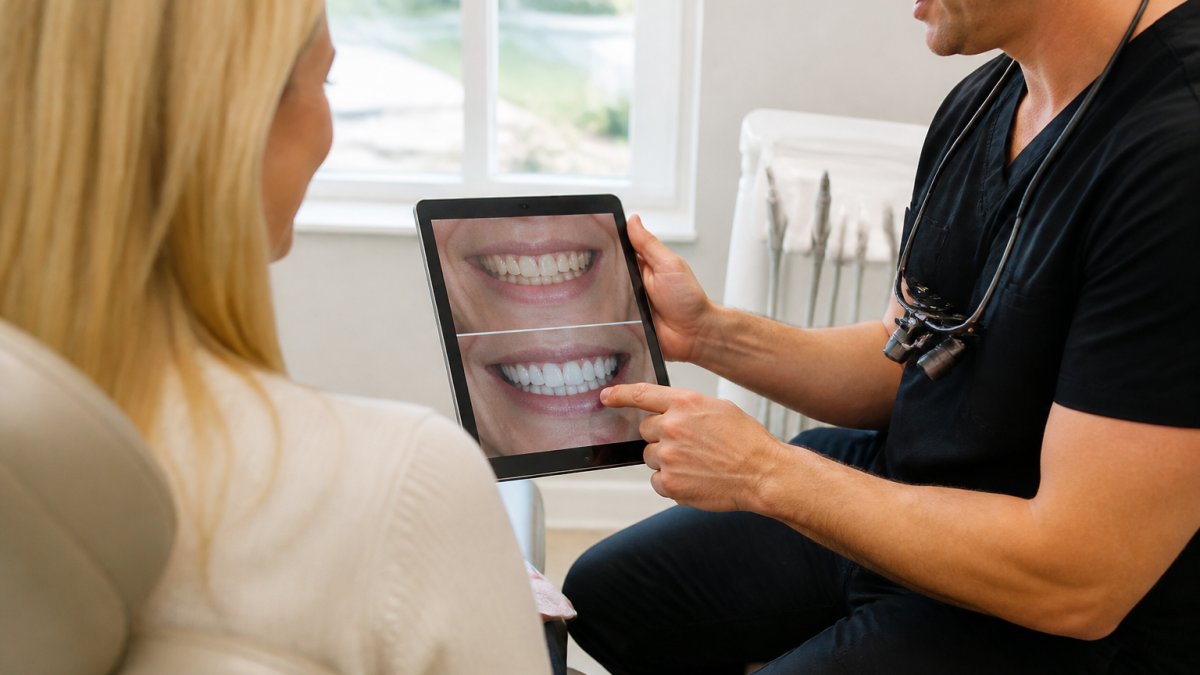
- Consultation process, Does the dentist use digital smile design, intraoral scanning, or photography to preview results? Or is it a verbal plan with no visual mock-up?
- Post-treatment policy, What happens if a veneer chips in year two? Is there a warranty, a remake policy, or a fee?
What to Compare: Key Selection Criteria
Board Certification and Credentials. Look for memberships in organizations like the American Academy of Cosmetic Dentistry (AACD).
In-House Lab Capabilities. Practices with their own lab fabricate crowns, veneers, and bridges on-site, improving quality control and speed.
Before-and-After Portfolio. Request cases similar to yours, same tooth count, same starting condition, not just the practice's best three transformations.
Patient Reviews and Testimonials. Look beyond star ratings.
| Selection Criteria | Why It Matters | Red Flags |
|---|---|---|
| Board certification | Advanced training in cosmetic techniques | Dentist avoids discussing credentials or can't name the certifying body |
| In-house lab | Better quality control and faster turnaround | All work sent to external labs; won't name the lab |
| Same-day options | Convenience and fewer appointments needed | Only offers traditional multi-visit treatment |
| Before-and-after portfolio | Demonstrates aesthetic skill and consistency | No portfolio available or hesitant to share |
| Patient testimonials | Real experiences from people like you | Only positive reviews or very few reviews |
| Case volume in your procedure | Experience reduces complication risk | Vague answers about how often they do the work |
| Post-treatment policy | Protects your investment long-term | No written policy on remakes or adjustments |
Consultation and Treatment Timelines
One practical comparison point is how long treatment takes and how many visits it requires.
- Veneers: Typically 2-3 visits over 2-4 weeks (prep, try-in, cementation). Some practices with in-house labs compress this to 2 visits.
- Same-day crowns: 1 visit, usually 2-3 hours in the chair.
- Traditional crowns: 2 visits, 2-3 weeks apart.
Ask each provider for their typical timeline for your case, not the average. A practice quoting "about a month" for veneers without examining your teeth is guessing.
Treatment Suitability, Risks, and Alternatives
A good cosmetic dentist will tell you when a treatment isn't right for you. Compare providers on how candidly they discuss trade-offs:
- Veneers require irreversible enamel removal. If a dentist says "no-prep veneers" for every case, ask what happens if the result needs revision, there's less tooth structure to work with.
- Bonding is reversible but stains and chips faster; expect 3-7 years before replacement.
- Whitening doesn't work on crowns, veneers, or bonding, those materials won't lighten, which can create a color mismatch if you whiten after restorations.
A provider who explains these trade-offs unprompted is demonstrating the judgment you're paying for. One who only lists benefits is selling, not treating.
Trinity Dental Arts: Board-Certified Implantology and Same-Day Restoration
Trinity Dental Arts is a leader in cosmetic and restorative dentistry in the Tampa Bay area. Led by a board-certified implantologist (DICOI, FAAID, DABOI/ID), the practice pairs clinical expertise with in-house lab capabilities: crowns, veneers, and other restorations are fabricated on-site for precision and consistency.
Specialization and Advanced Services
Trinity Dental Arts specializes in same-day full-arch teeth, full mouth restoration, and implant-supported solutions, handling complex cases requiring both surgical expertise and aesthetic refinement. The board-certified implantologist credential means training beyond dental school and rigorous exams in implant placement and restoration. Emergency care is also available, so acute dental pain can be handled without a referral.
In-House Lab and Treatment Speed
The in-house laboratory is a significant advantage: when your dentist works directly with the lab technician, adjustments happen faster and the final restoration reflects exact specifications. Same-day crowns mean fewer appointments, a broken tooth can often be restored the same day rather than waiting two weeks with a temporary.
General and Cosmetic Dentistry of Tampa: Multi-Location Convenience
General and Cosmetic Dentistry of Tampa operates two locations, North Tampa and South Tampa, offering general dentistry alongside cosmetic services including same-day crowns and dental implants. The multi-location model works well if proximity matters, schedule at whichever location is convenient and consolidate routine cleanings with cosmetic work in one place.
Muscaro & Martini Dentistry: Cosmetic and Restorative Focus
Muscaro & Martini Dentistry emphasizes cosmetic and restorative dentistry for smile transformations. Located in Tampa (ZIP code 33629), it focuses on procedures improving both aesthetics and function. That combination matters because many smile transformations require both, veneers on front teeth plus implants or crowns, and a practice skilled in both can create a cohesive plan rather than referring you out.
New Tampa Smiles: General, Emergency, and Cosmetic Care
New Tampa Smiles operates in the New Tampa area (ZIP code 33647) and offers general dentistry, emergency care, and cosmetic procedures, with flexible payment options. The combination of emergency and cosmetic services is useful if you want one practice for both urgent problems and elective improvements.
Advanced Dental Associates of Tampa Palms: Cosmetic Specialization
Advanced Dental Associates of Tampa Palms focuses specifically on cosmetic dentistry, a solid choice if your primary goal is aesthetic improvement rather than complex restorative work. Cosmetic-focused practices often invest heavily in aesthetic training and materials, which can translate to more refined results for veneers, whitening, or bonding.
Cosmetic Dentistry Treatments Available in Tampa
Porcelain Veneers and Bonding
Porcelain veneers are thin, custom-made shells that cover the front surface of your teeth to correct discoloration, chips, gaps, and misalignment.
Dental bonding is a less invasive alternative: tooth-colored resin is applied directly to the tooth and shaped to improve appearance.
The choice depends on your goals, budget, and how many teeth need correction.
Professional Teeth Whitening and Clear Aligners
Professional teeth whitening removes deep stains that at-home products can't touch.
Clear aligners like Invisalign straighten teeth without traditional braces. They're nearly invisible, removable, and work well for mild to moderate misalignment, typically over 6-18 months with a new set of aligners every week or two.
Many practices offer both, often combined: straighten with aligners first, then whiten for a complete smile transformation.
Full Mouth Restoration and Smile Makeovers
Smile makeovers are customized to your face, teeth, and goals. A skilled cosmetic dentist in Tampa will consider your lip line, facial symmetry, skin tone, and preferences when designing your new smile.
These complex cases require coordination across multiple procedures and often benefit from in-house lab capabilities, so adjustments happen faster and the final result is more cohesive.
How Much Does Cosmetic Dentistry Cost: Pricing and Financing
Most cosmetic dentistry pages avoid numbers. That's frustrating when you're trying to plan. Pricing varies by provider, materials, and case complexity, but understanding the factors involved can give you a realistic starting point for budgeting and comparing quotes.
Typical Price Ranges by Procedure
| Procedure | Typical Range (per tooth/unit) | Notes |
|---|---|---|
| In-office whitening | $500-$1,000 | Single visit; take-home trays often $300-$600 |
| Dental bonding | $300-$800 | Per tooth; less durable than veneers |
| Porcelain veneers | $1,000-$2,500 | Per tooth; premium cosmetic practices at the high end |
| Same-day crown | $1,200-$2,500 | Includes milling and materials |
| Traditional crown | $1,000-$2,000 | Lab-fabricated |
| Clear aligners | $3,500-$8,000 | Full treatment; minor cases lower |
| Single implant + crown | $3,000-$6,000 | Includes placement, abutment, and crown |
| Full-arch restoration | $20,000-$60,000+ per arch | Varies widely by technique and materials |
Insurance rarely covers elective cosmetic work, but may cover the restorative portion of a treatment (for example, the crown portion of an implant crown, or a crown needed after a fracture).
Factors That Affect Treatment Cost
Cosmetic dentistry pricing varies widely by procedure, number of teeth involved, and case complexity. A single veneer costs differently than a full set of eight; whitening is less expensive than implants. Location and the dentist's experience level also influence cost, as do materials: porcelain veneers cost more than composite bonding but last longer and resist staining better, and same-day crowns may cost more than traditional crowns because of the technology and lab time required.
Three factors patients underestimate:
- Tooth preparation and gum work. If your case requires gum contouring, tissue grafting, or significant enamel reduction, expect add-on fees.
- Temporary restorations. Some practices include temporaries in the quote; others bill separately.
- Replacement timeline. A $500 bonding that needs replacing every 4 years costs more over 20 years than a $1,500 veneer that lasts 15+.
Insurance, HSA/FSA, and What's Actually Covered
Dental insurance typically classifies procedures in ways that affect coverage.
The workaround: if a procedure has both a functional and cosmetic purpose, your dentist can document the functional need.
HSA and FSA accounts can typically be used for cosmetic dental work if it's deemed medically necessary, and often for orthodontics (aligners) regardless.
Financing Options and How They Work
Many cosmetic dental practices offer financing options, such as third-party medical financing or payment plans. Some may also offer package discounts for multiple procedures or in-house savings plans for uninsured patients. It is advisable to inquire directly with the practice about their specific financing options and terms.
Getting a Quote and Understanding Payment Options
The best way to understand pricing is to schedule a consultation with a cosmetic dentist Tampa. The dentist examines your teeth, discusses your goals, and provides a detailed treatment plan with costs.
Ask for the quote in writing, itemized by procedure, and confirm:
- What's included (temporaries, adjustments, follow-up visits)
- What's excluded (gum work, extractions, grafting)
- Whether the quote expires
Many practices offer financing options, payment plans, dental credit cards, or financing-company partnerships that spread costs over several months, and some offer package discounts for multiple procedures.
When comparing costs, don't choose on price alone. A lower quote might mean lower-quality materials or less experienced work. Look at credentials, portfolio, and patient reviews alongside the price. The cheapest veneer is expensive if you're paying to replace it in three years.
Frequently Asked Questions
What should I look for when choosing a cosmetic dentist in Tampa?
Prioritize board certification in cosmetic or implant dentistry, proven case experience with before-and-after photos, and a consultation process that addresses your specific goals. Ask about the dentist's training in advanced techniques like veneers, implants, and smile design. Check whether the practice offers in-house lab services, which can speed up treatment and ensure precision. Request references or patient testimonials, and verify that the dentist listens to your concerns and explains treatment options clearly.
How much does cosmetic dentistry cost in Tampa?
Cosmetic dentistry pricing varies significantly based on the treatment type, complexity, and the dentist's experience. Veneers, whitening, bonding, and aligners each have different cost structures. Most practices require a consultation to provide an accurate quote because treatment depends on your individual needs. Contact providers directly for current pricing, and ask about financing options, payment plans, or insurance coverage that may apply to your specific procedure.
What questions should I ask during a veneers consultation?
Ask how many veneers you need, how long they typically last, what the preparation process involves, and whether alternatives like bonding might suit your goals better. Inquire about the material quality, whether the dentist uses an in-house lab or an external lab, and the timeline from consultation to completion. Request to see before-and-after cases similar to your situation, and clarify the cost, warranty or guarantee, and any maintenance requirements after placement.
What cosmetic dentistry treatments are available in Tampa?
Tampa cosmetic dentists offer porcelain veneers, professional teeth whitening, dental bonding, clear aligners like Invisalign, same-day crowns, smile makeovers, full mouth restoration, and dental implants. Many practices combine these treatments to create comprehensive smile transformations. Some specialize in restorative cosmetic work for patients with missing teeth or significant damage. Schedule a consultation to discuss which treatments align with your goals and budget.
Is a cosmetic dentist different from a regular dentist?
A cosmetic dentist focuses on improving the appearance of your smile alongside oral health, while a general dentist emphasizes preventive and restorative care. Many cosmetic dentists hold additional certifications or training in advanced aesthetic techniques, smile design, and complex procedures like implants and full mouth restoration. Some practices combine general and cosmetic services. When choosing, verify the dentist's specific training and experience with the treatments you want.