 ultimate-guide
How to Choose a Cosmetic Dentist: A 2026 Guide
Table of Contents
- What Separates a Cosmetic Dentist From a General Dentist
- How to Evaluate Before-and-After Photos and Patient Reviews
- Key Questions to Ask a Cosmetic Dentist at Your Consultation
- The Benefits of In-House Dental Lab Services for Cosmetic Work
- Is Invisalign Good for Complex Bite Issues?
- Understanding Costs, Insurance, and Financing Options
- Long-Term Maintenance and Post-Procedure Support
- Conclusion
- Frequently Asked Questions
Last Updated: September 15, 2026
What Separates a Cosmetic Dentist From a General Dentist
Choosing the right cosmetic dentist starts with understanding that not every general dentist offers the same level of cosmetic training. A cosmetic dentist is a dental professional who focuses on improving the appearance of teeth, gums, and bite through procedures like porcelain veneers, teeth whitening, dental bonding, and smile design. General dentists maintain oral health; cosmetic dentists reshape how a smile looks and functions together.
The distinction matters more than most patients realize.
Training, Credentials, and Board Certification
Cosmetic dentistry is not a recognized specialty by the American Dental Association, which means any licensed dentist can advertise cosmetic services. That is exactly why credentials matter so much. Look for board certification through organizations like the American Board of Cosmetic Dentistry, membership in professional organizations such as the American Academy of Cosmetic Dentistry, and documented continuing education in aesthetic and restorative procedures.
A dentist with advanced credentials in implantology or prosthodontics brings deeper clinical experience to complex cases. Ask directly: "What specialized training do you have in cosmetic procedures?"
American Dental Association on dental specialties
How to Evaluate Before-and-After Photos and Patient Reviews
Before-and-after photos and patient reviews are your two most reliable tools for judging a cosmetic dentist's real-world results. Request to see a gallery of cases similar to yours, not just the dentist's best work.
When reviewing photos, check for natural-looking results rather than uniform, artificial smiles. Look at the gum line, tooth proportions, and how the smile fits the patient's face. A skilled cosmetic dentist matches work to each patient's features.
Patient reviews deserve the same scrutiny. Read reviews across multiple platforms and look for patterns. Do patients mention feeling rushed? Do they describe the consultation process in detail? One negative review is noise; five reviews mentioning the same issue is a red flag.
Key Questions to Ask a Cosmetic Dentist at Your Consultation
The consultation is where you separate a good cosmetic dentist from a great one. Bring a written list, take notes, and do not let the conversation stay surface-level. The goal is not just to hear answers, but to judge how the dentist thinks through your specific case.
Questions About Training and Case Volume
- What are your credentials, and are you board-certified in your specialty?
- How many procedures like mine have you completed in the past year?
- Can I see before-and-after photos of patients with similar aesthetic goals?
A strong answer names a specific certifying body and pulls up photos of cases that resemble yours. A weak answer stays vague ("I do a lot of these") or deflects to a general reputation.
Questions About Diagnosis and Treatment Planning
- What technology do you use for diagnosis and treatment planning, such as intraoral cameras, digital imaging, or digital smile design software?
- What is the full treatment plan, including expected timeline and number of visits?
- How will you decide between veneers, bonding, or aligners for my case?
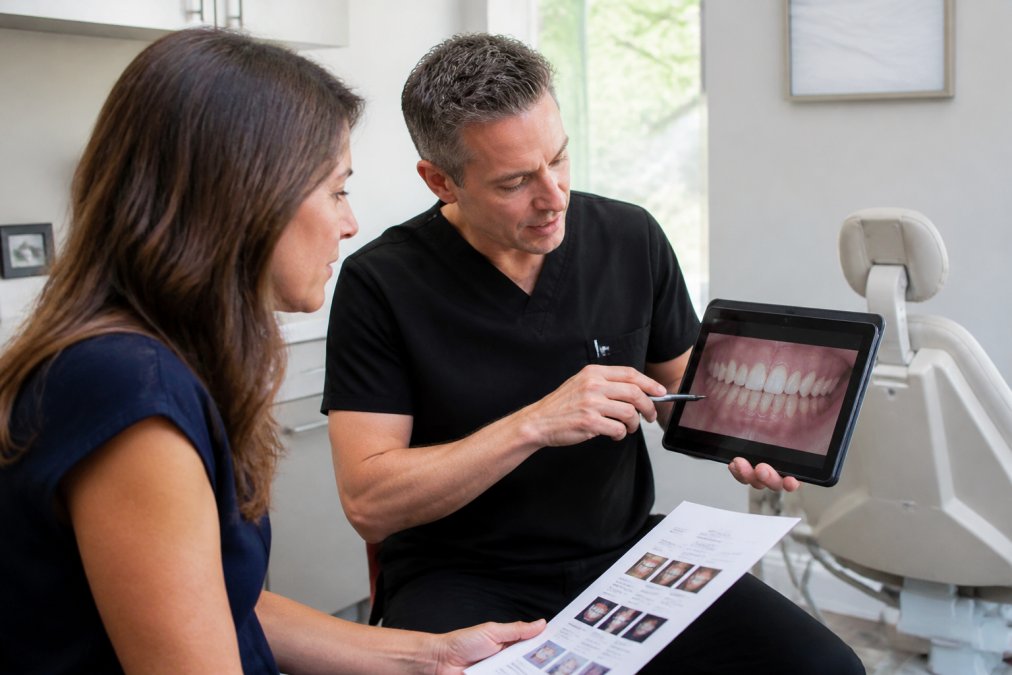
This is where you can separate a high-tech provider from a general practitioner. Ask whether the practice uses digital smile design software that lets you preview a proposed result before any tooth is touched. A dentist who can show you a simulated smile on screen, walk through the tooth proportions and gum-line changes, and explain why one material or prep style fits your face is planning your case, not just selling a procedure. If the answer is "we'll figure it out as we go," that is a planning gap, not a personality quirk.
Questions About Cost and Post-Treatment Support
- What are the out-of-pocket costs, and what financing options do you offer?
- What does post-procedure support look like if something goes wrong?
- How do you handle complications or emergency protocols after treatment?
Ask for a written treatment plan that itemizes each procedure rather than a single bundled number. Then ask what happens if a restoration chips, loosens, or needs adjustment, and who is responsible for the cost of that fix. A dentist who stands behind their work will put the terms in writing.
A dentist who answers these clearly and without defensiveness is a dentist worth trusting. Vague answers about pricing, timelines, or credentials are your cue to keep looking.
The Benefits of In-House Dental Lab Services for Cosmetic Work
In-house dental lab services give a practice direct control over the precision and turnaround of custom restorations. When a dentist works with an on-site lab, adjustments happen in real time rather than across a multi-week shipping cycle.
The practical benefits of in-house dental lab services include:
- Faster turnaround on crowns, veneers, and full-arch restorations
- Fewer fitting issues because the technician and dentist collaborate directly
- Better color matching for natural-looking results
- Reduced need for multiple temporary fixes during treatment
For patients pursuing a smile makeover, this translates to fewer appointments and more predictable outcomes. When the lab is off-site, a single misfit restoration can add weeks to your treatment plan.
Is Invisalign Good for Complex Bite Issues?
Invisalign can address some complex bite issues, but it is not a universal solution. Clear aligners work well for many cases of crowding, spacing, and mild to moderate bite problems. Severe skeletal discrepancies, significant jaw misalignment, or cases requiring major tooth movement often need a combined approach with orthodontics or oral surgery.
The honest answer depends on your specific case. A qualified cosmetic dentist will use digital imaging and intraoral scans to model your bite and determine whether aligners alone can achieve your aesthetic goals. If they cannot, a good clinician will tell you so rather than sell you a treatment that will not deliver results.
American Association of Orthodontists on clear aligner treatment
Understanding Costs, Insurance, and Financing Options
Cosmetic dentistry is largely elective, which means most dental insurance plans do not cover procedures like veneers, bonding, or whitening. This is the reality most guides gloss over, and it is the single biggest source of sticker shock for patients.
Why Insurance Rarely Covers Cosmetic Work
What Out-of-Pocket Really Looks Like
Financing Options to Ask About
How to Compare Quotes Fairly
Long-Term Maintenance and Post-Procedure Support
| Evaluation Factor | What to Look For | Red Flag |
|---|---|---|
| Credentials | Board certification, continuing education | Vague or evasive answers |
| Photo gallery | Varied, natural-looking results | Only a few staged photos |
| Reviews | Consistent, detailed feedback | Repeated complaints about rushing |
| Consultation | Written plan with itemized costs | Pressure to decide same day |
| Post-care | Clear support and emergency protocols | No follow-up plan offered |
Conclusion
Frequently Asked Questions
What's the difference between a regular dentist and a cosmetic dentist?
A general dentist focuses on overall oral health, including exams, cleanings, and fillings. A cosmetic dentist has additional training in aesthetic procedures like porcelain veneers, teeth whitening, and smile makeovers. While both can perform some overlapping treatments, a cosmetic dentist typically has advanced continuing education in smile design, dental bonding, and minimally invasive techniques. When choosing a cosmetic dentist, ask about their specific training.
What credentials should I look for in a cosmetic dentist?
Look for board certification, membership in professional organizations like the American Academy of Cosmetic Dentistry, and evidence of continuing education in cosmetic procedures. A dentist who has completed specialized training in porcelain veneers, smile design, or implantology brings deeper expertise. Also check whether they use digital imaging and intraoral cameras for precise treatment planning. During your consultation, ask directly about their clinical experience with the specific procedure you want.
How do I evaluate before-and-after photos of cosmetic dental work?
Ask to see before-and-after photos of patients with similar aesthetic goals and dental health starting points. Look for natural-looking results, consistent lighting and angles, and cases that match your specific concerns, whether that's teeth whitening, dental bonding, or a full smile makeover. A reputable cosmetic dentist will have a gallery and can explain the treatment plan behind each result. Don't rely on a single photo; review multiple cases to assess consistency.
What questions should I ask during a cosmetic dentistry consultation?
Ask about the dentist's credentials, how many times they've performed your specific procedure, and what technology they use (such as digital smile design or intraoral cameras). Inquire about the full treatment plan, expected timeline, and what happens if something goes wrong after the procedure. Also ask about out-of-pocket costs, financing options, and whether the practice has an in-house dental lab, which can improve precision and turnaround time.
Does the American Academy of Cosmetic Dentistry offer a board certification?
The American Academy of Cosmetic Dentistry (AACD) offers accreditation, which is a rigorous process that requires submitting clinical cases for peer review. While not a board certification in the traditional sense, AACD accreditation signals a high level of commitment to cosmetic dentistry. Other organizations, such as the American Board of Cosmetic Dentistry, offer board certification. When evaluating a cosmetic dentist, ask about any additional credentials beyond a standard dental degree.
Is Invisalign good for complex bite issues?
Invisalign can address many complex bite issues, including overbites, underbites, crossbites, and crowding, especially when prescribed by an experienced provider. However, severe skeletal discrepancies may require a combination of orthodontics and other treatments. A cosmetic dentist with training in clear aligners can assess your bite and determine if Invisalign is appropriate. Ask about their experience with complex cases and whether they use digital imaging to plan your treatment.