 how-to
Is General Anesthesia Safe for Dental Implants?
Table of Contents
- Is General Anesthesia Safe for Dental Implants?
- Types of Anesthesia Used for Dental Implant Surgery
- General Anesthesia Risks for Dental Surgery
- Who Administers and Monitors General Anesthesia
- When General Anesthesia May Be Recommended
- Preoperative Preparation and What to Expect
- Questions to Ask Before Dental Implant Surgery
- Recovery Timeline and Discharge Precautions
- Frequently Asked Questions
Last Updated: October 15, 2026
Is General Anesthesia Safe for Dental Implants?
Dental implant surgery is a significant procedure, and many patients worry about whether is general anesthesia safe for dental implants.
At Trinity Dental Arts, most patient anxiety about anesthesia comes from not knowing what to expect. This guide covers how general anesthesia works for implant surgery, who administers it, and when it's a reasonable choice.
Safety depends on your medical history, the complexity of your procedure, and the expertise of your surgical team.
Types of Anesthesia Used for Dental Implant Surgery
Your oral surgeon offers several anesthesia options for implant placement. Your choice depends on the scope of treatment and your comfort level.
Local Anesthesia Alone
Local anesthesia numbs only the implant area, and you remain fully awake. The surgeon injects numbing medication around the site before beginning.
It works well for simple cases with one or two implants, and you can drive yourself home. However, you'll hear and feel vibrations from the surgical tools, and the procedure's duration can feel long.
Local anesthesia carries minimal risk and is the most affordable option for straightforward placements.
Oral Sedation
Oral sedation means taking a sedative by mouth before your procedure. You remain conscious but deeply relaxed and may not remember much afterward.
The medication takes effect about 30 minutes in.
You cannot drive afterward, so arrange transportation and plan to rest for the day. This option costs more than local anesthesia but less than IV sedation.
Conscious IV Sedation
Conscious IV sedation delivers medication directly into your bloodstream, producing deeper relaxation than oral sedation. You remain responsive but won't remember the procedure.
An anesthesia professional monitors your vital signs throughout, and it provides excellent anxiety relief for patients who fear dental work.
Recovery is faster than with general anesthesia, and most patients feel normal by the next day. It costs more than oral sedation but less than general anesthesia.
General Anesthesia Risks for Dental Surgery
General anesthesia for dental implant surgery suppresses your protective reflexes, including your ability to breathe on your own and your cough and swallow reflexes. That is the core reason it carries more risk than local anesthesia or conscious IV sedation. The risk is not the same for every patient, though. It depends heavily on your individual health profile, which is why a thorough preoperative evaluation matters more than any generic list of side effects.
Common, Self-Limiting Side Effects
Most patients experience some of the following, which typically resolve within hours:
- Nausea and vomiting as the medication wears off
- Sore throat from the breathing tube or airway device
- Drowsiness, grogginess, and slowed reaction time
- Dizziness when standing up too quickly
- Mild shivering or feeling cold during emergence
- Confusion or emotional swings during the first hour of waking
These are expected, not signs something went wrong, and rarely require anything beyond time and monitoring.
Serious Risks and Who Faces Them
Serious complications are uncommon in an accredited setting but possible: allergic reactions, breathing difficulties or airway obstruction, irregular heart rhythms, blood pressure swings, and, rarely, aspiration of stomach contents. Malignant hyperthermia is a rare inherited reaction to certain anesthetic gases, which is why family history matters.
Your personal risk level rises with certain factors. Be prepared to disclose all of the following:
- Heart disease, prior heart attack, or arrhythmia. Anesthesia affects heart rate and blood pressure, so cardiac history changes monitoring and medication choices.
- High blood pressure. Uncontrolled hypertension increases the risk of cardiovascular events during surgery.
- Diabetes. Blood sugar can swing under anesthesia, and poor control slows healing and raises infection risk.
- Respiratory conditions such as asthma or COPD, which affect how well you tolerate airway management.
- Sleep apnea. This is one of the most important disclosures. Sleep apnea makes you more sensitive to sedatives and raises the risk of breathing problems after surgery. Your team may recommend extended monitoring, a different anesthesia approach, or an overnight stay.
- Obesity. It can affect airway management, medication dosing, and how quickly you clear anesthetic drugs.
- Smoking. It impairs lung function and healing and increases airway irritation.
- Age. Older adults often need lower medication doses and recover more slowly.
- Prior anesthesia reactions, whether in you or a blood relative.
- Current medications and supplements. Blood thinners, aspirin, certain antidepressants, and some herbal supplements can interact with anesthetic drugs.
What to Disclose Before Treatment
Honesty here is not optional, your provider builds your plan around your complete medical picture. Bring a written list of every prescription, over-the-counter medication, and supplement you take, with doses. Mention any past reaction to anesthesia, even a mild one, and any family history of anesthesia problems, including malignant hyperthermia.
The American Society of Anesthesiologists publishes standards for pre-anesthesia evaluation that guide how your provider assesses your fitness for general anesthesia. ASA standards for perioperative care These standards emphasize a documented review of your medical history, medications, and risk factors before any anesthetic is given.
How Risk Is Reduced in Practice
Risk is managed, not just identified. Your provider selects medications for your health profile, adjusts doses in real time, continuously monitors heart rate, blood pressure, oxygen saturation, and breathing, and keeps emergency equipment and reversal agents ready. In an accredited facility with a qualified provider, the realistic risk of a serious complication is low.
Who Administers and Monitors General Anesthesia
A qualified anesthesia professional, a board-certified anesthesiologist or a certified registered nurse anesthetist (CRNA), administers and monitors your general anesthesia. Both have extensive training.
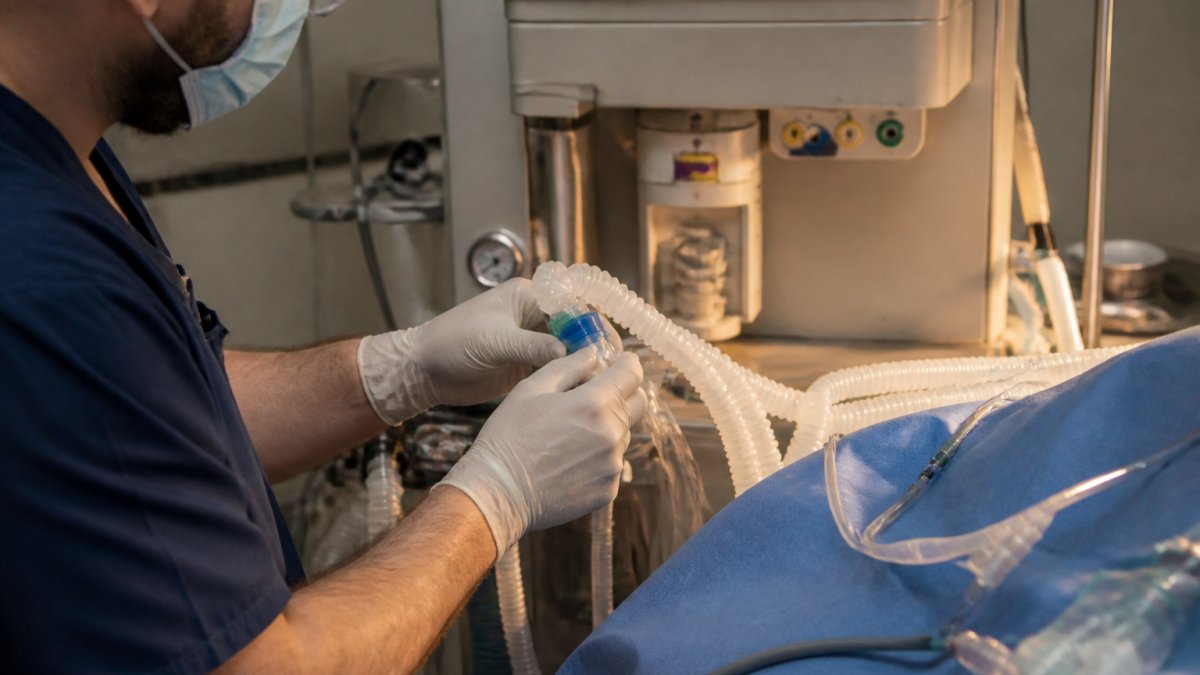
The anesthesia provider stays with you throughout, continuously watching your heart rate, blood pressure, oxygen level, and breathing.
Our surgical team includes experienced professionals trained in anesthesia administration and monitoring, using current equipment and established safety protocols.
When General Anesthesia May Be Recommended
General anesthesia makes sense for certain patients. Your oral surgeon may recommend it for severe dental anxiety, when patients cannot relax enough for conscious sedation or local anesthesia alone.
Extensive procedures, multiple implants or bone grafting, benefit from general anesthesia, keeping you comfortable through cases that may take several hours.
Patients who cannot hold still, due to tremors, Parkinson's disease, or severe anxiety, may need general anesthesia for precise surgical work.
Young children sometimes receive general anesthesia for dental implants, though this is less common, as may patients with developmental disabilities or autism.
Preoperative Preparation and What to Expect
Proper preparation reduces anesthesia risks significantly. Follow your surgeon's specific instructions carefully.
You'll typically fast for 6-8 hours before general anesthesia, no food or drinks after midnight for morning surgery.
Blood thinners, aspirin, and some supplements may need to be discontinued.
Arrange transportation before your appointment, you cannot drive for 24 hours after general anesthesia.
Wear loose, comfortable clothing, avoid jewelry and nail polish, and remove contact lenses if you wear them.
Questions to Ask Before Dental Implant Surgery
Asking the right questions helps you feel prepared. Discuss any concerns with your surgical team.
Request the anesthesia provider's qualifications and ask how many implant surgeries they've managed under anesthesia.
Ask what monitoring equipment will be used and what protocols exist if something unexpected happens.
Discuss pain management: what medications you'll receive and how to manage discomfort at home.
Recovery Timeline and Discharge Precautions
Recovery from general anesthesia is staged, and you won't be discharged until you meet specific criteria. Knowing the timeline and precautions reduces the chance of a setback.
Phase 1: The Recovery Area (30 to 60 Minutes)
After surgery you're moved to a recovery area where your provider monitors you as the medication wears off, checking alertness, breathing, blood pressure, heart rate, and oxygen. Feeling confused, emotional, or sleepy is normal. You won't go home until you can breathe normally on your own, your vital signs are stable, and you can sit up and usually walk with assistance.
Phase 2: Discharge Criteria and the First 24 Hours
You cannot drive yourself home or take a rideshare or taxi alone. A responsible adult must drive you and stay with you for at least the first several hours, ideally overnight, arrange this before your appointment.
For the first 24 hours after general anesthesia:
- Do not drive. Reaction time and judgment are impaired even if you feel alert.
- Do not operate machinery or make important decisions, including signing legal or financial documents.
- Do not drink alcohol or take sedatives unless your surgeon approves them.
- Do not be alone. Someone should be with you in case you become dizzy, nauseated, or unsteady.
- Rest. Light activity is fine, but no strenuous exertion.
Eating, Drinking, and Medication
Start with clear liquids and soft foods once fully alert and not nauseated. Avoid hot liquids until sensation returns, since numbness can cause burns. Take prescribed pain medication exactly as directed, and don't mix it with alcohol or sedatives.
Swelling and Discomfort Timeline
Swelling typically peaks around day two or three. Apply ice 20 minutes on, 20 minutes off, during the first 48 hours. Mild to moderate discomfort is normal, managed with prescribed medication then over-the-counter pain relievers. Most patients feel significantly better by day three or four. Avoid strenuous activity, heavy lifting, and contact sports for at least a week.
When You Can Resume Normal Activities
Most patients return to light work within a few days, depending on the surgery's extent and their response to anesthesia. Full healing takes several months as the implant integrates with your jawbone, invisible but critical to long-term success, so follow aftercare instructions even after you feel normal.
Warning Signs: When to Seek Urgent Care
Most recoveries are uneventful, but some symptoms require immediate attention. Call your surgeon or seek emergency care if you experience:
- Difficulty breathing, chest pain, or a racing or irregular heartbeat, call 911.
- Excessive bleeding that does not stop with gentle pressure.
- Severe pain not controlled by your prescribed medication.
- Fever above 101°F, or chills.
- Persistent vomiting that prevents you from keeping fluids or medication down.
- Swelling that continues to increase after day three, or swelling that spreads to your neck or throat.
- Numbness that does not resolve beyond the expected window.
- Signs of infection at the implant site, such as pus, worsening redness, or a foul taste.
Knowing these thresholds in advance lets you act quickly if something feels wrong.
Frequently Asked Questions
Can you get dental implants under sedation instead of general anesthesia?
Yes. IV sedation and oral sedation are common alternatives to general anesthesia for dental implant surgery. IV sedation allows you to remain conscious but relaxed and unaware of the procedure, while oral sedation uses medication taken by mouth. Both options provide pain control and anxiety relief with lower risks than general anesthesia. Your oral surgeon will recommend the best option based on your anxiety level, medical history, and the complexity of your implant procedure.
What are the main risks of general anesthesia for dental implants?
General anesthesia carries risks including nausea, vomiting, sore throat, temporary sleepiness, and shivering during recovery. Serious complications are rare but can include breathing problems, allergic reactions, and cardiovascular events. Risk increases if you have existing health conditions, take certain medications, or require extensive treatment like bone grafting. A thorough medical history assessment before surgery helps your anesthesia provider identify and manage individual risk factors.
Will I be fully asleep during dental implant surgery with general anesthesia?
Yes, with general anesthesia you will be fully asleep and have no memory of the procedure. An anesthesia provider monitors your breathing, heart rate, and oxygen levels throughout surgery. You'll wake after the procedure is complete. This differs from IV sedation, where you remain conscious but heavily relaxed and may have limited memory of the implant placement.
What questions should I ask my oral surgeon before dental implant surgery?
Ask about the anesthesia options available, which option is recommended for your specific case, who will administer the anesthesia, what preoperative fasting is required, what medications to stop before surgery, expected recovery time, discharge precautions, and warning signs that require urgent care. Also discuss your complete medical history, current medications, and any previous anesthesia complications. Understanding your surgeon's experience with your chosen anesthesia type helps build confidence in your treatment plan.