 How-to
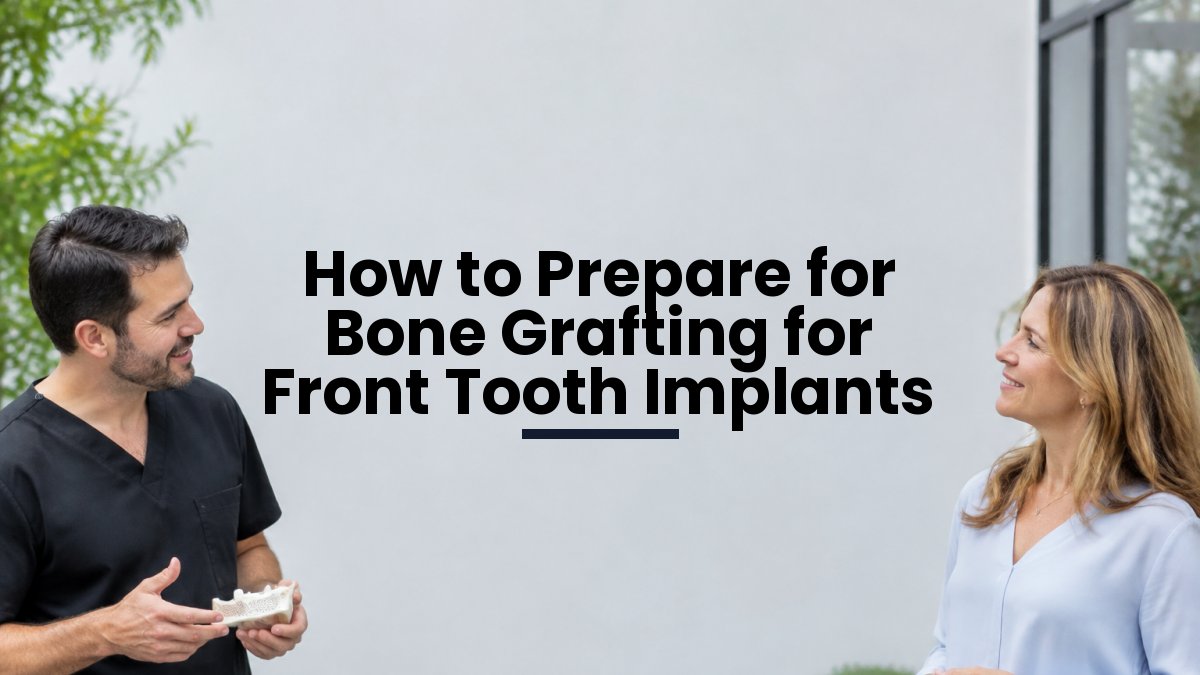
How to Prepare for Bone Grafting for Front Tooth Implants
Last Updated: November 13, 2026
Quick Summary
Bone grafting for front tooth implants rebuilds bone that has thinned after a tooth was lost, giving the implant a solid base to grip. A dentist usually checks bone with imaging before deciding whether a graft is needed. Healing typically takes several months before the implant can be placed.
- Bone grafting adds bone material so the patient's own bone can grow into it.
- A CBCT scan is usually used to check bone before deciding on a graft.
- Thin or shrunken bone can make an implant loose or cause gum recession.
- Graft materials include your own bone, donor bone, animal-derived bone and synthetic options.
- Contact your dentist promptly for worsening pain, swelling, pus, fever or a loose graft.
Table of Contents
- Why Bone Grafting Comes Before a Front Tooth Implant
- Who Needs a Bone Graft Before a Front Tooth Implant
- Choosing Graft Material and Understanding the Cost Range
- Dental Bone Graft Healing Stages and How Long After Bone Graft for Implant
- Signs of Failed Dental Bone Graft and What to Do
- How to Speed Up Bone Graft Healing After Surgery
- Booking Your Front Tooth Consultation at Trinity Dental Arts
- Frequently Asked Questions
Why Bone Grafting Comes Before a Front Tooth Implant
Bone grafting for front tooth implants is often the step that decides whether the final result looks natural and lasts. A graft can rebuild bone that has thinned after a front tooth was lost, so the implant has something solid to grip.
Dental bone graft is a procedure that adds bone material to the jaw. The new material gives the body a scaffold, and over time the patient's own bone grows into it. This is why it is so often part of the plan before a front tooth implant.
The front teeth are hard to replace well. To see what the surgery and recovery look like from start to finish, read What to Expect During Implant Surgery. They are seen every time you smile or speak, so even a small loss of bone can show as a gum dip or a shadow at the gumline. Bone that thins after an extraction is the usual reason a graft is needed.
Why bone matters for the implant:
- The implant is a titanium post that acts like a tooth root.
- It needs enough bone around it to stay stable.
- Thin bone can make the implant loose or make the gums recede.
A common mistake is assuming the implant can simply be placed right after the tooth comes out. Sometimes it can, but often the bone has already started to shrink by then.
Who Needs a Bone Graft Before a Front Tooth Implant
Not everyone needs a graft. A dentist usually checks the bone with imaging, such as a CBCT scan, before deciding. Your need depends on how much bone is left and how it is shaped.
You may need a graft if:
- The tooth has been missing for a long time.
- The socket has shrunk or collapsed.
- Gum disease has damaged the bone around the tooth.
- The bone is too thin or too narrow for an implant.
Bone loss can also start quickly after an extraction. This is one reason a graft is sometimes placed at the time of extraction, known as socket preservation.
If your bone is not ready, the dentist may suggest waiting or building it up first. This is a normal part of planning and does not mean the implant will fail.
Choosing Graft Material and Understanding the Cost Range
Graft material choice matters on a front tooth, where the material can affect how new bone forms and how the final crown and gum contour look. Your dentist can recommend a material based on the size and shape of the defect, your health history, and whether the graft is placed at extraction or later.
The four material families and their practical trade-offs:
- Autograft (your own bone). Typically harvested from the chin or the back of the jaw. It carries living bone cells and proteins that support new bone formation, which is why many clinicians consider it a strong choice for larger or more demanding defects. The trade-off is a second surgical site with its own discomfort, swelling, and a small risk of numbness near the harvest area.
- Allograft (donor bone). Processed human bone from a tissue bank, available in forms such as freeze-dried bone or demineralized freeze-dried bone. It avoids a second surgical site and is widely used for socket preservation and ridge augmentation. Processing reduces but does not eliminate the theoretical risk of disease transmission, and most practitioners find it heals predictably in routine front-tooth cases.
- Xenograft (animal-derived). Usually bovine bone, processed to remove organic material so what remains acts as a slow-resorbing mineral scaffold. It can hold volume well over time, which is useful when the goal is to preserve ridge width for an implant. The trade-off is slower replacement by your own bone and patient preference around animal-derived material.
- Alloplast (synthetic). Man-made materials such as calcium phosphate or bioactive glass. There is no donor-site surgery and no biologic source concern, and the material is fully consistent from batch to batch. Resorption rates vary by product, and some synthetics are better suited to filling small defects than to rebuilding a large ridge.
Many grafts are actually composites: a particulate material mixed with a small amount of your own bone or with a barrier membrane. Membranes, often made of collagen, are frequently used on front-tooth sites to hold the graft in place and to guide gum and bone healing, a technique called guided bone regeneration.
What drives the cost. Pricing depends on the number of sites, the material chosen, whether a membrane is used, whether sedation is involved, and whether the graft is bundled with the extraction or implant placement. For current prices or a quote, please contact Trinity Dental Arts directly. You can also read about affordable dental implants, costs and financing options.
Front-tooth-specific considerations. The bone on the facial side of a front tooth is thin, sometimes less than a millimeter, and it is the wall that supports the gumline. When that wall is damaged, the material and membrane choice matters more than it would in the back of the mouth, because the goal is not just enough bone to hold the implant but enough bone and gum to keep the crown looking like it belongs there.
Dental Bone Graft Healing Stages and How Long After Bone Graft for Implant
Healing is where front-tooth grafting differs most from grafting elsewhere. You are not only waiting for bone to bond to the graft; you are waiting for the gum and bone to settle into a contour that will support a crown that matches its neighbor.
The healing stages, in order:
- Days 1 to 3. Swelling and mild discomfort peak. The graft is held in place by the clot and any membrane or sutures. Follow the aftercare instructions closely; this is when the site is most vulnerable.
- Weeks 1 to 2. Gum tissue closes over the graft. Sutures are typically removed or dissolve. The graft is not yet solid; it is a scaffold that your body is beginning to colonize.
- Weeks 3 to 8. New blood vessels and early bone form within the graft. The site feels normal to most patients, but the bone is still soft and remodeling.
- Months 3 to 6. The graft consolidates and your own bone replaces or integrates with it. This is the window when most dentists re-image and decide whether the ridge is ready for an implant. Larger or block grafts can take longer.
- Months 6 to 9 and beyond. For a front tooth, the gum contour is often allowed to mature before the final crown is made, so the gumline settles rather than shrinking away from the crown later.
The full front-tooth timeline from extraction to final crown. A staged sequence generally follows a set order: extraction with socket preservation or ridge augmentation, a healing period before implant placement, implant placement, a further period for the implant to integrate with bone, and then impressions and final crown delivery.
Immediate versus staged placement, and how to think about the choice. Immediate placement means the implant goes in at the same visit as the extraction and graft. It can shorten the overall timeline and preserve gum architecture, but it depends on having enough intact bone to stabilize the implant and on the absence of active infection.
Temporary tooth options during healing. A temporary tooth is often used to fill the space while the graft heals. Ask your dentist which temporary options suit your case, how the temporary will be made, how it will look, and what you should avoid eating while wearing it.
What can go wrong, and what happens next. A graft can fail to provide enough bone, or it can heal with less volume than planned. Warning signs include pain that worsens after the first week, swelling that increases rather than resolves, pus or a bad taste, exposed graft material, or a loose membrane.
The healing timeline below summarises the main stages a front-tooth graft passes through before an implant can be placed.
| Stage | Timing | What happens |
|---|---|---|
| Early swelling | Days 1 to 3 | Swelling and discomfort peak; follow aftercare closely |
| Gum closure | Weeks 1 to 2 | Gum closes over the graft; sutures removed or dissolve |
| Early bone formation | Weeks 3 to 8 | New blood vessels and early bone form within the graft |
| Consolidation | Months 3 to 6 | Graft consolidates; dentist re-images to check readiness |
| Gum maturation | Months 6 to 9 and beyond | Gum contour settles before the final crown is made |
Signs of Failed Dental Bone Graft and What to Do
Most grafts heal without problems, but complications can happen. Contact your dentist promptly if you notice:
- Pain that gets worse instead of better after the first few days.
- Swelling that increases after the first few days.
- Pus, a bad taste, or a foul smell from the site.
- A loose graft or exposed material.
- Fever.
Do not wait to see if these symptoms go away on their own. Early care can often prevent a bigger problem. Your dentist can check the site and explain your options.
How to Speed Up Bone Graft Healing After Surgery
You cannot force bone to heal faster, but you can support the process. Good habits make a real difference.

- Follow your dentist's instructions for food, activity and medicine.
- Keep the area clean with gentle rinsing as directed.
- Eat a balanced diet with protein, calcium and vitamin D.
- Avoid smoking, which can slow healing and raise the risk of failure.
- Attend all follow-up visits so your dentist can track progress.
- Manage health conditions such as diabetes with your doctor's guidance.
Rest also matters. Your body does most of its repair while you sleep and take it easy.
Booking Your Front Tooth Consultation at Trinity Dental Arts
A good first step is a consultation. This visit lets the dentist review your teeth, take imaging, and talk through whether a graft is needed. Come prepared with questions about your options, timeline and costs.
At Trinity Dental Arts, our board-certified implantologist, Dr. Xhoana Gjelaj, can evaluate your bone and explain the plan in plain terms. Contact our office in Trinity, FL to schedule your visit and get a clear picture of your next steps.
Frequently Asked Questions
How long does a front tooth bone graft take to heal?
Most bone grafts take several months to integrate with the existing jawbone before an implant can be placed or loaded. Healing speed depends on the graft material, the size of the defect, overall health, and whether the site was smoking-free during recovery. Your dentist uses imaging to confirm enough new bone has formed before proceeding. Timelines vary, so ask for a plan specific to your case at your consultation with Trinity Dental Arts.
How painful is a bone graft for a tooth implant?
Most patients describe soreness and swelling that is manageable with prescribed or over-the-counter pain relievers during the first few days. Your dental team can explain the anesthesia and comfort options available for your procedure. Discomfort typically decreases steadily over the following week. Report severe or worsening pain to your dental team promptly.
What are the signs of a failed dental bone graft?
Warning signs can include persistent or increasing pain, swelling that worsens after the first few days, pus or a foul taste, loosening of the graft area, or exposed graft material. Any of these symptoms warrants a prompt call to your dental office. Early evaluation allows the team to check for infection and decide on appropriate treatment. Do not wait for symptoms to resolve on their own.
Can you get a front tooth implant right after a bone graft?
In some cases, implants can be placed at the same time as the graft, while in others the graft must heal before implant placement. The decision depends on the amount of bone present, the stability of the graft site, and the esthetic goals for the front teeth. Your clinician will explain which approach fits your situation. Ask about both immediate and staged options during your consultation.