 How-to
How to Clean Invisalign Aligners Step by Step at Home
Quick Summary
To clean Invisalign aligners, rinse them under lukewarm water as soon as you remove them, then brush gently with a soft toothbrush and unscented, clear antibacterial soap for about 30 seconds per tray. Rinse off all soap, shake off the water, and store them in their case. Clean your teeth before reinserting them.
- Remove and rinse aligners under lukewarm water immediately, not after they dry.
- Brush inside and outside for about 30 seconds per tray with a soft-bristled brush.
- Never use toothpaste, which is abrasive and leaves fine scratches that cloud the trays.
- Use only lukewarm water, since hot water softens the plastic and can warp the tray.
- Brush and floss your teeth before reinserting aligners to avoid trapping food and bacteria.
Table of Contents
- Why Clean Invisalign Aligners Every Day
- Supplies and Tools You Need for Cleaning
- Invisalign Cleaning Instructions: Daily Rinse and Brush Routine
- Using Invisalign Cleaning Crystals: Steps and How Often to Soak
- Cleaning Your Retainer with Baking Soda Safely
- Troubleshooting Cloudy, Stained or Odorous Aligners
- Booking Your Next Visit at Trinity Dental Arts
- Frequently Asked Questions
Why Clean Invisalign Aligners Every Day
Last Updated: November 18, 2026
Clean Invisalign aligners every day to keep your teeth healthy and your trays clear. Plaque, saliva and food particles build up on the plastic fast. Skipping a day lets bacteria grow and can leave a dull film or odor. Daily care is simple, and it takes only a few minutes.
Most people clean their aligners by rinsing them and brushing gently after each meal. The goal is to remove the film before it hardens and stains the plastic. Good daily habits also protect your oral hygiene, since bacteria trapped under the trays can affect your gums and teeth.
- Plaque builds up on aligners within hours of wearing them
- Food particles trapped under trays feed bacteria
- Clear trays stay clear longer with a steady routine
Watch out: Hot water can warp aligner plastic, so always use lukewarm water.
Supplies and Tools You Need for Cleaning
You do not need expensive products to clean your aligners well. A few basic items cover most of what you need.
- A soft-bristled toothbrush, used only for your aligners
- Lukewarm water
- Unscented, clear antibacterial soap
- A clean, dry case for storage
- Invisalign cleaning crystals, if you want a deeper clean
Avoid toothpaste, which is abrasive and can leave fine scratches that make trays look cloudy. Harsh cleaners and hydrogen peroxide can also damage the plastic over time. Keep a separate brush just for your trays so it never mixes with the brush you use on your teeth.
Invisalign Cleaning Instructions: Daily Rinse and Brush Routine
Follow this routine every time you take your aligners out, not just once a day. The goal is to remove the plaque film before it hardens into a layer that stains the plastic and traps odor.
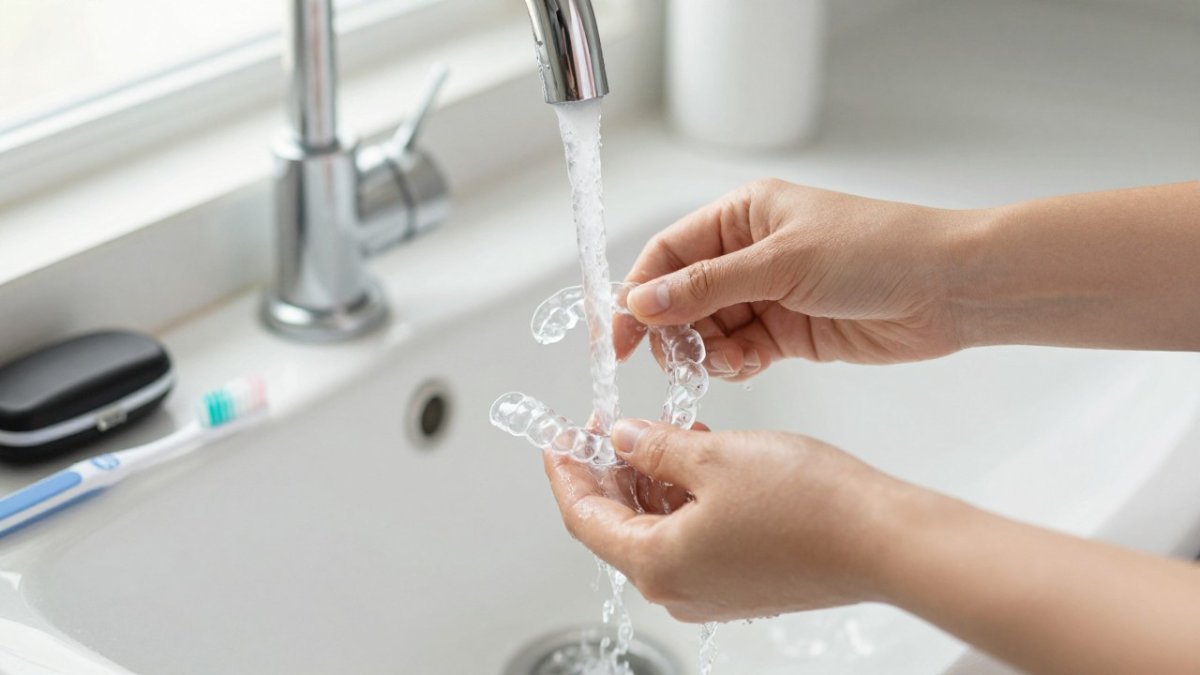
- Remove your aligners and rinse them under lukewarm water immediately. Do not let them sit dry in a case with saliva and food residue on them.
- Hold each tray under the running water and rub the inside and outside with your thumb to loosen the film before you brush.
- Brush the inside and outside gently with a soft-bristled toothbrush and a drop of unscented, clear antibacterial soap. Use light pressure and small circular strokes for about 30 seconds per tray. Do not scrub hard, and do not use toothpaste, which is abrasive and leaves fine scratches that make trays look cloudy.
- Rinse thoroughly under lukewarm water so no soap film stays on the plastic. Soap residue can taste bitter and irritate gums.
- Shake off excess water and place the aligners in their case. Do not wrap them in a napkin, where they are easily thrown away.
- Brush and floss your teeth before you put the aligners back in. Sealing food and bacteria under a tray feeds plaque and causes odor.
Watch out: Use lukewarm water only. Hot water softens the plastic and can warp the tray so it no longer fits, and very cold water does not dissolve soap residue as well.
Rinse after every meal and after any drink other than plain water. Coffee, tea, soda, and juice leave color and sugar against the plastic, and the longer they sit, the more they stain. If you cannot brush after a meal, at least rinse the trays and your mouth with water before reinserting them, then brush as soon as you can.
Keep a separate soft toothbrush just for your aligners. The brush you use on your teeth carries toothpaste residue and bacteria, and sharing one brush spreads both onto the trays. Replace the aligner brush periodically, or sooner if the bristles splay.
The routine below sums up the key steps and timings from the daily cleaning process.
| Step | What to do | Time or frequency |
|---|---|---|
| Rinse | Rinse aligners under lukewarm water right away | After each removal |
| Loosen film | Rub inside and outside with your thumb under running water | Before brushing |
| Brush | Use a soft brush with unscented clear antibacterial soap | About 30 seconds per tray |
| Rinse soap off | Rinse thoroughly under lukewarm water | Every cleaning |
| Store | Shake off water and place in the case | Every cleaning |
| Clean teeth first | Brush and floss before reinserting trays | Before reinserting |
Using Invisalign Cleaning Crystals: Steps and How Often to Soak
Cleaning crystals are a helpful addition to your daily routine. They dissolve in water to form a solution that removes buildup in hard-to-reach areas.
- Fill a cup with lukewarm water, not hot.
- Drop in one cleaning crystal and let it fully dissolve.
- Place your aligners in the solution and soak for the time listed on the package.
- Remove, rinse well with plain water and let them air dry briefly before storing.
Invisalign Cleaning Crystals How Often to Use Them
Many people soak their aligners a few times a week, along with their daily brushing. Follow the directions on your product and ask your provider if you are unsure how often to soak. Too much soaking can wear on the plastic, so do not use crystals more often than recommended.
Cleaning Your Retainer with Baking Soda Safely
Some people try baking soda on their retainers, but use it with care. A small amount mixed with water can help lift light residue. Scrub gently with a soft brush, then rinse very well so no grit remains.
Do not use baking soda on aligners every day. It can be slightly abrasive, which may scratch clear plastic over time. When in doubt, stick with lukewarm water, mild soap and cleaning crystals.
Troubleshooting Cloudy, Stained or Odorous Aligners
Most guides only tell you how to prevent cloudy trays. This section covers what to do once a tray is already cloudy, stained, or smelly, and how to tell whether it can be saved.
Cloudy trays. Cloudiness usually has one of two causes. The first is a plaque and mineral film that builds up when trays are not brushed often enough; this film often lifts with a soak in Invisalign cleaning crystals followed by a gentle brush. The second is fine surface scratches from abrasive toothpaste, baking soda, or a hard-bristled brush. Scratches scatter light and make the plastic look dull, and they cannot be polished out at home. If a tray looks cloudy right after a thorough soak and brush, scratches are the likely cause, and the tray will stay cloudy until it is replaced on schedule.
Stained trays. Staining comes from pigments in coffee, tea, red wine, soda, tomato sauce, and tobacco. The plastic absorbs color over the one to two weeks a tray is worn, so a tray that is stained late in its cycle is normal and will be replaced soon. For a tray that stains early, soak it in cleaning crystals, brush gently, and remove it before drinking anything other than water. Do not try to bleach a tray; bleach and hydrogen peroxide can degrade the plastic and leave a residue that irritates gums.
Odorous trays. A bad smell means bacteria have colonized the tray, usually because it was stored wet or worn while eating. Soak the tray in cleaning crystals, brush it thoroughly, and let it air dry completely before the next use. Store trays dry in a vented case rather than sealed in a damp one. If odor persists after a soak and a full dry, the tray is likely harboring bacteria in scratches and should be replaced.
Warped or cracked trays. A tray that no longer snaps into place, feels loose, or has a visible crack cannot be fixed by cleaning. Warping most often comes from hot water, a hot car, or a dishwasher. Stop wearing a warped or cracked tray and contact a qualified provider, because a poor fit can irritate gums.
- Soak first, then brush; brushing a dry tray grinds residue into the plastic
- Air dry trays fully before storing them in a case
- Keep trays out of hot water, hot cars, and dishwashers
- Replace trays on schedule rather than trying to rescue a damaged one
Persistent stains, odor, or cracked plastic may need a professional look. If simple cleaning does not help, check with a qualified dental provider.
Booking Your Next Visit at Trinity Dental Arts
Clean aligners work best when you also keep up with regular dental visits. A dental professional can check your trays, review your cleaning routine and address any concerns.
Contact a qualified dental provider to learn about treatment and book your next appointment. Daily care keeps your trays clear, and a professional check keeps your treatment on track.
Frequently Asked Questions
What is the best way to deep clean Invisalign aligners?
A weekly deep clean works well for most people. Brush each tray gently with a soft-bristled toothbrush and unscented, clear soap, rinse thoroughly with lukewarm water, then soak the aligners in a cleaning solution or a dissolved Invisalign cleaning crystal for about 15 minutes. Avoid hot water, which can warp the plastic. Always rinse before putting the trays back in, and ask your dentist or orthodontist if you have questions about your specific aligners.
How often should you clean Invisalign aligners?
Clean your aligners every time you take them out, ideally by rinsing them and brushing gently with lukewarm water and a soft-bristled toothbrush. Give them a deeper clean at least once a week to remove plaque buildup and odor-causing bacteria. Use Invisalign cleaning crystals when you soak the trays if you want a more thorough routine, and follow the package directions for timing.
Can you clean Invisalign aligners with baking soda?
Baking soda can be used to clean a clear retainer as a gentle abrasive when mixed with water and brushed lightly, but it can scratch the surface of aligner trays over time. Many users prefer a soft-bristled toothbrush with unscented, clear soap. If you are unsure which method suits your trays, check with your dental provider before trying a new cleaning method.
Can I use hydrogen peroxide to clean my Invisalign aligners?
Hydrogen peroxide is not recommended as a routine cleaning agent for aligners because it can affect the plastic and may leave residue if not rinsed thoroughly. Stick with lukewarm water, a soft-bristled toothbrush, unscented soap, or Invisalign cleaning crystals. If you have stained or cloudy trays, a dental professional can advise you on safe options.