 ultimate-guide
Are Same-Day Dental Implants Safe? What You Need to Know
Table of Contents
- What Are Same-Day Dental Implants and How Do They Work?
- Same-Day Dental Implant Recovery Time and What to Expect
- Candidates for Immediate Load Dental Implants: Who Can Get Them?
- Dental Implant Complications and Prevention Strategies
- Same-Day Implants vs. Traditional Implants: Safety and Success Rates
- Pre-Operative Diagnostic Technology and Treatment Planning
- Long-Term Outcomes and Maintaining Your Same-Day Implants
- Conclusion
Last Updated: August 29, 2026
What Are Same-Day Dental Implants and How Do They Work?
Same-day dental implants place a prosthetic tooth on an implant the same day the implant is surgically inserted into the jawbone, unlike traditional implants which require several months of healing before the crown is attached.
The procedure uses immediate loading: a titanium post is anchored into the jawbone, and a temporary or permanent crown is secured the same day rather than waiting for osseointegration (bone fusion to the implant). This requires precise surgical planning and specific patient conditions to succeed.
At Trinity Dental Arts, our board-certified implantologist uses advanced diagnostic technology to evaluate whether immediate loading is viable. The decision depends on bone density, implant stability measurements, and overall oral health. Not every patient is a candidate, and not every tooth position can support same-day placement.
Same-day implants rely on primary stability, the implant must have enough mechanical grip in the bone to prevent micromotion during healing. If bone is too soft or placement is compromised, the implant may fail to integrate properly. This is why safety hinges entirely on patient selection and surgical precision.
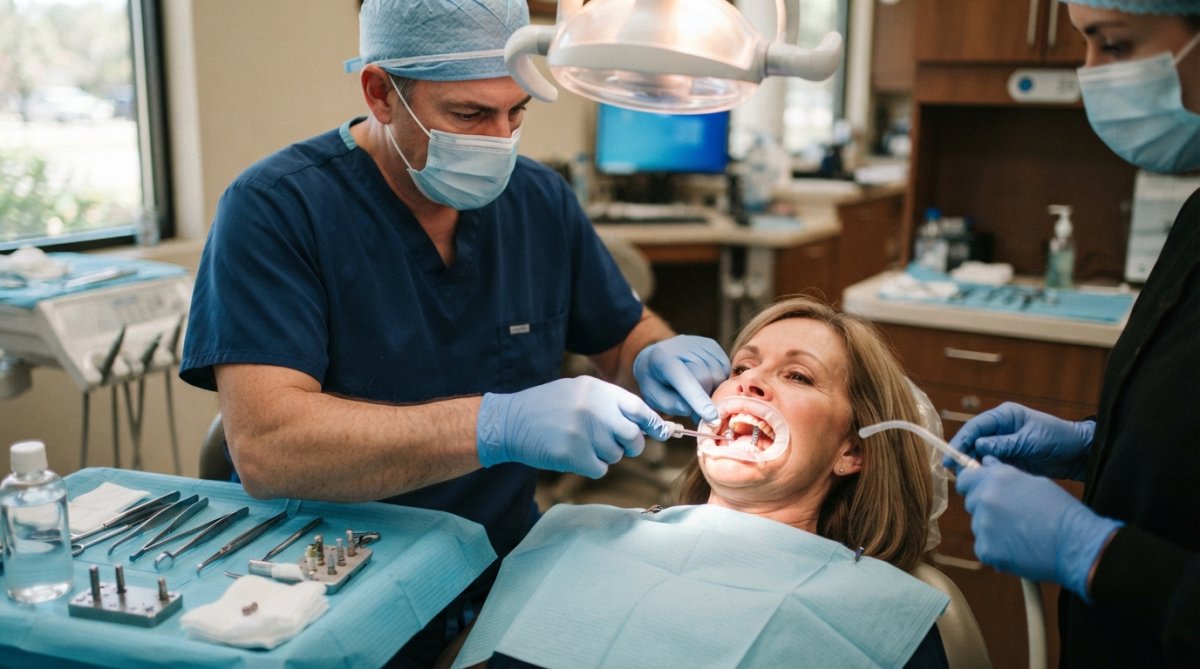
Modern protocols are far more selective than early techniques, which were applied too broadly. Today's same-day implants have comparable success rates to traditional implants when proper case selection is followed.
Same-Day Dental Implant Recovery Time and What to Expect
Recovery from same-day dental implants is faster than traditional surgery, but most significant discomfort occurs in the first 24 to 72 hours. Swelling typically peaks around day two or three, then gradually subsides over the following week.
During the first week, avoid hard or hot foods, refrain from smoking, and take prescribed antibiotics and pain medications as directed. Most patients return to light work within 3 to 5 days, though strenuous activity should be avoided for at least two weeks.
The temporary crown requires careful maintenance. Avoid chewing directly on the implant side and follow specific oral hygiene instructions to prevent infection. Unlike traditional implants where the site remains undisturbed, same-day implants have a prosthetic in place immediately, creating additional wound management considerations.
Full osseointegration still takes 3 to 6 months. During this period, the implant cannot be treated like a fully healed tooth. The temporary crown may need adjustments as bone heals and settles. Minor discomfort or sensitivity during integration is normal and typically managed with over-the-counter pain relief.
By month three, most patients report their same-day implant feels stable and integrated. The permanent crown can usually be placed after full osseointegration is confirmed through imaging. This staged approach provides immediate function while protecting the implant during the critical integration window.
Candidates for Immediate Load Dental Implants: Who Can Get Them?
Not everyone is a candidate for same-day dental implants. The ideal candidate has adequate bone density, good overall health, and realistic expectations about healing.
Key candidacy factors include:
- Sufficient bone volume in the implant site (determined through 3D imaging)
- Bone density that allows primary stability at placement
- No active periodontal disease or untreated tooth decay
- Good oral hygiene habits and commitment to post-operative care
- Non-smoker or willingness to quit during the healing period
- No uncontrolled diabetes or other systemic conditions that impair healing
- Realistic expectations about temporary vs. permanent restoration timelines
Patients with significant bone loss may not qualify for immediate loading. Bone grafting or sinus lift procedures may be necessary, extending the timeline 4 to 6 months.
Age alone is not disqualifying. Both younger patients and seniors can be candidates if bone quality and overall health support the procedure. However, patients over 65 should have bone density and healing capacity evaluated carefully.
Patients with previous implant failure should discuss this openly with their implantologist. Previous failure doesn't automatically exclude someone, but it requires investigation into the cause and whether the patient's situation has changed.
Dental Implant Complications and Prevention Strategies
While same-day dental implants are generally safe with proper protocols, complications can occur.
Common complications include:
- Implant failure, when the implant does not integrate with bone (typically 1-5% for well-executed placements)
- Infection at the surgical site, which develops if post-operative care instructions aren't followed
- Marginal bone loss, triggered by poor oral hygiene, smoking, or excessive bite forces
- Peri-implantitis, an inflammatory condition affecting soft tissue and bone around the implant
- Bite misalignment, if the crown creates uncomfortable bite forces
Prevention requires patient discipline. Smoking significantly increases infection risk and impairs bone healing; quitting before surgery is strongly recommended. Rigorous oral hygiene prevents bacterial buildup that leads to peri-implantitis.
Regular follow-up appointments allow monitoring of bone levels and soft tissue health. Imaging at 6 months, 1 year, and annually thereafter detects early signs of marginal bone loss. Choosing a practice with commitment to long-term follow-up care, like Trinity Dental Arts, matters significantly.
Bite force management is critical. Patients who grind their teeth should wear a night guard. Avoiding hard foods during the first year protects the implant while osseointegration completes.
Same-Day Implants vs. Traditional Implants: Safety and Success Rates
The comparison between same-day and traditional implants comes down to timeline versus safety margins. Both are safe when executed properly.
Traditional implants follow a two-stage protocol: the implant is placed and left undisturbed for 3 to 6 months while osseointegration occurs. Only after bone fusion is confirmed does the prosthetic crown attach. This approach has the longest track record and is considered the gold standard.
Same-day implants compress the timeline by placing the prosthetic immediately, but require stricter patient selection and more precise surgical execution. When conditions are met, success rates for same-day implants are comparable to traditional implants, often reported at 95-98%.
Traditional implants have a larger margin for error because the implant site is protected during healing. Same-day implants require ideal bone quality, flawless placement, and precise patient compliance. If any factor is compromised, failure risk increases.
For patients with excellent bone density and commitment to aftercare, same-day implants offer immediate function and restored confidence. For patients with marginal bone quality or compliance concerns, traditional implants may be safer. Trinity Dental Arts uses advanced diagnostic technology to determine which approach is optimal for each patient, matching the protocol to your anatomy and circumstances.
Pre-Operative Diagnostic Technology and Treatment Planning
Modern same-day implant success depends on what happens before surgery. Diagnostic technology has transformed implant planning into a precise science.
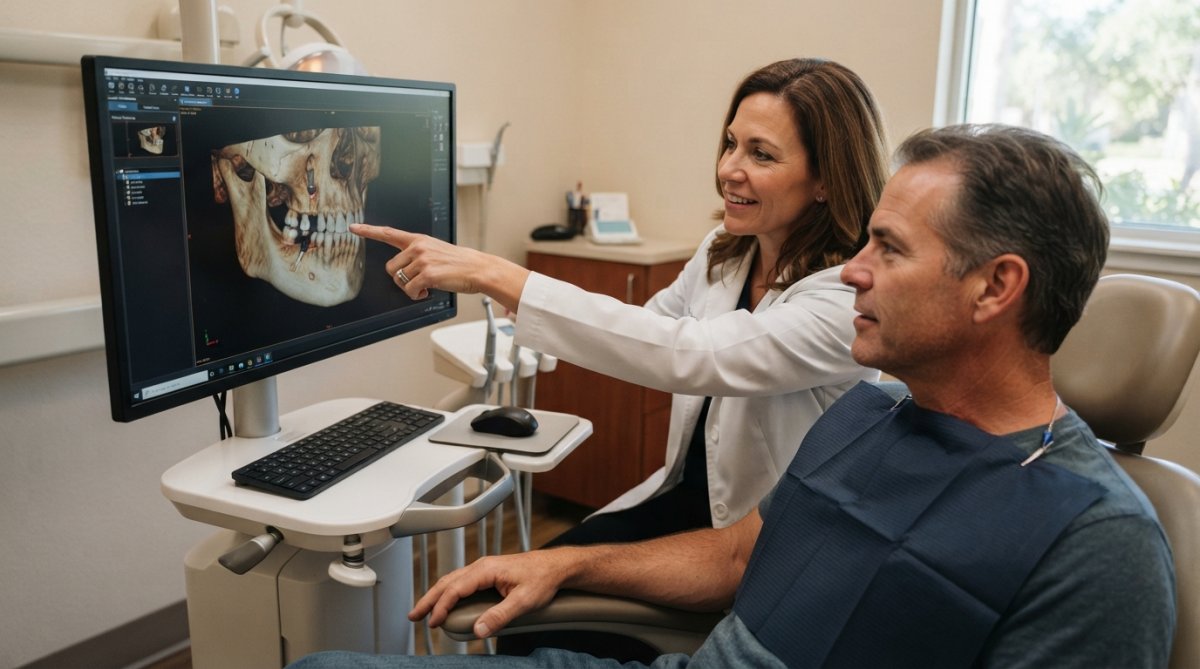
Three-dimensional cone beam computed tomography (CBCT) captures exact jawbone dimensions, including bone density, height, width, and vital structures like the inferior alveolar nerve. This determines whether immediate loading is feasible and where the implant should be positioned.
Digital treatment planning software creates a virtual surgical guide. The implantologist can simulate the entire procedure before surgery, positioning the implant, evaluating bone engagement, and predicting osseointegration outcomes. This reduces complications and increases successful immediate loading likelihood.
Implant stability measurements using resonance frequency analysis (RFA) confirm primary stability immediately after placement. If readings indicate insufficient stability, the surgeon can adjust the approach in real time.
Patient-specific factors are evaluated through diagnostic protocols. Blood work screens for conditions impairing healing. Periodontal assessment confirms existing teeth are disease-free. Bite analysis ensures the planned implant functions properly within your natural bite pattern.
This pre-operative phase typically takes 1 to 2 weeks. Some patients may need bone grafting, sinus lifts, or periodontal treatment, extending the timeline. The goal is entering surgery with certainty that success conditions are in place.
Long-Term Outcomes and Maintaining Your Same-Day Implants
Long-term success depends on post-placement care. The implant is designed to last 20, 30, or more years with proper maintenance.
Osseointegration completes over 3 to 6 months as bone gradually fuses to the implant. During this period, minimize chewing on the implant side and avoid hard foods. By month six, most implants have achieved sufficient integration for normal bite forces.
Once osseointegration is complete, the permanent crown is placed. Custom-milled to match your natural teeth and bite, the crown's quality significantly influences long-term outcomes. Poorly fitting crowns create damaging bite forces.
Long-term maintenance centers on oral hygiene and professional monitoring. Daily brushing and flossing prevent bacterial accumulation leading to peri-implantitis. Professional cleanings every 6 months allow tartar removal and bone level monitoring. Early detection of marginal bone loss enables intervention before significant damage occurs.
Smoking remains the greatest threat to long-term implant health. Smokers experience higher rates of peri-implantitis, marginal bone loss, and implant failure. Quitting before surgery and staying quit dramatically improves outcomes.
Bite force management continues throughout the implant's life. Patients who grind their teeth should wear a night guard. Avoiding hard foods and not using teeth as tools protects the crown and implant from excessive stress.
Same-day dental implants are a safe, effective solution for patients with appropriate anatomy and commitment to aftercare. Technology and protocols have matured significantly, with success rates rivaling traditional implants when proper case selection and surgical precision are applied.
At Trinity Dental Arts, our board-certified implantologist evaluates every patient individually to determine whether same-day implants are appropriate. We combine advanced diagnostic technology with clinical experience to deliver trustworthy outcomes. If you're considering same-day implants, schedule a consultation to discuss your bone quality, healing capacity, and candidacy for immediate loading. The right approach depends on your specific circumstances, and that assessment is the foundation of successful long-term outcomes.
Frequently Asked Questions
What are the primary risks associated with same-day dental implants?
Same-day dental implants carry risks including infection at the surgical site, implant failure due to insufficient bone-to-implant integration, nerve damage, sinus complications, and marginal bone loss around the implant. Infection risk is highest in the first two weeks post-operatively. Implant failure typically occurs when osseointegration does not develop properly, often due to inadequate bone density or poor surgical technique. Selecting an experienced implant dentist and following post-operative care instructions significantly reduce these risks.
How does the recovery time for same-day dental implants compare to traditional implants?
Same-day dental implants allow immediate loading of a temporary crown, meaning you leave with teeth the same day. However, full osseointegration, the critical bone-to-implant integration process, still requires 3-6 months, just like traditional implants. The main difference is convenience: you don't wait months for a separate implant placement and crown fabrication appointment. Healing and post-operative care timelines remain similar, with most patients returning to normal activities within 1-2 weeks.
Am I a candidate for same-day dental implants?
Candidates for immediate load dental implants need adequate bone density, good overall health, healthy gum tissue, and realistic expectations about the healing process. Patients with severe bone loss, uncontrolled diabetes, active periodontal disease, or heavy smoking may not qualify. A comprehensive pre-operative evaluation using digital imaging and clinical assessment determines candidacy. Your dentist will assess your bone volume, bone quality, and systemic health to confirm whether same-day implants are appropriate for your situation.
What long-term maintenance is required after same-day dental implants?
Same-day implants require lifelong post-operative care including twice-daily brushing, daily flossing around the implant, and regular professional cleanings. Avoid smoking and excessive alcohol, which compromise healing and increase infection risk. Maintain excellent oral hygiene to prevent peri-implantitis, a condition similar to periodontal disease that can lead to implant failure. With proper care and regular monitoring, same-day implants have success rates comparable to traditional implants.
This article was written using GrandRanker