 ultimate-guide
Advanced Cosmetic Dentistry in Trinity: What to Know
Table of Contents
- What Sets Advanced Cosmetic Dentistry Apart
- The Digital Smile Design Process
- Is Invisalign Good for Complex Bite Issues?
- Full Mouth Restoration Options Explained
- Benefits of Same-Day Dental Implants
- Recovery Timelines and What to Expect
- Financial Planning and Insurance Navigation
- Long-Term Maintenance and Longevity
- Frequently Asked Questions
Last Updated: September 6, 2026
What Sets Advanced Cosmetic Dentistry Apart
Advanced cosmetic dentistry in Trinity has moved far beyond simple whitening trays and basic veneers. It now combines restorative science with aesthetic precision, meaning your treatment plan addresses both how your smile looks and how well your teeth function. This guide from Trinity Dental Arts explains what modern cosmetic dentistry actually involves, from digital planning to same-day restorations.
The real difference between standard cosmetic work and advanced treatment comes down to who plans the case and what technology they use. A board-certified implantologist brings surgical expertise that general dentists often lack, particularly when you need implants placed alongside veneers or crowns. Add an in-house laboratory, and you eliminate the guesswork of sending impressions off-site.
Many patients assume cosmetic work is purely elective. In practice, procedures like full mouth restoration and implant-supported teeth restore your ability to chew comfortably and protect your long-term oral health. That functional foundation is what separates advanced cosmetic dentistry from surface-level aesthetics.
The Digital Smile Design Process
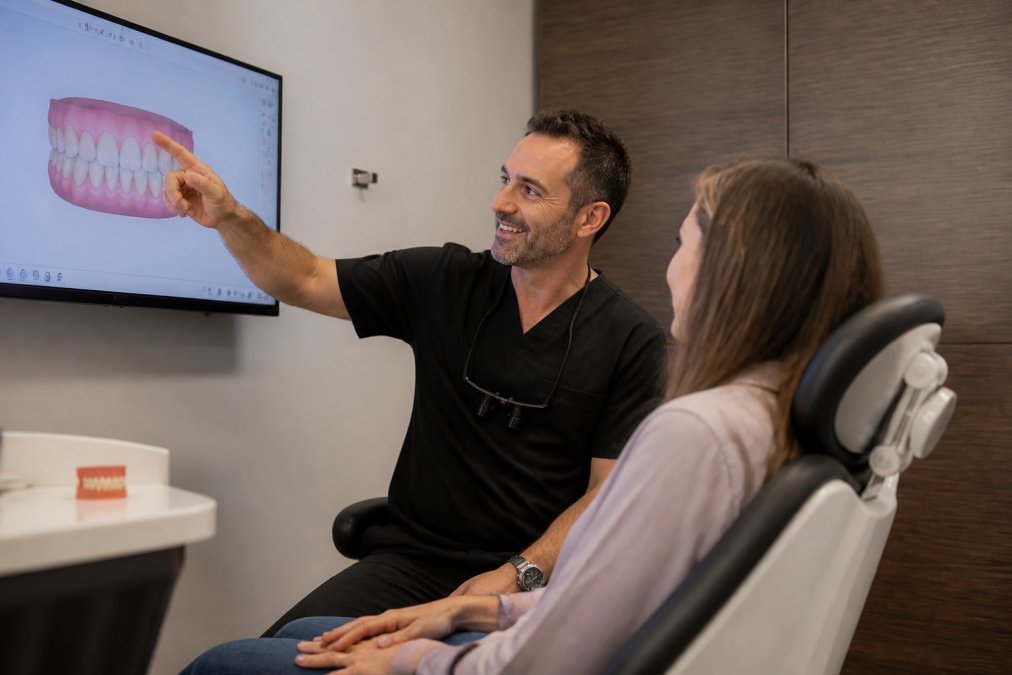
Digital Smile Design is a systematic approach to planning your treatment before any work begins. Your dentist captures digital impressions, photographs, and facial measurements, then uses specialized software to map out your ideal smile proportions. You see a preview of the proposed result on screen and can request adjustments before procedures start.
This process matters because it removes most of the uncertainty from cosmetic work. Instead of describing what you want and hoping the dentist interprets it correctly, you both review the same digital model.
For complex cases involving multiple procedures, this planning phase is essential. It allows the dentist to sequence treatments logically, identifying which work must happen first to support later restorations.
Is Invisalign Good for Complex Bite Issues?
Invisalign is a viable option for many bite problems, but its effectiveness depends on the specific nature and severity of the issue. Mild to moderate crowding, spacing, and certain bite misalignments respond well to clear aligner therapy. For severe skeletal discrepancies or complex multi-tooth movements, traditional braces or a combined approach may be more appropriate.
The key is a thorough evaluation rather than assuming aligners can or cannot handle your case. A dentist trained in orthodontic assessment will review your bite relationship, tooth root positions, and jaw alignment using 3D imaging.
For patients who also need restorative work, aligners can sometimes be phased alongside other procedures. Straightening teeth before placing veneers or crowns often produces better long-term results, because the restorations sit on properly aligned foundations.
How Clinicians Actually Triage Complex Cases
The Role of Attachments and IPR
Modern Invisalign treatment relies on composite attachments, small tooth-colored buttons bonded to specific teeth, to create the leverage points needed for complex movements. Your dentist uses the ClinCheck software to place these attachments virtually, then transfers that plan to your actual teeth. Interproximal reduction (IPR), where the dentist gently polishes between teeth to create space, is another tool used in complex cases, typically limited to 0.2 to 0.3 mm per contact point.
What to Ask During Your Consultation
Before committing to aligner therapy for a complex bite issue, ask your dentist three specific questions. First, request to see your ClinCheck simulation and ask which movements are predicted to be most difficult. Second, ask whether your case will require refinements, most complex cases do. Third, ask about retention: complex bite corrections have a higher relapse tendency, so a bonded lingual wire or a custom night-time retainer is often recommended.
Full Mouth Restoration Options Explained
Full mouth restoration rebuilds damaged, missing, or worn teeth across both arches to restore function and appearance. The term covers a spectrum of treatment plans, from multiple crowns and bridges to implant-supported fixed prostheses.
For patients missing many or all teeth, implant-supported options generally offer the most stable and natural-feeling result. Full-arch implant treatments replace an entire row of teeth using strategically placed implants and a fixed prosthesis. Unlike removable dentures, these restorations stay securely in place and preserve jawbone density through stimulation.
Patients with extensive decay or failing existing crowns may need a different sequence: rebuilding individual teeth first, then addressing aesthetics. Periodontal health must also be stable before major restorative work begins.
The Clinical Decision Tree: Three Pathways
Material Selection Matters
The Provisional Phase: A Hidden Advantage
Benefits of Same-Day Dental Implants
Same-day dental implants allow you to have implants placed and receive a temporary fixed restoration in a single visit, rather than waiting months with removable dentures. This approach is particularly valuable for full-arch cases.
The most significant benefit is immediate function and confidence. You avoid the period of adjustment that comes with temporary dentures, and your new teeth are stabilized by implants from day one.
A board-certified implantologist brings the surgical judgment needed to position implants correctly for same-day loading. Not every case qualifies, and your dentist must assess bone density, implant stability, and overall health before committing to this timeline.
Recovery Timelines and What to Expect
Recovery from advanced cosmetic and implant procedures follows predictable phases, though individual experiences vary. For implant surgery, expect some swelling and tenderness for the first few days, manageable with pain relief. Most patients return to normal activities within two to three days, though you will follow a soft-food diet while the surgical site heals.
The timeline for full-arch implant cases extends over several months as the implants integrate with your jawbone. You will wear a temporary restoration during this period, then transition to your final prosthesis once integration is confirmed. Regular follow-up visits let your dentist monitor healing and catch any issues early.
For veneer and crown procedures performed on existing teeth, recovery is generally minimal. Some temporary sensitivity to hot and cold is normal for a week or two after tooth preparation. Bonding and whitening procedures typically require no downtime at all, making them convenient options for patients with busy schedules.
Financial Planning and Insurance Navigation
Cosmetic and restorative dentistry requires a clear financial plan, because coverage varies widely and many aesthetic procedures are not fully covered by insurance. Your dental office should provide a detailed treatment plan with itemized costs before you begin.
Insurance typically covers the restorative components of your care, such as implants, crowns, and necessary extractions, while purely cosmetic elements like whitening may not qualify. Your treatment coordinator can help you understand what your plan covers and submit pre-authorization requests to confirm benefits in advance.
Because pricing depends on the complexity of your case, the number of implants, and the type of restoration, the only way to get an accurate figure is through a consultation and treatment plan.
Long-Term Maintenance and Longevity
Advanced cosmetic restorations are durable, but they are not maintenance-free. Porcelain veneers and dental implants are durable with proper care when the surrounding bone and gum tissue remain healthy.
Implant restorations require the same daily brushing and flossing as natural teeth, plus attention to cleaning around the abutment where the crown meets the gum. Regular professional cleanings allow your dentist to check the integrity of your restorations and address minor issues before they become costly repairs.
Smoking and poor glycemic control significantly increase the risk of implant complications and peri-implant disease. Your dentist should discuss these risk factors honestly before treatment and provide a maintenance schedule tailored to your situation. With consistent care, patients often find that implant-supported restorations offer significant long-term value.
Frequently Asked Questions
What is the difference between a regular dentist and a cosmetic dentist?
A regular dentist focuses on preventing, diagnosing, and treating oral health issues like cavities and gum disease. A cosmetic dentist, or one with advanced training in cosmetic dentistry, focuses on improving the appearance of your smile through procedures like veneers, whitening, and bonding. Many of these procedures also restore function. Advanced cosmetic dentists often have additional certifications and experience in full mouth restoration and complex cases, which involves both aesthetic and restorative work.
What procedures are included in a full mouth restoration?
Full mouth restoration is not a single procedure but a customized treatment plan that combines multiple cosmetic and restorative treatments. It can include dental implants, crowns, bridges, veneers, inlays, onlays, and gum contouring. The goal is to rebuild or restore all the teeth in both the upper and lower jaws to improve function, oral health, and aesthetics. Your dentist will design the plan based on your specific needs, which may involve addressing bite issues, missing teeth, and worn enamel.
Are same-day dental implants a viable option for cosmetic enhancement?
Yes, same-day dental implants are a viable option for many patients seeking cosmetic enhancement. The key benefit is that you receive a temporary, fixed set of teeth on the same day your implants are placed, so you leave the office with a complete smile. However, it requires careful planning and a skilled implantologist to determine if you are a candidate, which is confirmed during a comprehensive exam.
How do I choose the best cosmetic dentist for complex cases?
For complex cases like full mouth restorations or full-arch implants, look for a dentist with advanced credentials, such as a board-certified implantologist. Ask about their experience with your specific procedure and their use of technology, like digital imaging and in-house labs, which can improve precision and convenience. Reviewing before-and-after photos of similar cases is also important. A consultation should include a thorough exam and a clear, customized treatment plan before you commit.
Choosing the right provider for advanced cosmetic dentistry in Trinity comes down to clinical expertise, technology, and honest communication about what your case requires. Trinity Dental Arts combines board-certified implantology, an in-house laboratory, and same-day full-arch capabilities to deliver comprehensive care under one roof. Get started with Trinity Dental Arts and see how precise planning and modern technology can restore both your smile and your confidence.